
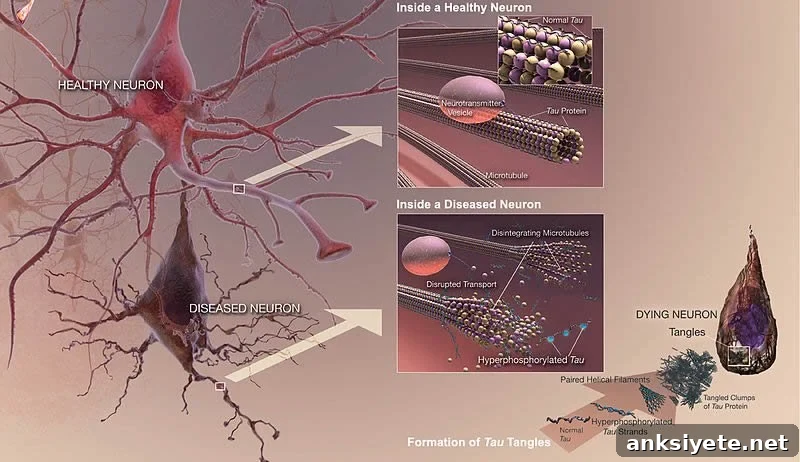
New research suggests type 2 diabetes is linked to increased tau protein and brain tissue loss, independently of Alzheimer’s disease.
People with type 2 diabetes may have higher levels of tau—a protein that forms tangles in the brain—and reduced cortical thickness, findings that point to a potential pathway by which diabetes increases dementia risk. The study, published September 2, 2015 in Neurology, analyzed biomarkers of neurodegeneration alongside clinical diagnoses to better understand how diabetes might influence brain health.
“Evidence has long shown that people with type 2 diabetes face roughly double the risk of developing dementia,” said study author Velandai Srikanth, MD, PhD, of Monash University in Melbourne. “These results add detail to how diabetes and neurodegeneration may be linked, suggesting a role for tau-related processes.”
The analysis included 816 participants with an average age of about 74. Among them, 397 had mild cognitive impairment (MCI), 191 had dementia attributed to Alzheimer’s disease, and 228 had normal cognition. In total, 124 participants had diagnosed type 2 diabetes.
The researchers examined multiple measures of neurodegeneration: cortical thickness measured by MRI, amyloid burden assessed in a subset using PET imaging, and cerebrospinal fluid (CSF) levels of beta-amyloid and tau proteins. The goal was to determine whether diabetes is associated with Alzheimer-like changes (amyloid accumulation) or with other neurodegenerative markers such as tau and brain tissue loss.
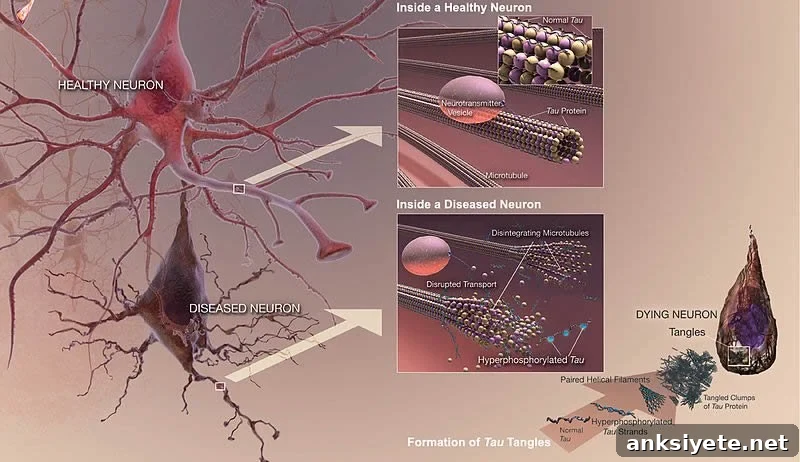
Key findings:
- Higher CSF tau: After adjusting for age, sex, intracranial volume, APOE ε4 status, and diagnostic group, people with type 2 diabetes had higher cerebrospinal fluid levels of total tau (an average increase of about 16 pg/mL) and phosphorylated tau compared with those without diabetes. Elevated CSF tau is commonly interpreted as a marker of neuronal injury or tangle pathology.
- Reduced cortical thickness: Diabetes was associated with thinner cortex in frontal and parietal regions. On average, cortical tissue thickness was reduced by about 0.03 millimeters in people with diabetes, a difference that persisted across diagnostic categories (normal cognition, MCI, and Alzheimer’s dementia).
- No clear link with amyloid: The study did not find an association between diabetes and brain amyloid burden measured by PET imaging nor with CSF Aβ42 levels, suggesting that diabetes-related neurodegeneration may act through tau-related mechanisms rather than through increased amyloid deposition.
Statistical analysis indicated that the relationship between diabetes and reduced cortical thickness was partly explained by phosphorylated tau levels: inclusion of phosphorylated tau attenuated the cortical thinning association by approximately 15%, supporting a possible mediating role for tau phosphorylation in diabetes-related brain tissue loss.
“Because neurons do not regenerate effectively, preventing or slowing neuronal loss is crucial,” Dr. Srikanth said. “Understanding whether and how diabetes accelerates neuronal injury helps identify potential intervention targets to protect brain health in people with diabetes.”
Limitations: The investigators emphasize that the study was cross-sectional, based on measurements taken at a single point in time. This design cannot establish causation or the direction of effects—whether diabetes promotes tau pathology, whether shared risk factors drive both conditions, or whether another mechanism is responsible. Longitudinal studies are needed to clarify temporal relationships and causal pathways.
Funding: The analysis used data from the US Alzheimer’s Disease Neuroimaging Initiative and received support from the National Institutes of Health.
Source: Rachel Seroka – American Academy of Neurology
Image Source: The image is credited to NIH and is in the public domain.
Original Research: “Type 2 diabetes mellitus and biomarkers of neurodegeneration” by Chris Moran, Richard Beare, Thanh G. Phan, David G. Bruce, Michele L. Callisaya, and Velandai Srikanth, on behalf of the Alzheimer’s Disease Neuroimaging Initiative (ADNI). Published online September 2, 2015. DOI: 10.1212/WNL.0000000000001982
Abstract
Type 2 diabetes mellitus and biomarkers of neurodegeneration
Objective: To determine whether type 2 diabetes mellitus (T2DM) is associated with neurodegenerative changes similar to those seen in Alzheimer disease (AD), specifically by promoting brain beta-amyloid (Aβ) or tau pathology.
Methods: Cross-sectional associations of T2DM with cortical thickness, brain Aβ load, and CSF Aβ and tau were analyzed in participants from the Alzheimer’s Disease Neuroimaging Initiative across diagnostic groups: AD dementia, mild cognitive impairment, and normal cognition. All 816 participants had MRI; subsets underwent amyloid PET imaging (n = 102) and CSF Aβ/tau measurements (n = 415). Analyses accounted for cognitive diagnosis and other covariates.
Results: Among 124 people with T2DM (mean age 75.5) and 692 without T2DM (mean age 74.1), T2DM was associated with lower bilateral frontal and parietal cortical thickness (β = −0.03, p = 0.01) after adjustment. T2DM showed no association with regional 11C Pittsburgh compound B uptake or CSF Aβ42 levels. T2DM was associated with greater CSF total tau (β = 16.06, p = 0.04) and phosphorylated tau (β = 5.84, p = 0.02). Inclusion of phosphorylated tau reduced the cortical thickness association by about 15%.
Conclusions: Type 2 diabetes may contribute to neurodegeneration independently of an Alzheimer’s disease diagnosis, potentially through mechanisms involving tau phosphorylation. Further research is needed to elucidate how T2DM influences tau biology and neuronal injury.