Summary: Researchers report a link between specific gut bacteria and physical signs of neurodegenerative disease in a model organism.
Source: University of Florida
Neurodegenerative disorders such as Alzheimer’s disease, Parkinson’s disease and amyotrophic lateral sclerosis (ALS) affect millions worldwide. The underlying causes remain poorly understood, which slows progress toward effective therapies and prevention.
Recent human studies have observed changes in gut bacterial communities among people with neurodegenerative conditions, but the human microbiome’s complexity makes it difficult to identify which microbes might contribute to disease. To narrow that search, scientists at the University of Florida turned to a simple and powerful experimental model: the tiny, transparent roundworm Caenorhabditis elegans.
Published in PLOS Pathogens, the new study demonstrates for the first time that colonization of this worm’s gut by particular human enteric bacteria can trigger toxic protein aggregation in multiple tissues. Alyssa Walker, a doctoral candidate in microbiology and cell science at UF/IFAS, is the study’s lead author. Daniel Czyz, an assistant professor in the UF/IFAS department of microbiology and cell science, is the senior author.
“Investigating the microbiome is an emerging strategy for understanding neurodegenerative disease risk and progression,” said Czyz. “In our experiments, specific bacterial species promoted protein misfolding and aggregation, while other bacteria produced molecules that counteracted those effects.”
All neurodegenerative diseases are linked to failures in protein homeostasis: when proteins fold incorrectly they can clump into aggregates that disrupt cellular function. Czyz’s team asked whether feeding C. elegans particular human-associated bacteria would change the worms’ ability to maintain proteostasis.
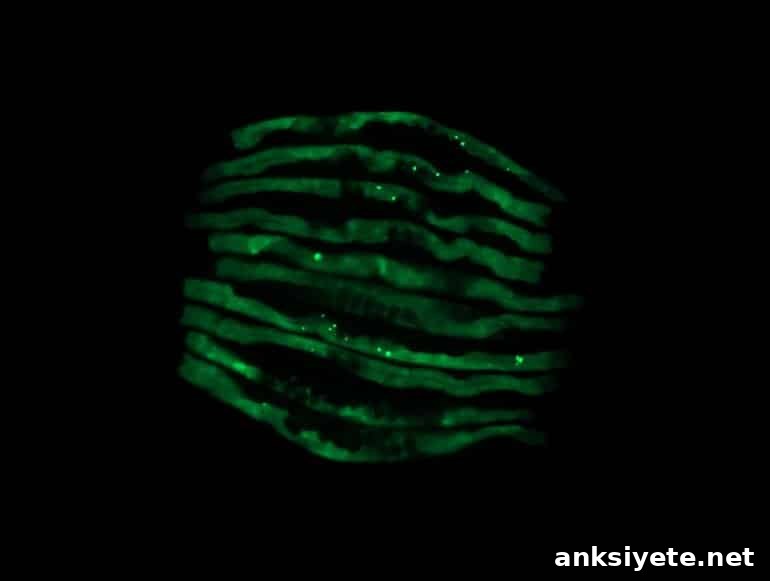
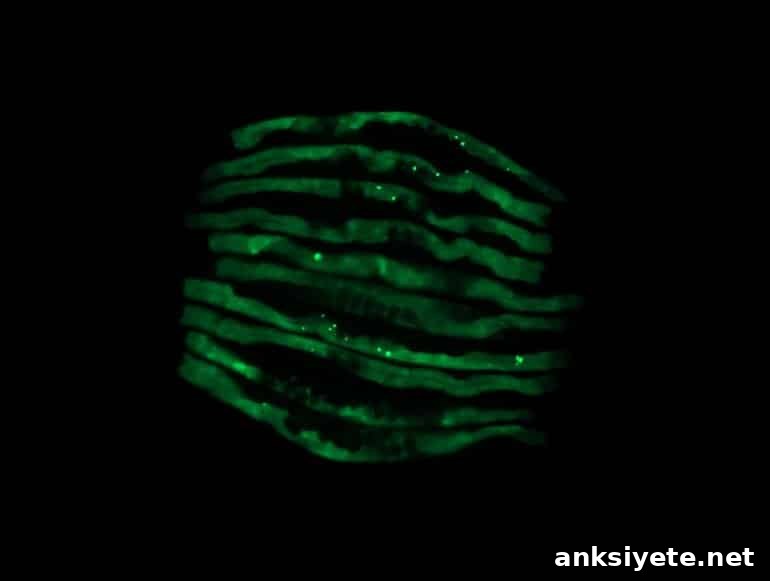
Using worm strains engineered to produce fluorescent markers when protein aggregates form, the researchers found that colonization by certain pathogenic bacteria caused extensive aggregation. The glowing aggregates appeared not only in the intestinal cells that directly contact bacteria but throughout the worms’ bodies—muscle, neurons and reproductive tissues were affected.
Remarkably, offspring of colonized worms showed increased protein aggregation even though they had not been exposed to the original bacteria, suggesting that bacteria can trigger signals that pass to the next generation. Worms harboring the aggregation-inducing bacteria also lost mobility: normally active animals became sluggish and failed simple behavioral tests developed by the team to assess neuromuscular function.
The researchers also identified bacterial strains that conditionally produce butyrate, a short-chain fatty acid previously associated with neuroprotective effects in other models. When worms were colonized by butyrate-producing bacteria, protein aggregation and its toxic consequences were reduced. Co-colonizing worms with a butyrate-producing strain suppressed the aggregation caused by the harmful bacteria, highlighting how microbial interactions can shape host protein homeostasis.
Further experiments showed that the protective effect of butyrate depended on the specific colonizing bacteria and required host stress-response transcription factors SKN-1/Nrf2 and DAF-16/FOXO. The team also found evidence that protein aggregates derived from bacteria contributed directly to the disruption of host proteostasis.
C. elegans offers practical advantages for this kind of research: each worm is only about one millimeter long and has exactly 959 cells, yet it possesses basic tissues—intestine, muscle and nerves—comparable in function to ours. Their transparency and simple body plan make it straightforward to observe protein aggregation and tissue damage in vivo. They also naturally feed on bacteria, making them an ideal system to study host–microbe interactions.
Walker developed behavioral assays that reveal neuromuscular impairment: for example, healthy worms actively roll and thrash and will quickly move off a handling tool, whereas affected animals show reduced movement consistent with toxic protein accumulation. The team notes that delicate tools such as an eyebrow hair or an eyelash are often used to manipulate worms gently during these assays.
The Czyz laboratory is now screening hundreds of bacterial strains isolated from the human gut to map which species influence proteostasis in C. elegans and to dissect the molecular mechanisms by which bacteria trigger protein misfolding. They are also exploring potential links between bacteria associated with protein misfolding and antibiotic resistance, noting that many of the bacteria implicated in their assays are also known to cause antibiotic-resistant infections in people. Understanding any causal relationship will require years of additional study.
About this neurology research news
Source: University of Florida
Contact: Samantha Murray – University of Florida
Image: Image credited to University of Florida
Original Research: Open access. “Colonization of the Caenorhabditis elegans gut with human enteric bacterial pathogens leads to proteostasis disruption that is rescued by butyrate” by Alyssa C. Walker, Rohan Bhargava, Alfonso S. Vaziriyan-Sani, Christine Pourciau, Emily T. Donahue, Autumn S. Dove, Michael J. Gebhardt, Garrett L. Ellward, Tony Romeo, Daniel M. Czyż. PLOS Pathogens.
Abstract
Colonization of the Caenorhabditis elegans gut with human enteric bacterial pathogens leads to proteostasis disruption that is rescued by butyrate
Protein conformational diseases are defined by misfolding and toxic aggregation of metastable proteins, processes that frequently culminate in neurodegeneration. Enteric bacteria can influence the development and progression of these disorders, but the complexity of the human microbiome complicates efforts to determine how individual microbes contribute. Disruption of host protein homeostasis, or proteostasis, critically affects disease onset and trajectory.
To examine how bacteria affect host proteostasis, the authors used Caenorhabditis elegans strains expressing tissue-specific polyglutamine reporters that reveal shifts in the protein folding environment. Colonization of the C. elegans gut with enteric bacterial pathogens disrupted proteostasis across multiple tissues, including intestine, muscle, neurons and the gonad. In contrast, bacteria that conditionally synthesize butyrate suppressed aggregation and alleviated associated proteotoxicity. Co-colonization experiments emphasized the importance of microbial interactions: a butyrate-producing strain reduced aggregation induced by pathogenic bacteria.
The protective effect of butyrate depended on the identity of the colonizing bacteria and required SKN-1/Nrf2 and DAF-16/FOXO transcription factor pathways. The authors also present evidence that bacterial protein aggregates contribute to host proteostasis disruption. Collectively, these findings underscore the potential role of enteric infection and gut dysbiosis in protein conformational disease and point to butyrate-producing microbes as candidates for further study as preventative or therapeutic interventions for neurodegenerative disease.