
Response to Anxiety Linked to Movement Control Areas in the Brain
Summary: Researchers report that anxiety responses in adolescents involve not only emotion-related regions but also motor control areas of the brain.
Source: ECNP.
A small longitudinal study presented at the ECNP Congress in Vienna suggests that social anxiety in teenagers is associated with activity not only in emotional brain regions such as the limbic system, but also in motor control areas. These motor-area changes may be linked to movement inhibition under stress, sometimes described as “freezing.”
Italian and Canadian investigators followed a group of children from late childhood into adolescence to examine how early social inhibition might develop into social anxiety and how the adolescent brain reacts to emotional cues. Initially, 150 children were assessed at ages eight to nine for signs of social inhibition and tendencies to withdraw from social situations. Those identified with early social anxiety traits also demonstrated greater difficulty recognizing emotions, particularly angry facial expressions.
Participants from both the anxious and control groups were reassessed at ages 14–15. The research team used functional magnetic resonance imaging (fMRI) to observe how adolescent brains responded to angry faces. The objective was to identify whether neural responses to social threat cues differed between adolescents with ongoing social anxiety and those without.
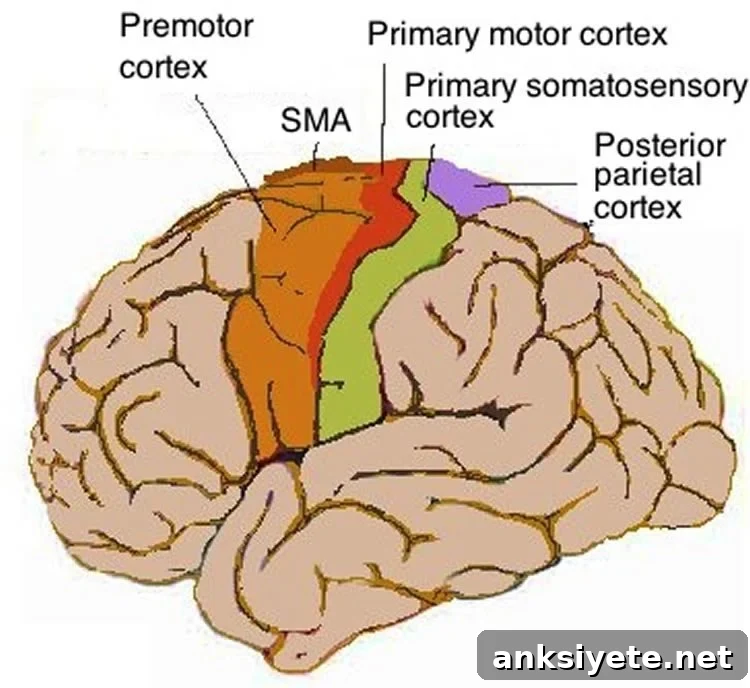
Lead researcher Laura Muzzarelli reported that exposure to angry faces produced increased activation in the amygdala among socially anxious adolescents. The amygdala plays a central role in processing emotions, forming memory traces related to emotional events, and orchestrating responses to perceived threats. Unexpectedly, the same stimuli also corresponded with reduced activity in parts of the premotor cortex, a region involved in preparing and planning voluntary movements.
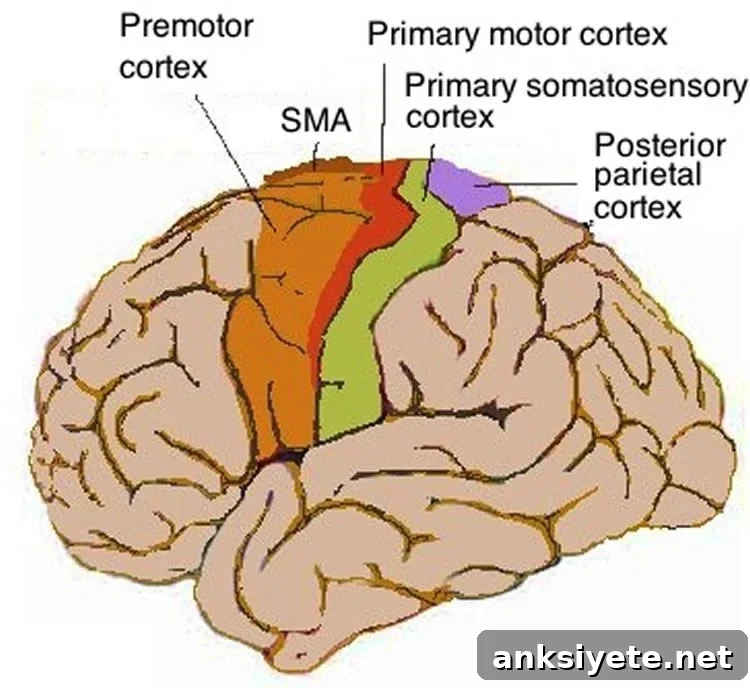
In plain terms, the study provides evidence that strong emotional responses may directly influence brain areas responsible for movement control. Adolescents without social anxiety did not exhibit the same pattern of motor inhibition. The researchers note that this neural inhibition could help explain why people sometimes become physically immobile or “freeze” in frightening or highly stressful social situations, though further work is needed to confirm how these brain changes translate into actual movement differences.
The authors emphasize several important limitations. Although the study began with 150 children, participant numbers decreased over the six-year follow-up. By adolescence, the sample included only five individuals meeting criteria for social anxiety and five with less severe or subthreshold social anxiety, yielding a small final sample for the imaging analyses. Because of this limited sample size, the findings should be considered preliminary and in need of replication with larger cohorts.
Social anxiety is a mental health condition characterized by intense fear and avoidance of negative evaluation by others. It is among the most common anxiety disorders, affecting roughly 6% to 8% of people at some point in their lives, and it most commonly begins during adolescence, although early signs can appear in infancy and childhood. In its early stages social anxiety can be mistaken for shyness.
Source: ECNP Congress presentation.
Image credit: Iamozy (illustrative).
ECNP. “Response to Anxiety Linked to Movement Control Areas in Brain.” NeuroscienceNews. Published September 19, 2016. Original research presented at the annual ECNP Congress, Vienna, 17–20 September.
Researchers and clinicians may find these preliminary results useful for guiding future investigations into how emotional states influence motor systems in the brain. If replicated in larger samples, the observation that emotional reactivity can inhibit premotor regions may inform both diagnostic understanding and the development of interventions aimed at reducing the physical impact of acute emotional stress in social anxiety.
This summary reflects the study as presented at the ECNP meeting and avoids adding new or unverified claims beyond the original report. Further research is required to establish causal links and to explore therapeutic implications.