
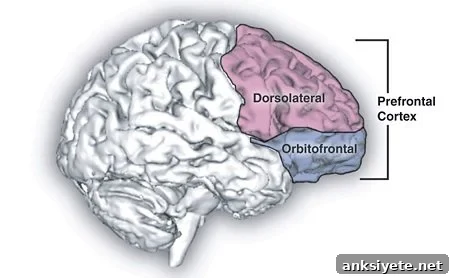
Turning off cells in a habit-associated brain region prevents rats from learning to run a maze on autopilot.
Daily routines often become automatic: we take the same route to work, perform familiar sequences of actions without conscious thought, and sometimes develop habits we cannot easily stop, such as smoking or nail-biting. New research from MIT reveals a way to prevent habits from taking hold by temporarily suppressing neural activity in a specific prefrontal region while animals learn a task.
Researchers led by Institute Professor Ann Graybiel found that activity in two distinct brain areas is necessary for habits to solidify. Using optogenetics to silence neurons in the infralimbic (IL) cortex — a region of the prefrontal cortex — during every maze training run, they showed that rats still learned to navigate the maze for a reward but did not form a habit. When the reward’s flavor was made aversive, rats whose IL cortex had been turned off stopped responding, indicating the behavior had not become automatic. If a habit had formed, they would have persisted despite the change in reward value.
“Breaking a habit is usually difficult, and preventing a habit from forming when a reward is present should also be challenging,” Graybiel said. “With this optogenetic manipulation, however, the effect is strikingly simple: switch the light on during learning, and the habit does not take hold.”
Graybiel, a member of MIT’s McGovern Institute for Brain Research, and lead author Kyle Smith (now at Dartmouth College), published the findings in the journal Neuron. Their work builds on earlier studies implicating both the IL cortex and the striatum — a subcortical region closely tied to decision-making, reward, and repetitive behaviors — in habit learning and expression.
Patterns of habitual behavior
Previous research has shown that the motor sequences underlying habitual actions are encoded in striatal circuits, while cortical regions appear to influence which behaviors are expressed. Graybiel’s group previously described a distinctive “task-bracketing” neural pattern that emerges with habit formation: neurons become highly active at the start of a run, quiet during the middle of the task, and active again at completion. This pattern effectively “chunks” a sequence of actions into a single unit the brain can deploy automatically.
To better understand the dynamics of habit development, Smith recorded neural activity in the IL cortex as rats learned to run a maze for a reward. He discovered task-bracketing activity in the IL cortex similar to that seen in the striatum, but with important differences. The IL pattern appeared later than the striatal pattern and was more flexible: it appeared and disappeared as habits were formed and then broken. By contrast, the striatal pattern tended to persist even after a habit was disrupted. These observations suggested that the IL cortex tracks the current state of habit formation, while the striatum stores the motor pattern associated with the habit.
Multiple layers of control
Optogenetic suppression of IL cortex activity during learning prevented the habit-related task-bracketing pattern from becoming established and blocked the long-term automatic expression of the behavior. The results indicate the IL cortex plays an active and necessary role in habit formation, not just selecting between habits stored elsewhere.
“Previously the idea was that habits were stored in sensorimotor circuits and cortical areas merely selected which habit to express,” Smith explained. “Our data suggest a more fundamental role for the IL cortex: it contributes directly to the formation and real-time control of habitual behavior.”
This architecture — with both cortical and striatal contributions — provides multiple levels of regulation over automatic actions. The IL cortex may both coordinate whether a habit occurs and supply specific components of the habitual sequence. Current work is exploring whether the IL cortex and striatum communicate and influence one another or operate in parallel to shape habitual behavior.
Outside experts note the study’s implications. Christopher Pittenger, a psychiatrist and neuroscientist who was not involved in the research, emphasized that while the IL cortex has long been implicated in habit regulation, these results reveal new details about its interaction with the striatum. He suggested the findings raise the possibility that targeted interventions in the IL cortex could help break maladaptive habits — a prospect with potential clinical relevance.
The researchers also highlight potential translational applications. With a clearer neural signature of normal habit formation, scientists may be able to identify abnormal activity patterns linked to disorders of repetitive behavior — for example, behaviors that are learned too rapidly or become excessively rigid. Detecting such signatures could guide development of treatments, including approaches like deep brain stimulation, which uses controlled electrical stimulation to suppress pathological neural activity.
Notes about this neuropsychology and optogenetics research
The study was supported by the National Institutes of Health, the Office of Naval Research, the Stanley H. and Sheila G. Sydney Fund, and private funding from R. Pourian and Julia Madadi. The paper, “A Dual Operator View of Habitual Behavior Reflecting Cortical and Striatal Dynamics” by Kyle S. Smith and Ann M. Graybiel, was published in Neuron (online June 27, 2013) DOI: 10.1016/j.neuron.2013.05.038.
Written by Anne Trafton
Contact: Anne Trafton – MIT
Source: MIT press release
Image Source: Prefrontal cortex illustration credited to the NIH (public domain).
Original Research: Neuron article by Kyle S. Smith and Ann M. Graybiel.