
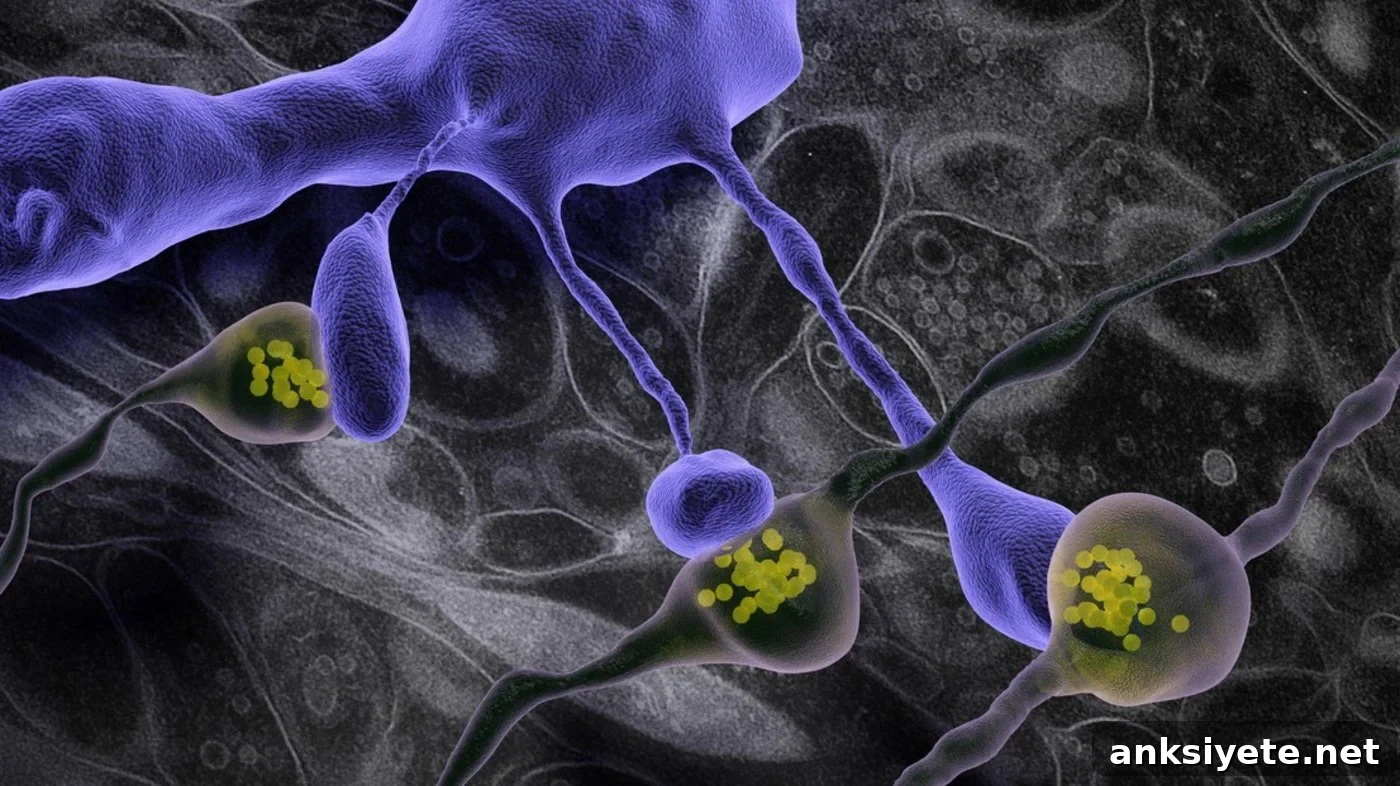
Summary: By using a rapid snap-freezing technique, researchers have captured and revealed the true ultrastructure of the connections—dendritic spines—that link neurons in the adult brain.
Source: EPFL
Most synaptic connections in the adult brain are located on dendritic spines—tiny micrometer-scale protrusions that extend from the neuron’s surface. The precise size and shape of these spines determine how effectively signals are transmitted from one neuron to another.
Those fine structural details are critical for constructing accurate models of neural circuits and for understanding how information flows through the brain. Yet the diminutive scale of dendritic spines and the technical challenges of preserving brain tissue in a near-native state have long obscured their true morphology. Traditional chemical fixation methods have been widely used, but they can introduce distortions that mask subtle features relevant to neuronal signaling.
Researchers in the School of Life Sciences at EPFL applied an alternative preservation strategy: snap-freezing brain tissue using liquid nitrogen jets combined with very high pressure. This cryo-fixation approach freezes thin pieces of brain tissue almost instantaneously, markedly reducing the structural alterations associated with slower chemical fixation. The teams led by Graham Knott and Carl Petersen then used high-resolution, three-dimensional electron microscopy to examine dendritic spines preserved by this method.
The cryo-preserved tissue largely confirmed previous descriptions of spine anatomy in terms of overall spine length and head volume. Crucially, however, the instantaneous freezing revealed that spine necks are significantly thinner—on average more than 30% narrower—than those measured after standard chemical fixation.
This difference is important because the neck diameter of a dendritic spine acts as a physical and electrical bottleneck. A thin, high-resistance neck increases the electrical isolation of the spine head from its parent dendrite and enhances the spine’s role as a separate biochemical compartment. The new cryo-fixed measurements therefore support decades of theoretical and functional evidence suggesting that spines can compartmentalize electrical and chemical signals, and that variations in neck geometry can substantially alter how a synaptic input influences the larger neuron.
The study also found that the weak correlation previously reported between spine neck width and head volume after chemical fixation was not present in cryo-fixed samples. This suggests that spine neck geometry is, to a large extent, independent of head size when the tissue is preserved close to its native state. As a result, cryo fixation reveals enhanced compartmentalization of the spine head and predicts a higher electrical resistance between the spine head and the parent dendrite than would be inferred from chemically fixed tissue.
“As well as revealing the true shape of these important brain structures, this work highlights the usefulness of rapid freezing methods and electron microscopy for obtaining a more detailed view of the architecture of cells and tissues,” says Graham Knott. The combination of rapid cryo-preservation and high-resolution 3D electron microscopy therefore provides a clearer, more reliable picture of subcellular structures involved in synaptic transmission.
Beyond confirming specific morphological details, these findings carry broader implications for neuroscience. Accurate measurements of spine geometry are essential inputs for computational models of synaptic integration and plasticity, for interpreting physiological recordings, and for understanding how pathological processes may alter synaptic function. Because spine neck resistance influences both voltage signaling and the diffusion of biochemical signals, the observation of consistently thinner necks in cryo-fixed tissue may prompt revisions to existing models and hypotheses about synaptic computation and compartmentalization.
Funding: Young Researchers Exchange Programme between Japan and Switzerland (Japanese-Swiss Science and Technology Programme), JSPS KAKENHI grant and Swiss National Science Foundation.
About this neuroscience research news
Source: EPFL
Contact: Nik Papageorgiou – EPFL
Image: The image is credited to Graham Knott (EPFL)
Original Research: Open access. “Ultrastructural comparison of dendritic spine morphology preserved with cryo and chemical fixation” by Tamada H, Blanc J, Korogod N, Petersen CCH, Knott GW. eLife. DOI: 10.7554/eLife.56384
Abstract
Ultrastructural comparison of dendritic spine morphology preserved with cryo and chemical fixation
Previous work showed that cryo fixation of adult mouse brain tissue provides a more faithful representation of brain ultrastructure than conventional chemical fixation (Korogod et al., 2015). Cryo fixation better preserved extracellular space, revealed larger numbers of docked synaptic vesicles, and showed less glial coverage of synapses and capillaries. Using the same preservation approaches, the current study directly compared dendritic spine morphology. The results indicate that while spine length and head volume remain similar across fixation methods, the spine neck is significantly thinner—by more than 30%—after cryo fixation. Additionally, the modest correlation seen between spine neck width and head volume in chemically fixed tissue is absent in cryo-fixed tissue. These findings imply that spine neck geometry is independent of spine head volume and that cryo fixation reveals stronger compartmentalization of the spine head with a consequent increase in predicted electrical resistance between the spine head and its parent dendrite.