
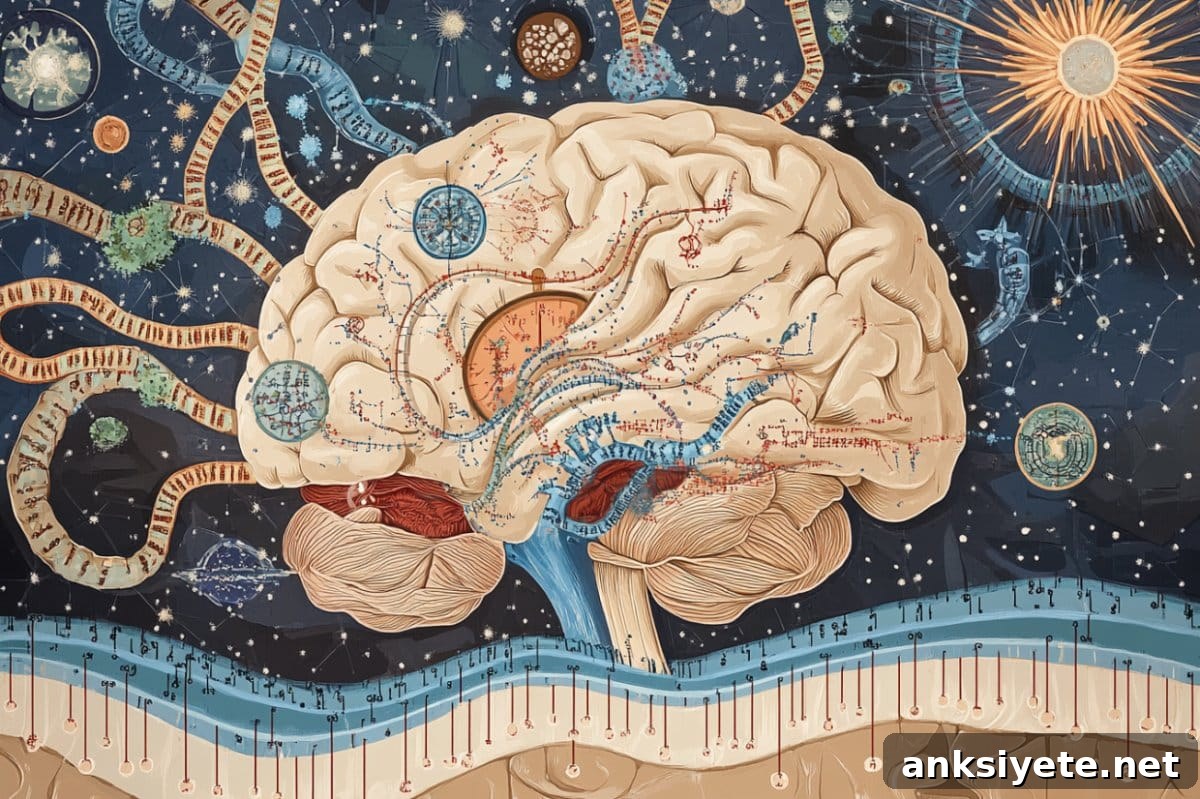
Summary: Researchers from the Max Planck Institute of Psychiatry, Helmholtz Munich and the University of Sydney report that several major psychiatric disorders share common biological mechanisms. By analyzing postmortem tissue from the dorsolateral prefrontal cortex at the exon level—the fine-grained segments of genes that determine how proteins are constructed and which protein isoforms appear—the team uncovered molecular differences that were invisible when looking at whole-gene expression alone.
This exon-focused approach exposed consistent disruptions across disorders in pathways that regulate stress hormones, dopamine signaling and the body’s circadian rhythm. These shared molecular signatures suggest a biological overlap between conditions such as schizophrenia, bipolar disorder and major depressive disorder, and point toward more mechanism-driven ways to classify and treat psychiatric illness.
Key Facts:
- Exon-level resolution: Differences between patients and controls emerged only when expression was examined at the exon level rather than at whole-gene resolution.
- Shared molecular pathways: Disturbances were consistently found in circadian entrainment, cortisol synthesis and secretion, and dopaminergic synapse signaling.
- Implications for diagnosis and treatment: Results support moving from symptom-based categories toward biologically informed classification and precision psychiatry.
Source: Max Planck Society
Study context and approach: The team analyzed postmortem samples from the dorsolateral prefrontal cortex, a brain region centrally involved in reasoning, executive function and emotion regulation that is frequently implicated in psychiatric disorders. The cohort included individuals diagnosed with schizophrenia, bipolar disorder and major depressive disorder, along with matched control samples. Rather than relying solely on whole-gene expression, the researchers examined expression at the exon level and integrated multiple layers of genetic information—common variant exon-level expression quantitative trait loci (eQTLs), rare variant data, and polygenic risk measures.
Exons are the coding segments of genes that carry the information used to build proteins and determine which protein isoforms are produced through alternative splicing. Because alternative splicing affects more than 95% of human genes, changes at the exon level can alter protein composition and cell function even when overall gene-level expression appears unchanged. By focusing on exons, the investigators were able to detect subtle but biologically meaningful differences tied to psychiatric disease risk.
Differences at the exon level
When expression was aggregated at the whole-gene level, patient and control samples showed few significant differences. However, exon-level analysis revealed clear and reproducible alterations in exon usage and expression in affected individuals. This indicates that psychiatric risk may often be mediated by how genes are spliced and which exons are used, not simply by whether a gene is up- or down-regulated overall.
The researchers combined exon-level eQTLs and a novel joint analysis that links polygenic risk scores with exon expression (exon eQT-Scores). Integrating these data with schizophrenia-focused rare-variant datasets from large consortia allowed them to converge on a core set of genes and pathways. Among the highlighted pathways were circadian entrainment (regulation of daily biological rhythms), cortisol synthesis and secretion (endocrine stress response), and dopaminergic synapses (key to reward, motivation and psychosis-related processes).
These pathway-level findings were supported by single-nucleus RNA sequencing from multiple cortical regions, which showed that the core gene set is predominantly expressed in excitatory neurons across layers 2–6 of the dorsolateral prefrontal cortex. This cell-type localization ties the molecular changes directly to neuronal populations involved in cognition and executive function, strengthening the link between genetic variation, cellular dysfunction and clinical symptoms.
Beyond the primary pathways, the study also found enrichment for hormone signaling processes (including insulin, GnRH, aldosterone and growth hormone pathways) and adrenergic signaling in cardiomyocytes, underscoring the broad physiological impact of the implicated genes. Overall, 110 core genes emerged from the integrated analysis, with statistically significant enrichment for circadian, cortisol and dopaminergic processes.
Toward precision psychiatry
By revealing exon-level dysfunctions shared across disorders, this work supports a shift from symptom-based diagnostic categories to biologically grounded classifications. Identifying specific molecular and cell-type mechanisms opens the door to targeted therapeutic strategies and biomarkers that reflect underlying biology rather than clinical presentation alone. The multimodal, exon-centric strategy demonstrated in this study shows how combining genetic, transcriptomic and single-cell data can provide new insights into the molecular architecture of severe psychiatric disorders.
About this report
Author: Anke Schlee, Max Planck Society
Source: Max Planck Society
Contact: Anke Schlee – Max Planck Society
Image: The image is credited to Neuroscience News
Original Research: Open access. “Exon-variant interplay and multi-modal evidence identify endocrine dysregulation in severe psychiatric disorders impacting excitatory neurons” by Janine Knauer-Arloth et al., Translational Psychiatry. The study integrates exon-level eQTLs, joint exon eQT-Scores and schizophrenia rare-variant data to identify 110 core genes enriched for circadian entrainment, cortisol synthesis and secretion, and dopaminergic synapse pathways, with expression concentrated in excitatory neurons of the dorsolateral prefrontal cortex.