
Summary: The compound salen shows strong binding capacity to several SARS-CoV-2 proteins, suggesting potential for development of new therapeutic strategies against COVID-19.
Source: Ural Federal University
Researchers report that salen can effectively bind to multiple proteins of the SARS-CoV-2 coronavirus.
Using molecular docking simulations, the research team identified that salen and its tautomeric forms display notable affinity for several viral proteins. The most promising interactions were observed with the non-structural protein nsp14, a viral factor involved in protecting the virus from degradation and contributing to its replication fidelity.
These computational results point to salen as a useful starting point for the design and development of new antiviral agents that could interfere with critical SARS-CoV-2 functions. While the findings are preliminary and derived from in silico analysis, they provide a rationale for further experimental studies including biochemical assays and cellular testing.
The study is published in the journal Polycyclic Aromatic Compounds.
“Our work focused on the well-known Schiff base compound salen. We evaluated its ability to interact with a series of SARS-CoV-2 proteins to determine which viral targets might be most susceptible to modulation by this molecule,” explains Damir Safin, Research Engineer at the Organic Synthesis Laboratory of Ural Federal University.
“The in silico docking experiments showed potential interactions across several targets, with the strongest predicted binding to nsp14, a non-structural protein that helps the virus avoid degradation. These results are encouraging as a first step, although additional studies are necessary to validate and expand on these observations,” adds Damir Safin.
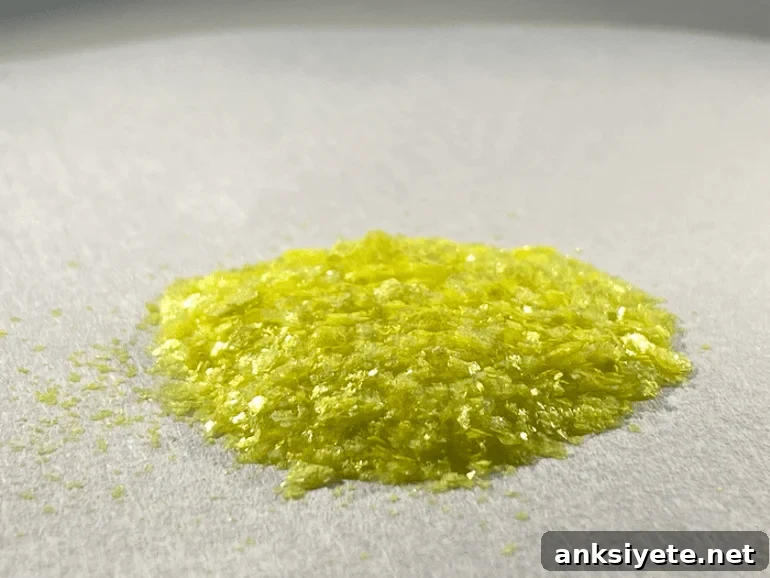
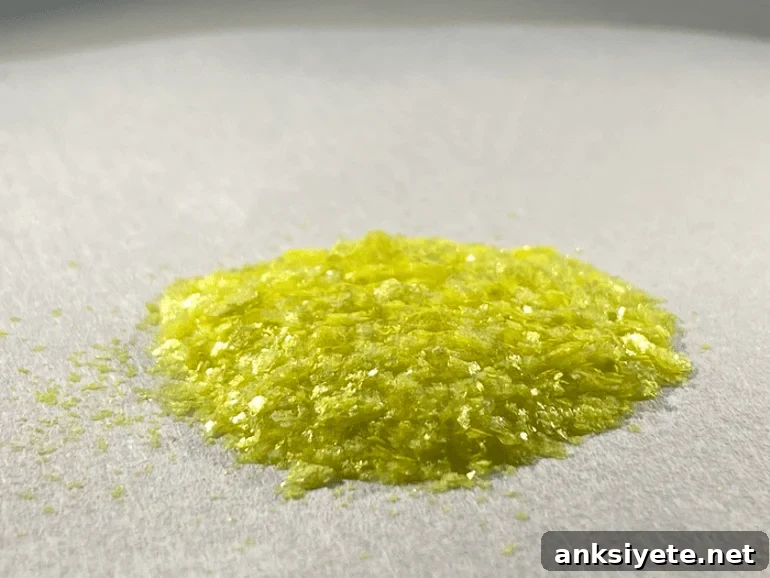
Salen is a tetradentate Schiff base formed from salicylaldehyde and ethylenediamine. It serves as an important ligand in coordination chemistry and is widely used to stabilize metal centers across different oxidation states. Salen derivatives and their metal complexes are applied in catalysis and materials chemistry, and their relatively simple synthesis makes them attractive for further modification.
The molecule features two hydroxyl groups whose hydrogen atoms can migrate to nearby nitrogen atoms, producing tautomeric forms that differ in shape and electronic distribution. This tautomerization influences how salen interacts with proteins and metal surfaces, so the researchers investigated multiple tautomeric forms to identify which was most favorable for protein binding.
“We modeled the interactions of different salen tautomers with the chosen SARS-CoV-2 proteins to determine which tautomeric state provides the most effective binding. Identifying the preferred tautomer is an important step for guiding chemical modifications that could improve binding affinity and specificity,” the authors note.
The research team emphasizes that computational docking is an early stage in drug discovery: it generates hypotheses about likely interactions and prioritizes targets for follow-up. Experimental validation—such as binding assays, structural studies, and antiviral testing in cell models—will be required to confirm if salen or its derivatives can function as effective antiviral agents against SARS-CoV-2.
This multidisciplinary study was conducted by scientists from the Innovation Center of Chemical and Pharmaceutical Technologies at Ural Federal University in collaboration with Kurgan State University and Tyumen State University.
About this COVID-19 research news
Author: Anna Marinovich
Source: Ural Federal University
Contact: Anna Marinovich – Ural Federal University
Image: The image is credited to UrFU / Damir Safin
Original Research: Closed access.
“Salen: Insight into the Crystal Structure, Hirshfeld Surface Analysis, Optical Properties, DFT, and Molecular Docking Studies” by Damir Safin et al. Polycyclic Aromatic Compounds
Abstract
Salen: Insight into the Crystal Structure, Hirshfeld Surface Analysis, Optical Properties, DFT, and Molecular Docking Studies
This report examines the Schiff base dye salen and its structural, optical, and electronic properties. Crystallographic analysis shows salen predominantly adopts the enol–enol tautomer in the solid state, where molecules assemble into a three-dimensional supramolecular framework stabilized by C–H···π interactions.
Optical measurements indicate multiple absorption bands depending on solvent, with additional features attributed to the presence of cis-keto tautomers in protic solvents. Emission spectra vary with excitation wavelength and solvent environment, reflecting contributions from different tautomeric excited states. Density functional theory (DFT) calculations support the experimental data, predicting the enol–enol tautomer as the most stable form followed by the enol–cis-keto tautomer.
Electronic structure analysis based on HOMO and LUMO energies provided global chemical reactivity descriptors. The DFT study also explored potential applications of salen as a corrosion inhibitor for metals commonly used in implants, finding that certain tautomers could facilitate electron transfer to metal surfaces—most notably Ni, Au, and Co in the systems examined.
Molecular docking simulations evaluated interactions of salen tautomers with a set of SARS-CoV-2 proteins. Among the viral targets tested, the strongest predicted binding affinity was observed for nsp14 (N7-methyltransferase), highlighting this protein as a promising target for further experimental investigation of salen-based inhibitors.
Together, the combined crystallographic, spectroscopic, computational, and docking results form a foundation for follow-up studies that could explore chemical modification of salen to enhance antiviral properties and to validate activity in biochemical and cellular assays.