
Summary: Scientists have mapped a neural circuit that enables the brain to convert a held motor plan into action in response to a specific external cue.
Source: Max Planck Florida
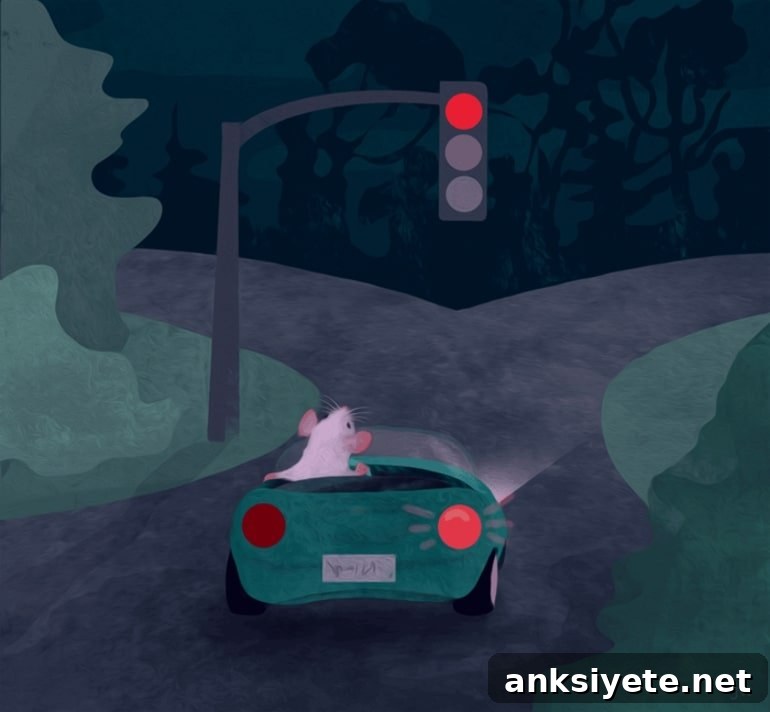
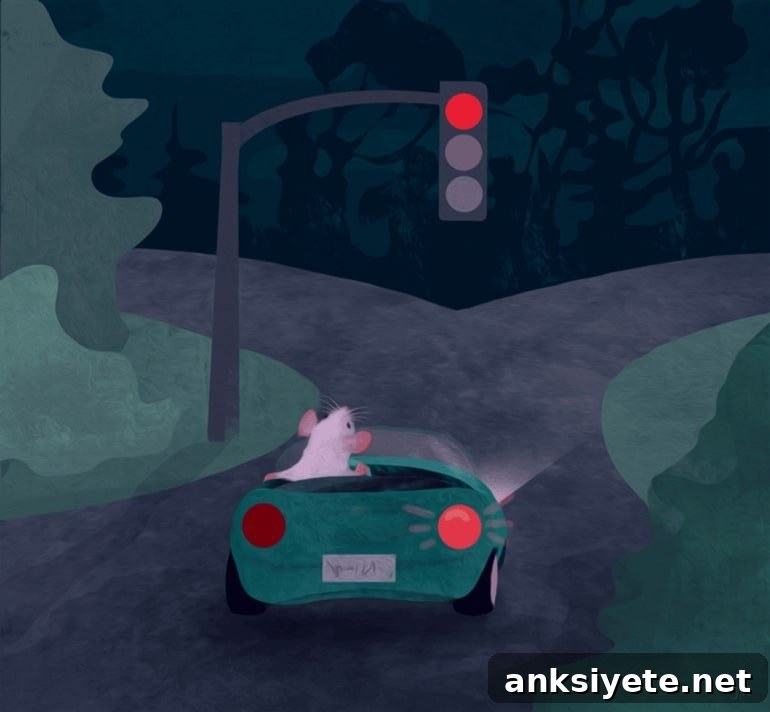
Planned movements are a routine part of everyday life, yet their execution often must be delayed until the right cue appears. Whether waiting for “GO!” at a race start or for a traffic light to change, the brain forms detailed motor plans but must suppress their execution until a specific external signal permits action.
A team of researchers has now identified the brain circuit that triggers the transition from planning to action when such cues occur.
Published in Cell, this collaborative study involves scientists from the Max Planck Florida Institute for Neuroscience, HHMI’s Janelia Research Campus, the Allen Institute for Brain Science, and other institutions. Co-first authors Dr. Hidehiko Inagaki and Dr. Susu Chen, together with senior author Dr. Karel Svoboda, investigated how environmental cues can rapidly release a planned movement.
“Neuronal activity across the brain is diverse and temporally structured,” said Dr. Inagaki. “Like an orchestra led by a conductor, ensembles of neurons produce coordinated activity patterns that shape behavior. Identifying the circuit elements that shift those patterns at the right moment is key to understanding how plans become actions.”
Motor cortex activity shows distinct signatures during the planning phase versus the execution phase of movement. The mechanism that switches motor cortex dynamics from a preparatory state into an executing state had been unclear. The researchers hypothesized the existence of a neural conductor that senses external cues and orchestrates this transition across brain regions.
To locate this conductor, the team recorded hundreds of neurons simultaneously while mice performed a cue-triggered task. Mice learned to lick left when a whisker stimulus was absent and lick right when whiskers were touched. Crucially, they had to withhold licking until they heard an auditory “go cue.” Only licks made after that cue earned a reward, so mice maintained a motor plan until the go cue signaled execution.
By aligning complex patterns of neuronal activity with behavioral events, the scientists observed a rapid, cue-linked signal that coincided with the transition from planning to movement. This signal originated from a circuit connecting midbrain areas, thalamic relays, and motor cortex. In particular, glutamatergic neurons in midbrain reticular and pedunculopontine nuclei showed brief, selective increases in firing shortly after the go cue. That activity propagated through thalamus to reorganize motor cortical state and produce a motor command that drove the appropriate lick.
The team tested causality using optogenetics to manipulate the identified circuit with light. Artificially activating the circuit during the planning period pushed motor cortex dynamics toward execution and caused the mice to lick prematurely. Conversely, silencing the circuit at the moment of the go cue prevented the normal transition: mice remained in a planning state and did not execute the cued movement. These experiments demonstrate that midbrain-driven signals transmitted via thalamus are sufficient and necessary to trigger the switch from motor planning to execution.
The study identifies a midbrain–thalamus–cortex pathway that acts as a trigger for cue-evoked actions. This circuit reorganizes cortical dynamics so that a stored motor plan becomes an executed command at the appropriate moment.
“We found a circuit that reliably converts motor planning activity into execution when an external cue arrives,” Dr. Inagaki said. “This provides a mechanistic view of how neuronal ensembles are orchestrated across brain regions to produce timed, precise behavior. Future work will examine how this circuit interacts with other networks to reshape activity across broader brain systems.”
Beyond advancing fundamental neuroscience, these findings have clinical relevance. Patients with motor disorders such as Parkinson’s disease often struggle with self-initiated movement, yet their responses to external cues—lines on the floor, auditory signals—can markedly improve mobility. This phenomenon, called paradoxical kinesia, implies that cue-triggered movements recruit neural mechanisms distinct from those used for spontaneous action initiation. Mapping circuits that support cue-triggered movement, which appear relatively preserved in Parkinson’s, could guide new therapeutic approaches.
About this neuroscience research news
Author: Katie Edwards
Source: Max Planck Florida
Contact: Katie Edwards – Max Planck Florida
Image: The image is credited to Julia Kuhl
Original Research: Open access.
“A midbrain-thalamus-cortex circuit reorganizes cortical dynamics to initiate movement” by Hidehiko Inagaki et al. Cell
Abstract
A midbrain-thalamus-cortex circuit reorganizes cortical dynamics to initiate movement
Highlights
- Distinct motor cortex activity patterns underlie planning and movement initiation
- An external cue rapidly reorganizes motor cortex activity to release a planned movement
- Midbrain neurons convey cue information to cortex via thalamic relays to trigger actions
- Midbrain activity is causal for reorganizing cortical dynamics and releasing movements
Summary
Motor behaviors are often planned well before they are executed but are released only after specific sensory events. Planning and execution each correspond to distinct motor cortex activity patterns. Key questions are how these dynamic patterns are generated and how they relate to behavior.
This study examines the multi-regional circuit that links an auditory go cue to the transition from planning to execution during directional licking. Ascending glutamatergic neurons in the midbrain reticular and pedunculopontine nuclei display short-latency, phasic changes in firing that are selective for the go cue. That signal is transmitted through the thalamus to motor cortex, provoking a rapid reorganization of cortical state from planning-related activity to a motor command that drives the appropriate movement.
These results demonstrate how the midbrain can control cortical dynamics via thalamic relays to produce fast, precise, cue-triggered motor behavior.