
Summary: Researchers have identified a distinct hypothalamus-to-habenula pathway that helps control sensations of aversion.
Source: Karolinska Institute.
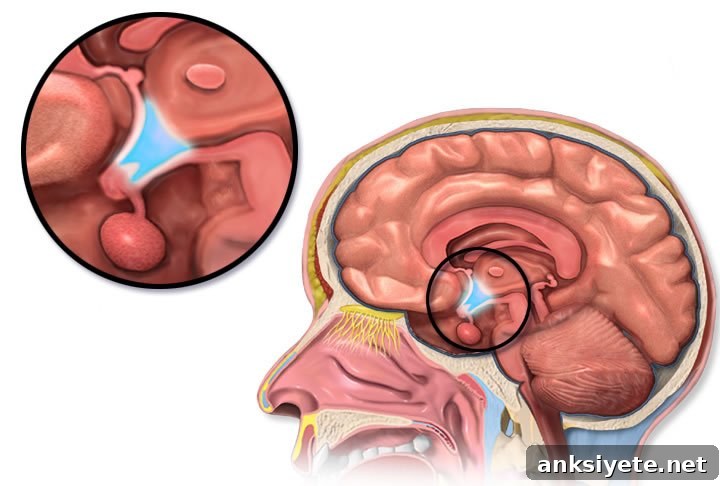
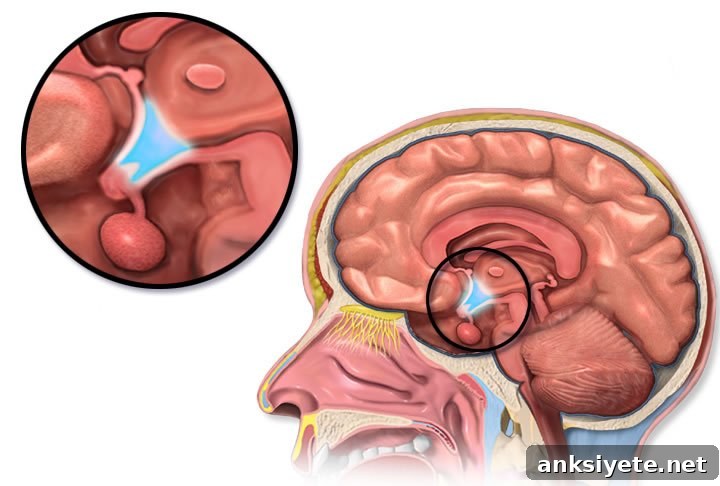
Researchers at Karolinska Institutet have pinpointed a brain circuit that governs aversion. A new study in Molecular Psychiatry maps the neuronal pathway from the hypothalamus to the lateral habenula and shows how this connection shapes negative emotional responses in mice.
Understanding how the brain produces signals tied to discomfort and avoidance is essential for revealing mechanisms behind mood and anxiety disorders. Historically, the amygdala has been central to studies of fear, while dopamine has dominated research into reward. By contrast, the neural substrates of aversion—how the brain encodes and predicts negative events—have been less well defined.
Recent research has highlighted the habenula as a key regulator of negative and positive states in animal models. The lateral habenula (LHb) influences both the dopamine and serotonin systems, neurotransmitters closely linked to motivation and well-being. Clinical work has even explored deep brain stimulation of the habenula as a potential treatment for severe depression, suggesting clinical relevance for circuits that control this structure. Until now, however, the specific upstream networks that regulate the habenula and how they encode aversive signals were not fully mapped.
The Karolinska team used a combination of modern circuit-mapping tools and functional techniques to identify which neurons project to the LHb and what role they play in encoding negative valence. By applying optogenetics, they were able to selectively activate or inhibit specific neuronal populations with light, observing how these manipulations altered behaviour associated with aversion.
Complementing optogenetic control, the researchers mapped connectivity using monosynaptic rabies tracing to reveal presynaptic partners of LHb-projecting neurons. They focused on glutamatergic neurons expressing the vesicular glutamate transporter Vglut2 in the lateral hypothalamic area (LHA), and compared these to neurons in the globus pallidus internal segment (GPi) that were proposed to co-release GABA and glutamate. Their tracing work showed that the LHA Vglut2 neurons receive predominantly limbic inputs, suggesting a role in processing emotional value, while GPi neurons received more sensorimotor inputs.
To link connectivity with function, the team recorded neuronal activity in behaving animals. Using calcium imaging to monitor LHA Vglut2 neurons during conditioning paradigms, they observed distinct clusters of activity that corresponded to reward versus aversion. Importantly, a subset of these LHA neurons responded to mildly aversive stimuli (such as brief foot shocks) and developed signals that predicted upcoming negative events. These LHb-projecting LHA Vglut2 neurons therefore encode negative valence and rapidly form prediction signals for aversive outcomes.
These converging lines of evidence establish a glutamatergic LHA-to-LHb circuit as a critical node for value processing, particularly for encoding and predicting aversive experiences. By demonstrating that modulation of this pathway alters aversive behaviour, the study provides a clearer picture of how specific hypothalamic inputs shape habenula activity and, ultimately, influence downstream neuromodulatory systems involved in mood.
The findings have potential implications for understanding the neural basis of affective disorders. If similar circuits operate in humans, interventions that selectively rebalance activity along this pathway could conceivably alleviate maladaptive negative bias seen in depression and anxiety. The authors note that circuit-targeted approaches—whether by refined neuromodulation, pharmacology, or other emerging technologies—may benefit from these mechanistic insights.
Funding: The study was supported by grants from the Swedish Research Council, the Swedish Foundation for Strategic Research, the Swedish Brain Foundation and Karolinska Institutet.
Source: Karolinska Institute
Publisher: NeuroscienceNews.com
Image Source: NeuroscienceNews.com image credited to BruceBlaus. Licensed CC by 3.0.
Original Research: “A hypothalamus-habenula circuit controls aversion” by Iakovos Lazaridis, Ourania Tzortzi, Moritz Weglage, Antje Märtin, Yang Xuan, Marc Parent, Yvonne Johansson, Janos Fuzik, Daniel Fürth, Lief E. Fenno, Charu Ramakrishnan, Gilad Silberberg, Karl Deisseroth, Marie Carlén & Konstantinos Meletis, published in Molecular Psychiatry, February 12, 2019.
DOI: 10.1159/000496086
MLA: Karolinska Institute. “Brain Pathways of Aversion Identified.” NeuroscienceNews, 14 February 2019.
APA: Karolinska Institute (2019, February 14). Brain Pathways of Aversion Identified. NeuroscienceNews.
Chicago: Karolinska Institute. “Brain Pathways of Aversion Identified.” NeuroscienceNews. (Accessed February 14, 2019).
Abstract
A hypothalamus-habenula circuit controls aversion
Encoding and predicting aversive events are essential for survival and emotional balance. Maladaptive changes in how the brain processes emotional valence can underlie affective disorders. The lateral habenula (LHb) has been tied to aversion and mood regulation through its influence on dopamine and serotonin systems. This study defines the identity and function of glutamatergic (Vglut2) control of the LHb, comparing inputs from the globus pallidus internal segment (GPi) and the lateral hypothalamic area (LHA). The results show that LHb-projecting LHA neurons—and not the putative GABA/glutamate co-releasing GPi neurons—encode negative value. Monosynaptic tracing revealed a predominantly limbic input onto LHA Vglut2 neurons, while sensorimotor inputs were more prominent onto GPi neurons. Calcium imaging of LHA Vglut2 neurons during conditioning revealed activity clusters corresponding to reward or aversion, including a population responsive to mild foot shocks that predicted aversive events. LHb-projecting LHA Vglut2 neurons encode negative valence and rapidly develop prediction signals for negative outcomes. These findings identify the glutamatergic LHA–LHb circuit as a critical node in value processing.