
Summary: Although previously thought to be absent from the brain, researchers have identified precapillary sphincters in the cerebral cortex of mice. The study suggests these small contractile structures may play a key role in regulating cerebral blood flow and local pressure, with implications for conditions such as migraine, Alzheimer’s disease and vascular dementia.
Source: University of Copenhagen
Precapillary sphincters — once believed not to exist in the brain — have now been demonstrated in mice.
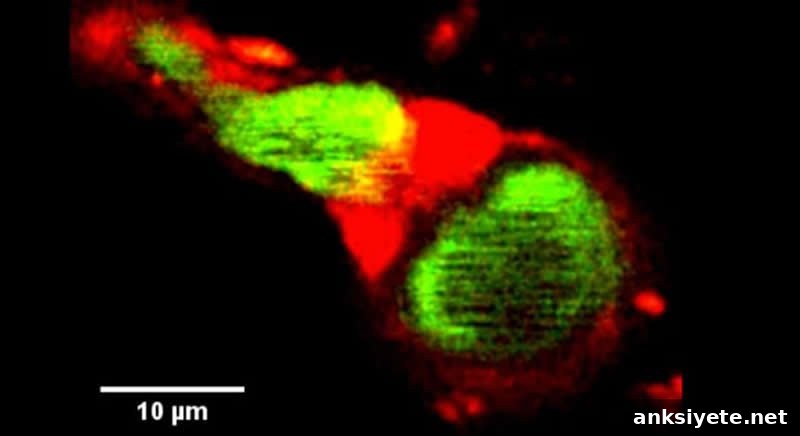
Assistant Professor Søren Grubb from the Department of Neuroscience at the University of Copenhagen and colleagues have identified precapillary sphincters at the transition between arterioles and capillaries in the mouse cerebral cortex.
Earlier reviews concluded that precapillary sphincters were unlikely to exist in organs like the heart and brain. Since that time, much attention has focused on pericytes—contractile cells that regulate resistance in the smallest blood vessels. However, that emphasis appears to have overshadowed another important site of flow regulation: sphincter-like contractile cells positioned at early capillary branches. These structures can exert strong influence on blood flow entering the capillary bed.
Acts like a faucet or sluice gate
Blood reaches brain tissue by traveling from arterioles into capillaries, where oxygen and nutrients are exchanged with neurons and glia. The research team describes precapillary sphincters as small, contractile rings that control the pressure and flow distribution from an arteriole into its downstream capillaries—similar to a faucet regulating pressure between a main pipe and a hose, or a sluice gate directing water from a river into irrigation channels.
When a sphincter relaxes, the passage widens and more red blood cells pass through, increasing downstream pressure and perfusion. When it contracts, the vessel narrows and creates a bottleneck that reduces pressure and flow beyond the clamp. This bidirectional control means these sphincters can produce some of the largest changes in vascular resistance of any cerebral vessel segment, protecting delicate downstream capillaries and tissue from abrupt pressure changes.
In practical terms, precapillary sphincters can both direct blood to active regions and shield microvessels from potentially damaging pressure spikes. If a sphincter fails to open or becomes obstructed, the downstream region may become underperfused, much like a field drying out if a sluice remains closed.
Implications for disease: migraine, Alzheimer’s and vascular dementia
The researchers propose that dysfunction of precapillary sphincters could contribute to disorders in which brain perfusion and clearance of waste are impaired. Conditions such as migraine with aura, Alzheimer’s disease and vascular dementia are associated with disrupted blood flow and accumulation of metabolic waste, and sphincter failure or inappropriate constriction could be one contributing factor.
The Lauritzen Lab research group, which includes Søren Grubb, has already tested a mouse model of migraine with aura and observed responses consistent with sphincter involvement. They found that cortical spreading depolarization—a wave of neuronal and glial depolarization linked to migraine aura—causes sphincter constriction and can trap blood cells in downstream capillaries. While these results support the hypothesis, the authors emphasize that further work is required to establish causal roles in human disease.
“We have shown that precapillary sphincters are present in the brain,” Søren Grubb explains. “Their discovery opens new questions about how blood flow and pressure are regulated at the capillary level. The next steps are to determine how these structures behave in healthy brains and how they change in disease.”
About the research and contact information
Source:
University of Copenhagen
Media contact:
Søren Grubb – University of Copenhagen
Image credit:
Lauritzen Lab, University of Copenhagen.
Original research (open access):
Title: “Precapillary sphincters maintain perfusion in the cerebral cortex.” Authors include Søren Grubb, Changsi Cai, Bjørn O. Hald, Lila Khennouf, Reena Prity Murmu, Aske G. K. Jensen, Jonas Fordsmann, Stefan Zambach and Martin Lauritzen. Published in Nature Communications. The study describes how sphincter-encircling mural cells can actively change the length and diameter of an enclosed vessel segment, creating substantial changes in cerebrovascular resistance and modulating capillary perfusion.
Abstract summary:
Active neurons release vasodilators that increase local blood supply by dilating nearby vessels, a process known as neurovascular coupling and the basis for BOLD functional imaging signals. This research reveals a precapillary sphincter at the junction between penetrating arterioles and first-order capillaries that links capillary flow to arteriolar inflow. The sphincters are encircled by contractile mural cells capable of bidirectional control, and they act both to direct capillary perfusion and to protect downstream capillaries from harmful pressure fluctuations. During cortical spreading depolarization, sphincters can constrict and trap blood cells, making them significant bottlenecks for capillary blood flow.