
Summary: Researchers report that a portable blink reflexometer can give doctors objective, quantitative data to help detect neurological problems ranging from concussion to Parkinson’s disease.
Source: Medical University of South Carolina
The blink reflex is highly sensitive to a variety of neurological insults — including traumatic brain injury (TBI), Parkinson’s disease and Huntington’s disease — and therefore has potential as a clinical assessment tool. Historically, clinicians and researchers analyzed blink timing using electromyography (EMG) beginning in the 1950s, but widespread clinical use never followed. EMG offers excellent sensitivity but is relatively cumbersome, can be uncomfortable, and requires controlled ambient conditions that limit testing outside clinical settings. Recent advances in digital imaging, high-frame-rate video capture and faster image processing now make a portable, noninvasive, quantitative evaluation of the blink reflex realistic and practical.
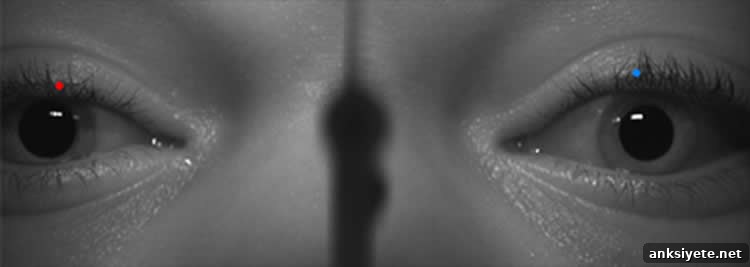
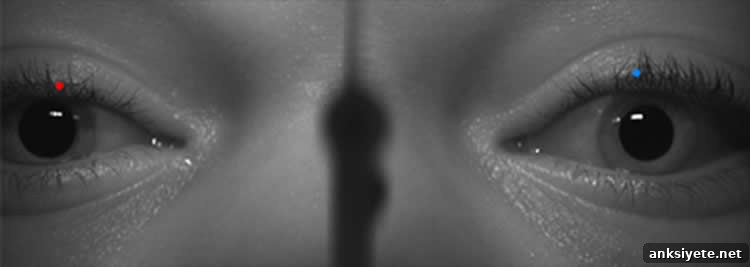
The Blink Reflexometer is a compact device developed at the Zucker Institute for Applied Neurosciences, Medical University of South Carolina, and is now licensed to BLINKtbi (Charleston, SC). The device uses brief puffs of air to trigger blinks and captures the eyelid movements with high-speed video. Custom image-processing software measures blink timing and dynamics and compares those measures to decades of blink-reflex research to identify abnormalities that may reflect neurological injury or disease.
In a validation pilot, investigators at the Medical University of South Carolina and The Citadel tested the Blink Reflexometer on ten healthy college students and compared the device’s measurements to published EMG benchmarks. The team measured three core parameters: latency (the interval from stimulus to the first detectable eyelid movement), differential latency (the difference in onset time between the two eyelids), and duration (the time from the start of eyelid closure to reopening). Latency and duration results from the video-based device were consistent with published EMG values. Differential latency in this small sample fell outside previously reported ranges, indicating an area for further investigation. Overall, the results support that the Blink Reflexometer can produce objective, quantitative blink metrics comparable to EMG.
“We are excited to be able to take something that had been qualitative and make it quantitative and objective,” said lead author Nancey Trevanian Tsai, M.D. “In medicine we often rely on metrics; moving from a subjective judgment to a measurable value is like switching from saying someone feels feverish to actually measuring their temperature with a thermometer.”
The pilot study involved a small group of young, healthy participants, so larger studies across broader age ranges and clinical populations are needed to validate the device’s sensitivity and specificity for different neurological conditions. Additional research will be required to establish how blink-reflex changes map to specific diagnoses. The Blink Reflexometer detects and quantifies alterations in blink behavior but does not determine the precise underlying cause of those changes; clinical interpretation and further diagnostic workup remain essential.
If subsequent studies confirm its utility, the Blink Reflexometer could allow the blink reflex to become a standard, measurable neurological metric or vital sign in clinical exams. Its portability makes it suitable for use outside the clinic, enabling on-site neurological screening: for example, sideline concussion assessments for athletes or potential field-side evaluations related to intoxication. The noninvasive nature and objective output could make the blink reflex a practical addition to neurological screening workflows.
The Blink Reflexometer is patent pending and currently available for investigational use only. The Medical University of South Carolina, the Zucker Institute for Applied Neurosciences and authors Tsai, Semler and Kothera have financial interests related to the technology. Funding for the work was provided by the Zucker Institute for Applied Neurosciences.
Publication and research details: The device and pilot results are described in the article “Development of a Non-Invasive Blink Reflexometer” by Nancey Trevanian Tsai; Jesse S. Goodwin; Mark E. Semler; Ronald T. Kothera; Mark Van Horn; Bethany J. Wolf; and Dena P. Garner. The paper was published in the IEEE Journal of Translational Engineering in Health and Medicine (published online December 12, 2017) and is available as an open-access article in that journal.
Abstract
Development of a Non-Invasive Blink Reflexometer
Clinicians commonly use qualitative blink reflex assessments to help evaluate neurological status in critical care, the operating room, and rehabilitation settings. Although decades of research support quantitative blink-reflex metrics for evaluating neurological disorders, routine clinical adoption has not occurred. There is an unmet clinical need for an objective, portable, non-invasive metric of neurological function that can be applied in multiple settings. We developed a high-speed videography-based device to elicit, record and analyze the blink reflex. A pilot study compared the device’s measurements to published electromyographic benchmarks, the current gold standard. Results indicate the device can rapidly provide objective, quantitative blink measurements, showing promise as a practical, non-invasive diagnostic assessment of neurological health.