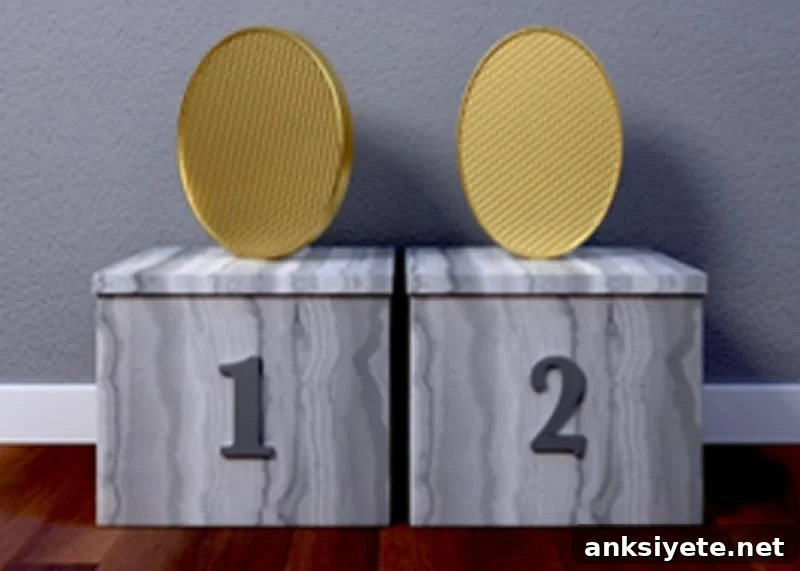
Summary: Researchers answer a long-standing philosophical question about objective perception. For visual experience, the conclusion is that people cannot fully separate their perspective from the way objects appear.
Source: Johns Hopkins University
Johns Hopkins Study Finds Perspective Shapes Visual Perception
Researchers at Johns Hopkins University applied methods from cognitive science and experimental psychology to test a philosophical question that dates back centuries: can humans see the world objectively, or does our viewpoint always influence what we perceive? Their empirical answer, reported in the journal Proceedings of the National Academy of Sciences (PNAS), is that objective visual perception is effectively impossible—our perspective persists in how we see things.
Using a carefully designed set of experiments that combined advanced computer graphics with precisely manufactured, laser-cut “coins,” the research team explored whether people can ignore perspectival distortions and perceive an object’s true shape. Participants viewed round coins tilted away from them; although observers often knew the coins were circular, they couldn’t avoid perceiving the retinal projection as elliptical. In short, knowledge of an object’s real shape did not fully eliminate the perspectival appearance.
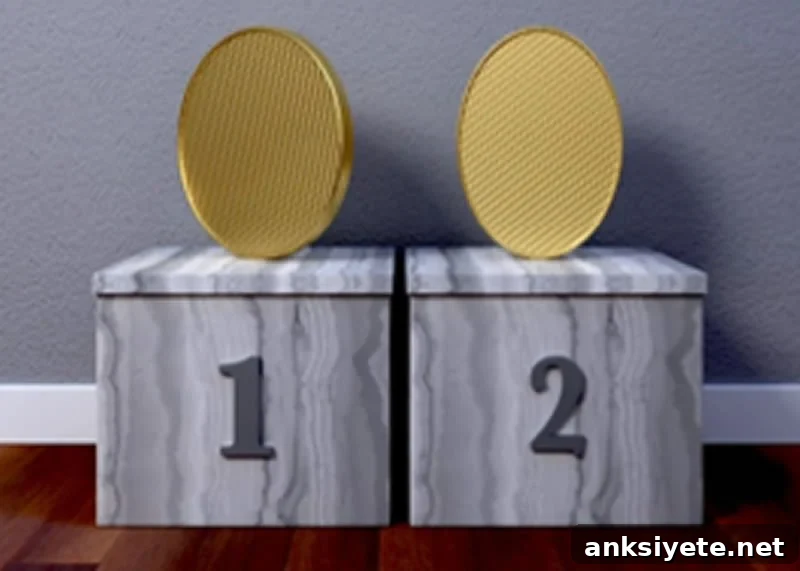
Lead author Jorge Morales, a postdoctoral fellow, described the central finding succinctly: objects are stamped with our perspective. Even when observers try to see the object “as it is” rather than how the image falls on the eye, perspective-related impressions remain influential.
Experimental Design and Key Findings
The team ran nine experiments in which subjects searched for a three-dimensional object with a distal elliptical shape among distractors. In each display, one item was a true oval while the other items included either circular coins or other shapes. When circular coins were tilted, producing an elliptical retinal projection, observers were slower and less accurate at locating the true oval target. This slowing occurred whether the coins were static or rotating, across multiple shape classes, and under both computer display and real-world viewing conditions.
Importantly, the effect could not be explained by unfamiliarity with the stimuli or by strategic guessing. Even when participants explicitly knew that a rotated coin was circular, the rotated coin’s perspectival appearance still interfered with search for the actual elliptical object. The effect persisted with prolonged viewing and under rich visual cues, indicating a robust and sustained influence of perspective on perceptual representation.
Philosophical and Scientific Implications
This work addresses a debate going back to philosophers such as John Locke and David Hume about whether perceptual experience represents the world itself or the sensory projection of the world. The Johns Hopkins experiments show that perception maintains a dual character: there is the object’s objective shape “out there” and a persistent perspectival shape “from here.” The results suggest that perceptual experience encodes both aspects rather than collapsing into purely objective representation.
Chaz Firestone, senior author and director of the Hopkins Perception & Mind Laboratory, noted that the project offered a productive collaboration between philosophy and experimental science. By designing a rigorous lab test of a classic philosophical question, the team demonstrated how empirical methods can illuminate long-standing theoretical issues about the mind and perception.
Ongoing and Related Research
This study is the first in a series exploring how philosophical concepts about perception can be examined with psychological and neuroscientific tools. In collaboration with philosopher Austin Baker, the lab is investigating whether social stereotypes shape perception—for example, whether people have difficulty seeing individuals who violate gender stereotypes. Other projects examine how observers perceive absent objects or detect the absence of expected items.
Overall, this research highlights that perception is both constructive and perspectival: even when we know the facts about objects, the way those objects appear from our viewpoint continues to shape our experience.
About this research
Institution: Johns Hopkins University
Media contact: Jill Rosen, Johns Hopkins University
Publication: Proceedings of the National Academy of Sciences (PNAS). Original research: “Sustained representation of perspectival shape” by Jorge Morales, Axel Bax, and Chaz Firestone. PNAS DOI: 10.1073/pnas.2000715117.
Abstract summary: The experiments show that tilted circular objects create sustained perspectival impressions that behave like true ellipses in perceptual tasks. Rotated circular coins impaired search for distal ellipses across multiple conditions, demonstrating a long-lasting dual representation of objects as both objectively shaped and perspectivally distorted.
Feel free to share this neuroscience news.