Night Sweats and Hot Flashes Linked to Mild Depression

featured 34727

Nighttime Hot Flashes May Trigger Mild Depression During Menopause Summary: A new study reports that a woman’s perception of frequent nighttime hot flashes, coupled with sleep disruption after estrogen suppression, is associated with mild depressive symptoms during the menopausal transition. Source: Endocrine Society. Published in the Journal of Clinical Endocrinology & Metabolism. Key finding Women … Read more


Moderate Caffeine During Pregnancy Shows No Impact on Baby IQ

featured 25746

Moderate amounts do not cause behavioral problems or obesity. Women who consume moderate amounts of caffeine while pregnant can be reassured that available evidence does not indicate harm to their child’s intelligence or increased behavioral problems, according to research from The Research Institute at Nationwide Children’s Hospital published in the American Journal of Epidemiology. This … Read more

Study Finds Surprising Simplicity in How the Nose Detects Smells

featured 18996

In rats, olfactory bulb neurons use simple “linear summation” to interpret fluctuating odor cues from their environment. Our sense of smell can produce powerful, immediate reactions. Encountering a foul scent—spoiled milk or a skunk—often triggers an instinctive recoil and quick action: discarding the milk or moving away from the source. The nose itself only detects … Read more

Gene Targeting Overcomes Brain Cancer Therapy Resistance

featured 67226

Summary: A mouse study shows that deleting the OSMR gene markedly improves glioblastoma responsiveness to therapy and extends survival. Source: McGill University New findings point to a gene that controls energy production in glioblastoma stem cells and could lead to more effective treatments. A McGill-led study published in Nature Communications demonstrates that suppressing the OSMR … Read more

TCM-Based Drug Extends Survival in Brain Tumor Models

featured 92446

Summary: Indirubin, a natural compound derived from indigo plants and long used in traditional Chinese medicine, has been formulated for injection and shown to extend survival in mouse models of glioblastoma by targeting tumor growth and immunosuppressive pathways. Source: Brown University A recent study reveals how a drug based on a traditional Chinese medicine compound … Read more

AI Reveals Bitter Taste Receptors’ Role in Gut-Brain Axis

featured 112925

Summary: Researchers applied AlphaFold3, the latest AI-driven protein structure prediction system, to model the three-dimensional structures of all 25 known human bitter taste receptors (T2Rs). When benchmarked against experimental data and previous AlphaFold2 predictions, AlphaFold3 produced consistently more accurate structural models. The analysis revealed strong conservation of intracellular regions across T2Rs and notable variation in … Read more

New Study Reveals How Aging Affects Memory

featured 32669

Summary: New research links the dopamine D2 receptor to long-term episodic memory and hippocampal function. Source: Umeå University. A European research team led by Professor Lars Nyberg at Umeå University reports that the dopamine D2 receptor is associated with long-term episodic memory, a cognitive function that commonly declines with age and in dementia. This discovery … Read more

Study Links Gut Microbiome to Alzheimer’s and Parkinson’s

featured 73778

Summary: Researchers report a link between specific gut bacteria and physical signs of neurodegenerative disease in a model organism. Source: University of Florida Neurodegenerative disorders such as Alzheimer’s disease, Parkinson’s disease and amyotrophic lateral sclerosis (ALS) affect millions worldwide. The underlying causes remain poorly understood, which slows progress toward effective therapies and prevention. Recent human … Read more

Scientists Find Brain Neurons That Detect Intermediate Colors

featured 24141

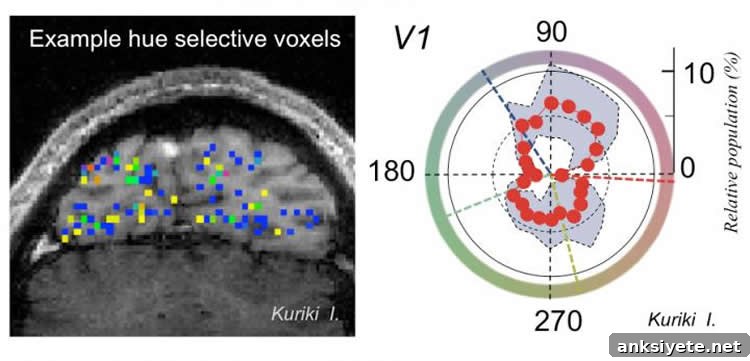
Researchers at Tohoku University’s Research Institute of Electrical Communication and RIKEN BSI have identified neurons in the human brain that respond selectively to intermediate colors—not only to the classic red, green, yellow and blue categories. Traditional models of color encoding in the human visual system posited that color information is represented by combinations of four … Read more

Why Music Moves Us: What AI Reveals About Emotion

featured 60342

Summary: Artificial intelligence reveals how music shapes our brains, bodies, and emotions. Specific auditory regions—such as Heschl’s gyrus and the superior temporal gyrus—respond strongly to pulse clarity and changes in dynamics, rhythm, timbre, and instrumentation. These contrasts drive physiological and emotional reactions, and the findings help identify song types that best support workout, study, and … Read more