How the Brain Maps Advanced Prosthetic Limbs

featured 44488

Summary: Using ultra-high field 7 Tesla fMRI, EPFL researchers show how targeted muscle and sensory reinnervation (TMSR) reshapes motor and somatosensory cortical maps in upper-limb amputees. The results indicate that TMSR helps preserve motor and sensory representations and their mutual connectivity, but higher-level multisensory embodiment remains limited—pointing to the need for integrated somatosensory feedback in … Read more


New Imaging Reveals Alzheimer’s Progression Inside Cells

featured 45164

Summary: Researchers at the University of Twente have used hyperspectral Raman imaging to produce clear, label-free images of brain tissue affected by Alzheimer’s disease, revealing both plaques and tangles as well as nearby changes in the surrounding tissue. Source: University of Twente Raman optical imaging now reveals Alzheimer’s-related changes in brain tissue, including surrounding regions … Read more

Why Stress Makes You Notice Your Partner’s Negative Behavior

featured 86688

Summary: Stressful experiences can harm romantic relationships by shifting attention toward a partner’s negative behaviors. When people are under sustained stress, they are more likely to notice lapses, impatience, criticism or broken promises than the positive things their partner does. Source: Society for Personality and Social Psychology Stress does more than change how partners behave … Read more

Why Your Memory Keeps Meaning Instead of Exact Details

featured 62326

Summary: When we recall past events, our memory relies more on deep structural similarities and the core meaning of situations than on superficial features such as setting or characters. Source: University of Geneva What cues does memory use to link a present situation with a past one? Researchers from the University of Geneva (UNIGE), in … Read more

Nasal Spray May Slow Alzheimer’s Progression by Years

featured 105946

Summary: Researchers at Texas A&M report a promising intranasal therapy that targets chronic neuroinflammation in early-stage Alzheimer’s disease. Using extracellular vesicles derived from neural stem cells, the nasal spray reduced inflammatory signaling and the accumulation of Alzheimer’s-related proteins and plaques in an animal model, suggesting potential to slow disease progression by many years. The therapy … Read more

Reprogramming Neurons Unlocks Flexible Decision Making

featured 68183

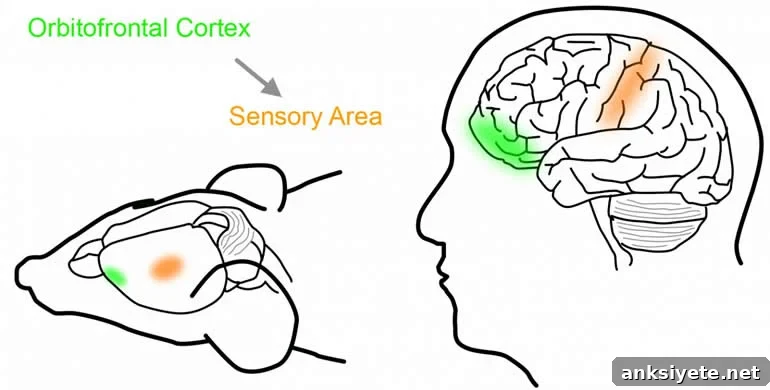
Summary: Study identifies the neurons that direct adaptive behavior. Source: University of Zurich Researchers at the Brain Research Institute of the University of Zurich used a mouse model to identify specific neurons that guide adaptive behavior. Their findings clarify how higher-order brain regions influence sensory areas during decision-making and may help explain changes in flexible … Read more

Is Schizophrenia Linked to Immune System Dysfunction?

featured 33002

Summary: A major genetic analysis clarifies the potential role of the immune system in schizophrenia. Source: Lancaster University. New analysis of the largest schizophrenia genetic dataset to date clarifies how immune-related genes relate to the disorder. Researchers using data from the largest genome-wide association study (GWAS) of schizophrenia investigated whether genetic variation affecting immune function … Read more

Self-Isolation Could Cut COVID-19 ICU Bed Demand

featured 63825

Summary: Researchers warn that, to prevent hospitals in the United States from facing the same extreme strain seen in Italy during the COVID-19 outbreak, even people with mild symptoms must promptly self-isolate to limit disease transmission. Source: Yale When Alison Galvani first observed the rapid spread of COVID-19 in China, she and colleagues at Yale’s … Read more

Can Bilingualism Delay Alzheimer’s Symptoms?

featured 63984

Summary: In a study of Alzheimer’s patients, those who spoke two or more languages fluently developed symptoms about four years later, on average, than monolingual individuals. Source: UCLA Overview: Researchers reviewing 253 patients with probable Alzheimer’s disease found that individuals who used two languages proficiently showed a delay of roughly four years in the appearance … Read more

How to Like Other Groups Without Rejecting Your Own

featured 86870

Summary: New research finds that preferring an outgroup often reflects positive attitudes toward that outgroup rather than negative feelings about one’s own group. Source: UCR More than seven decades ago, psychologists Kenneth and Mamie Clark asked Black children to choose between dolls that differed only in skin color. The children overwhelmingly favored the white dolls … Read more