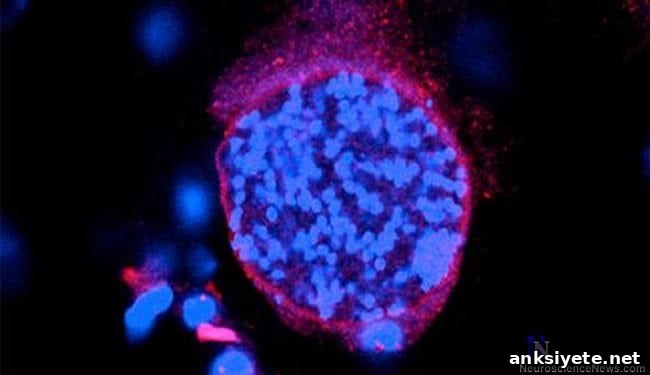
Common Anesthetics May Increase Tau Spread Linked to Alzheimer’s

featured 74071

Summary: Sevoflurane, a commonly used inhaled anesthetic, prompts tau protein to move out of neurons and into microglia. This transfer triggers microglial production of interleukin-6, driving inflammation and measurable cognitive decline in experimental models. Source: Mass General Tau protein accumulation and its spread across brain cells are central features of Alzheimer’s disease and related tauopathies. … Read more

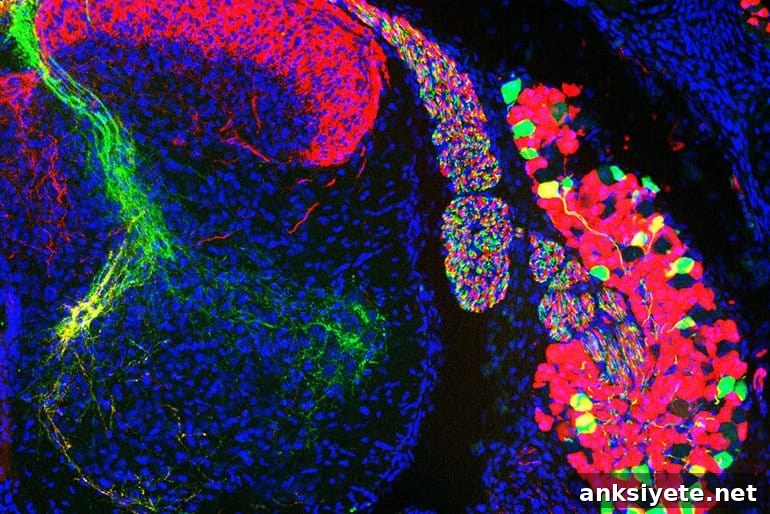
AI-Powered MRI Mapping for Brain Tumors

featured 25069

Researchers have identified a protein that makes the edges of brain tumours visible on magnetic resonance imaging (MRI), offering a clearer map of where the cancer may spread. Presented at the National Cancer Research Institute’s annual conference in Liverpool, this laboratory discovery may pave the way for clinical trials focused on improving the accuracy of … Read more

Genes Linked to Proprioception: What Controls the Sixth Sense

featured 88843

Summary: Researchers have identified molecular and genetic markers that distinguish proprioceptive sensory neurons linked to different muscle groups. These discoveries reveal how these neurons guide coordinated movement and offer directions for therapies and neuroprosthetic design. Source: Max Delbrück Center Coordinated movement depends on specialized sensory neurons in muscles and joints. Without these cells, the brain … Read more

De Novo Genetic Mutations Linked to Schizophrenia

featured 95304

Summary: New research links schizophrenia risk to somatic copy-number variants—mutations that arise after conception rather than being inherited—highlighting recurrent disruptions in the genes NRXN1 and ABCB11. A large analysis of genotype-marker data from more than 20,000 blood samples found that somatic copy-number variants (sCNVs) that occur early in development are more frequent in people with … Read more

Scientists Uncover Potential Pathway to a COVID-19 Cure

featured 86556

Summary: The compound salen shows strong binding capacity to several SARS-CoV-2 proteins, suggesting potential for development of new therapeutic strategies against COVID-19. Source: Ural Federal University Researchers report that salen can effectively bind to multiple proteins of the SARS-CoV-2 coronavirus. Using molecular docking simulations, the research team identified that salen and its tautomeric forms display … Read more

Researchers Reveal Mechanisms Guiding Brain Cell Orientation

featured 10988

Transmembrane protein NG2 directs oligodendrocyte precursor cells to wound sites — Publication in the Journal of Neuroscience When the central nervous system (CNS) is injured, oligodendrocyte precursor cells (OPCs) migrate toward lesions and help rebuild myelin sheaths around demyelinated axons. Researchers at the Institute of Molecular Cell Biology, Johannes Gutenberg University Mainz (JGU), have identified … Read more

How Drinking Too Much Coffee Harms Your Health

featured 65144

Summary: New research indicates that excessive coffee consumption may raise the risk of osteoarthritis, other arthropathies and obesity. The study suggests drinking more than six cups of coffee a day could increase the likelihood of adverse health outcomes. Source: University of South Australia Coffee is one of the world’s most popular beverages—whether cappuccino, latte or … Read more

Toxoplasma gondii Directly Alters Brain Chemistry and Dopamine

featured 5522

A research team at the University of Leeds has demonstrated that infection by the brain parasite Toxoplasma gondii, which is estimated to be present in roughly 10–20% of the UK population, can directly alter the production of dopamine, a crucial chemical messenger in the brain. These findings represent the first clear evidence that a mammalian … Read more

How the Adolescent Brain Develops: New Sequence Insights

featured 92261

Summary: During adolescence, brain areas that support emotion, social interaction, and complex thinking remain more plastic—more able to change and adapt—than sensory regions. This prolonged plasticity makes youth particularly sensitive to socioeconomic environments throughout adolescence. Source: University of Pennsylvania (Penn Medicine) New research from Penn Medicine shows that brain development follows a clear sequence rather … Read more

New Study Finds Link Between Bullying and Eating Disorders

featured 25548

Childhood bullying may raise the risk of eating disorder symptoms not only for victims but also for those who bully others, according to new research. Researchers from Duke Medicine and the University of North Carolina School of Medicine analyzed data from 1,420 young people and found that those who acted as bullies were significantly more … Read more