
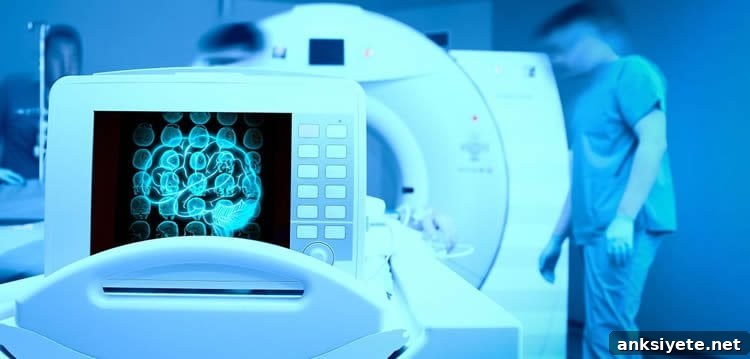
Researchers have identified a protein that makes the edges of brain tumours visible on magnetic resonance imaging (MRI), offering a clearer map of where the cancer may spread.
Presented at the National Cancer Research Institute’s annual conference in Liverpool, this laboratory discovery may pave the way for clinical trials focused on improving the accuracy of brain tumour imaging and treatment planning.
For the first time, scientists have pinpointed a protein—VCAM-1—expressed on blood vessels at the invasive edge of brain tumours. This inflammatory response marks the regions where tumour cells are most likely to infiltrate surrounding tissue. By detecting and mapping that inflammation, researchers gain a more complete view of tumour extent than conventional imaging alone provides.
The team developed a specialised contrast dye that binds to VCAM-1 on the inner lining of blood vessels. Because the protein sits on the vessel interior, it can be targeted from the bloodstream and visualised by MRI. This approach highlights areas that standard clinical MRI techniques often miss.
Current MRI scans commonly reveal tumours by detecting leaky blood vessels, a hallmark of many established tumour masses. However, blood vessels at the advancing tumour edge frequently remain intact and non-leaky, so those invasive cells can be invisible on routine imaging. Mapping VCAM-1-driven inflammation addresses this gap, showing the boundary where aggressive cells are most likely to spread.
Accurately identifying the tumour edge is crucial. If surgeons or radiotherapists cannot see the full extent of invasive cells, the remaining tumour tissue can lead to recurrence. This research suggests a practical route to improve preoperative planning and radiotherapy targeting, potentially reducing the chances of residual disease and regrowth.
Professor Nicola Sibson, study author and Cancer Research UK scientist at the University of Oxford, explained the clinical importance: ‘If we can’t map the edge of the tumour, surgery and radiotherapy often fail to remove aggressive tumour cells – and the brain tumour can grow back. This research shows that we can improve imaging of brain tumours, which could help both surgeons and radiotherapists with more effective treatment.’
Professor Charlie Swanton, chair of the NCRI and Cancer Research UK scientist at the Francis Crick Institute, commented on the broader impact: ‘Brain tumours are very difficult to treat and take the lives of too many patients each year. This important research identifying the edge of tumours—the area most likely to grow and spread—has potential to really help doctors treat patients and help save more lives.’
Harpal Kumar, chief executive of Cancer Research UK, highlighted the potential gains for patients: ‘Brain cancers continue to have very poor survival rates, which is why research into how to treat them is a top priority for Cancer Research UK. Being able to delineate the edges of brain tumours is an exciting step towards better surgery and radiotherapy for patients. The holy grail would be to be able to completely remove brain tumours with the help of this new imaging technique—reducing recurrence of the disease and saving more lives.’
Funding: This study was funded by Cancer Research UK and the Medical Research Council.
Source: Oxford University
Image Credit: The image is adapted from the Oxford University press release
Original Research: The findings were presented at the NCRI Cancer Conference in Liverpool during the week of November 1, 2015.
Each year in the UK, roughly 9,700 people are diagnosed with a tumour of the brain or central nervous system. Better imaging tools that reveal the invasive margins of tumours could improve surgical decisions, refine radiotherapy fields, and support the development of targeted therapies. The identification of VCAM-1 as a visible biomarker on vascular endothelium at the tumour edge represents a promising step toward more precise, individualized treatment for patients with brain tumours.