Unsupervised Screen Time Linked to Language Delays in Kids

featured 115991

Summary: For preschool children who already struggle with speech and vocabulary, unsupervised time alone with a tablet or television is not just a harmless distraction—it can be a missed chance to practice vital social skills and may contribute to serious behavioral and emotional problems. A longitudinal study of 546 preschoolers examined how solitary, unsupervised screen … Read more
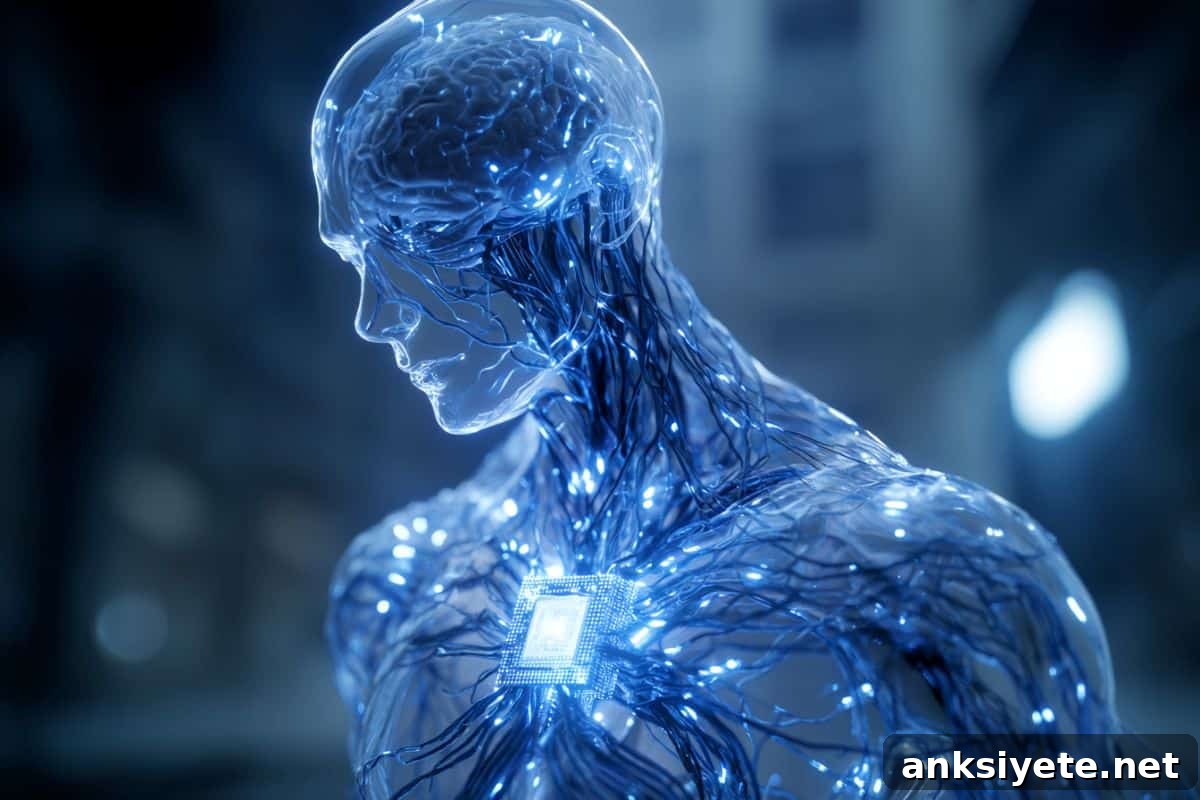
AI Body Gap: Why Robots Need Internal Sensing for Safety

featured 115986

Summary: When you reach for a saltshaker, your brain is doing much more than locating an object — it’s drawing on balance, tactile feedback, and internal signals such as thirst or fatigue. A new paper from UCLA argues that today’s leading AI systems, including multimodal models like ChatGPT and Gemini, are missing a crucial component: … Read more

Wetware AI: Living Neurons Trained to Model Chaotic Systems

featured 115982

Summary: The boundary between biology and computer science has moved closer: researchers have trained living rat neurons to perform complex machine-learning tasks. By embedding cultured neuronal networks in a reservoir computing framework and applying an online training method, the team demonstrated that living neural tissue can serve as a real-time computational resource. Using an approach … Read more

Mapping the Brain’s Internal Clock

featured 115979

Summary: From a tennis player timing a 100 mph serve to a driver deciding whether to stop at a yellow light, the brain is continuously computing duration. A new study has, for the first time, traced a cortical “stopwatch” that converts raw sensory input into the subjective sense of time. Using high-field functional MRI, researchers … Read more

How Single Cone Cells Give Us Our Sharpest Vision

featured 115975

Summary: Researchers have resolved a long-standing question about the source of our highest visual detail: whether it arises in the eye, the brain, or both. New evidence shows that the sharpest human vision depends on isolated signals from individual cone photoreceptors in the fovea, carried along dedicated neural pathways to the brain without losing spatial … Read more

How Your Neighborhood and Country Affect Brain Aging

featured 115971

Summary: Brain aging is shaped not only by genes and lifestyle but by the environments and societies we live in. A large international study of 18,701 people from 34 countries mapped the “exposome”—the lifetime collection of physical, social, and political exposures—and found that these factors interact in complex, multiplying ways to influence the pace of … Read more

Noninvasive Stimulation Engages Brain Memory Center

featured 115963

Summary: For decades the hippocampus — a deep brain region essential for memory and emotion — was regarded as inaccessible to noninvasive treatments because of its depth beneath the skull. Influencing it typically required surgery or systemic drugs. For the first time, researchers have shown that Transcranial Magnetic Stimulation (TMS) applied to the brain’s surface … Read more

How Octopus Arms Taste Their Way to a Mate

featured 115955

Summary: It is a classic “boy meets girl” story—if the boy is a California two-spot octopus and the girl is hidden behind a black divider. A major study reveals that male octopuses use a specialized arm, the hectocotylus, as a sophisticated sensory probe. That arm does more than deliver sperm: it “tastes” for female sex … Read more

Plug and Play Sensor Tracks Developing Brain Activity

featured 115951

Summary: Human cerebral organoids—small, lab-grown clusters of human brain tissue—are a powerful model for studying neurodevelopmental disorders such as Angelman syndrome. Progress has been limited by the high cost and low throughput of existing electrophysiology sensors, often restricting studies to fewer than ten organoids. Researchers have overcome this barrier with a new sensor platform called … Read more

AI Architect for Custom DNA Design

featured 115947

Summary: Understanding the molecular “switches” that control when and where genes turn on remains a major challenge in biology. Recent advances in artificial intelligence are beginning to decode this regulatory code, but tools have often been fragmented and hard to reuse. A new software suite, CREsted, unifies these steps into a single, scalable framework that … Read more