
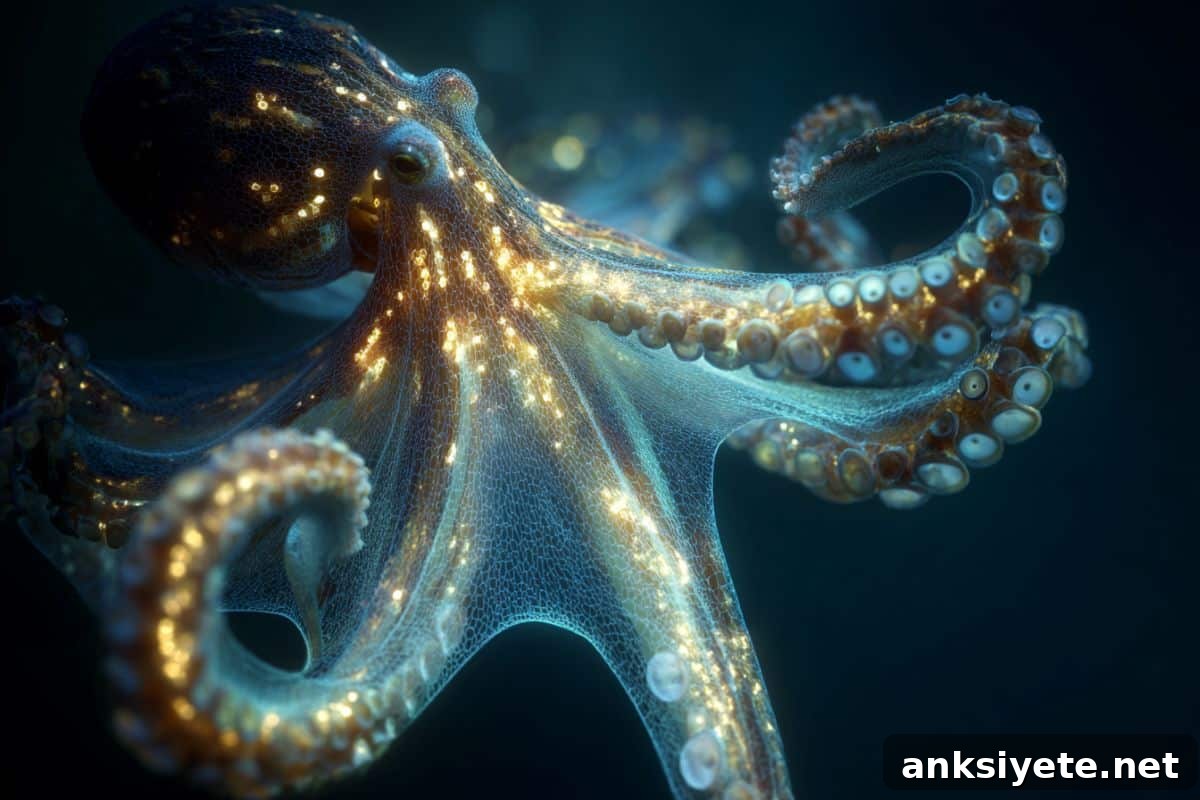
Summary: It is a classic “boy meets girl” story—if the boy is a California two-spot octopus and the girl is hidden behind a black divider. A major study reveals that male octopuses use a specialized arm, the hectocotylus, as a sophisticated sensory probe. That arm does more than deliver sperm: it “tastes” for female sex hormones such as progesterone using a contact-based chemosensory system.
Researchers demonstrated that males can identify a female and begin mating through small openings in a barrier without seeing her, proving the arms possess a semi-autonomous chemical sensing capability. Even when severed from the body, a hectocotylus can detect female hormones and respond, acting like an independent sensory “brain” for mate recognition.
Key Facts
- The multipurpose arm: The hectocotylus is a specialized reproductive limb used to seek, sense, and deposit sperm. It contains a groove that carries a sperm packet (spermatophore) to the female.
- Autonomous neural control: Most of an octopus’s roughly 500 million neurons are distributed in its arms. The study showed that an amputated hectocotylus will move and respond when exposed to female hormones.
- Progesterone as a mating cue: Females release progesterone-like molecules. Males were drawn to objects coated with progesterone but ignored tubes treated with other chemicals.
- CRT1 receptor identified: The researchers pinpointed a receptor named CRT1 that responds strongly to progesterone. CRT1 evolved from an ancestral receptor involved in detecting microbes on prey and has been repurposed to detect sex steroids.
- Evolutionary implications: This chemotactile system lets solitary, nocturnal octopuses reliably recognize mates of their own species in dark or murky conditions, reinforcing reproductive barriers and potentially driving species diversification.
Source: Harvard
A tactile courtship: octopus mating by touch and chemistry
A new study from Harvard biologists decodes how octopuses locate and identify mates using a “taste-by-touch” sense. The research, featured on the cover of Science, shows that one male arm—the hectocotylus—functions both as a delivery device for sperm and as a highly sensitive chemosensory organ tuned to female hormones.
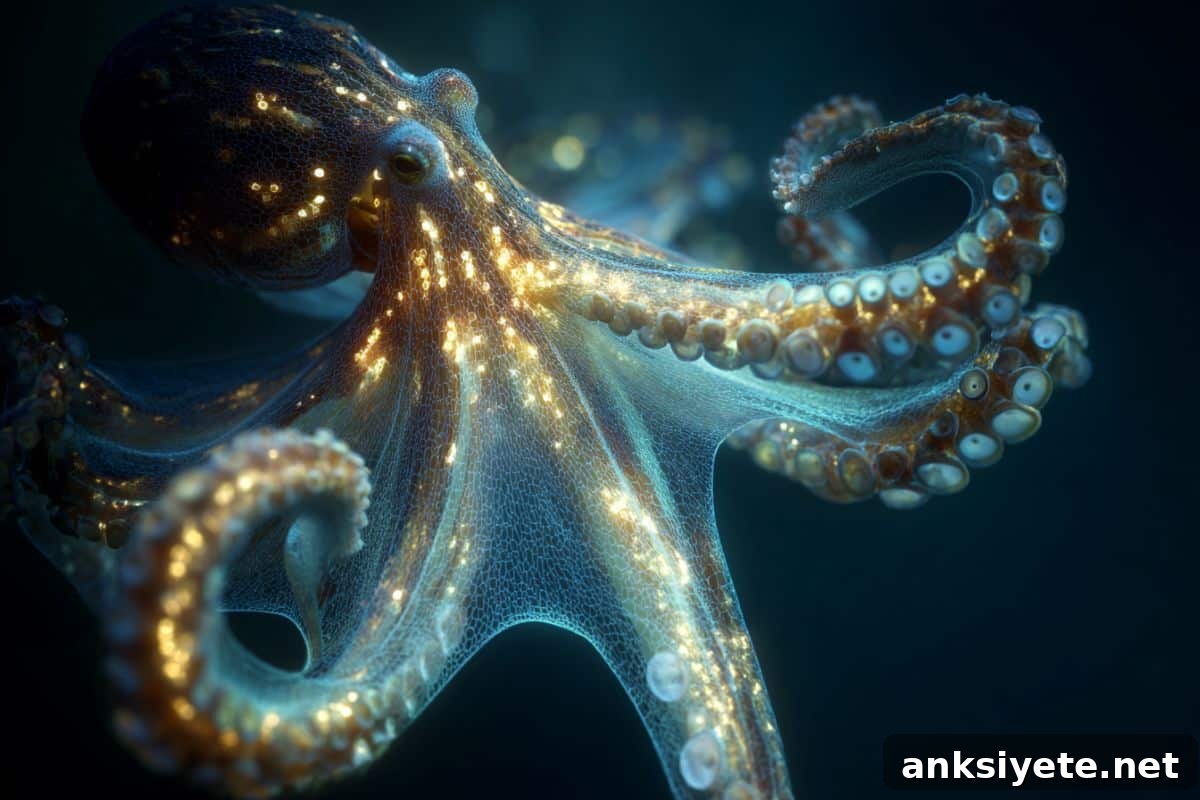
“The specialized mating arm was known for a long time, but it wasn’t appreciated that it also acts as a sensory organ,” said Nicholas Bellono, Professor of Molecular and Cellular Biology and senior author. “This mechanism explains how octopuses recognize mates and accomplish fertilization in low-visibility environments.”
Among male cephalopods, one arm is modified into a hectocotylus dedicated to reproduction. During mating it reaches into the female’s mantle cavity, locates the oviduct, and deposits a spermatophore. The arm also includes a groove to guide the spermatophore from the male’s mantle to the arm tip.
Although Aristotle and generations of naturalists described the hectocotylus, its sensory role was poorly understood until this work. The Bellono lab has studied cephalopod sensory biology extensively: octopus arms behave like muscular, exploratory tongues and each sucker contains thousands of sensory cells. With most of the animal’s neurons situated in the arms rather than the central brain, these appendages can operate with a high degree of autonomy.
The discovery began somewhat serendipitously. Postdoctoral researcher Pablo Villar, surveying octopus receptors, noticed the hectocotylus contained many of the same sensory proteins found in other arms—despite males rarely using it for foraging or exploration. That observation prompted behavioral experiments to see how the animals actually use the arm in mating.
Using California two-spot octopuses (Octopus bimaculoides), the team placed males and females on opposite sides of a black barrier with small arm-sized openings. Males repeatedly extended the hectocotylus through the gaps, found the female mantle, and inserted the arm tip to deliver the spermatophore. Females often allowed the contact even while remaining physically separated. The couples sometimes paused motion for over an hour during sperm transfer.
Males did not attempt mating when paired with other males, and successful encounters occurred even in complete darkness—evidence that a chemical cue from females guides mating behavior. Tissue analysis revealed female reproductive organs were rich in precursors to the steroid progesterone, and experimental manipulation confirmed its role.
In one test, an amputated hectocotylus exposed to progesterone began vigorous, mating-like movements. In another, males presented with tubes coated in progesterone behaved as if the tubes were female mantles, while tubes treated with other chemicals were ignored. Microscopy and single-cell sequencing showed the hectocotylus tip is densely populated with sensory cells and nerve endings specialized for contact chemosensation.
Molecular screening isolated a single receptor type, CRT1, as strongly responsive to progesterone. CRT1 appears to have evolved from receptors that originally detected microbes on prey surfaces, and chemotactile receptors in cephalopods show signatures of rapid evolution. Such diversification likely fine-tunes mate recognition and reduces hybridization between closely related species.
Octopuses are largely solitary and often encounter potential mates only rarely. Their foraging strategy—sweeping arms across seafloor terrain—means reliable, contact-based mate detection provides an effective reproductive filter. Bellono notes these sensory specializations illustrate how behavior and sensory biology contribute to reproductive isolation and species formation, a central question in evolutionary biology.
The work also highlights the value of open-ended, curiosity-driven science. “Following unexpected observations in diverse organisms can reveal fundamental principles—not only about octopus mating but about how sensory systems influence the origin of species,” Bellono said.
Key Questions Answered:
Q: Can an octopus really mate with something it can’t see?
A: Yes. In laboratory trials, males extended the hectocotylus through small holes in a dark divider and located the female mantle purely by chemical contact, without visual cues.
Q: Why does the arm keep moving after it’s cut off?
A: Octopus arms contain large networks of neurons and many sensory circuits. The hectocotylus has local neural circuits that drive progesterone-seeking reflexes independent of the central brain.
Q: What does this tell us about evolution?
A: This system illustrates how rapidly evolving sensory receptors can act as species-specific mate recognition mechanisms. Chemotactile receptors tuned to conserved hormones like progesterone help prevent cross-species mating and promote diversification.
Editorial Notes:
- This article was edited by a Neuroscience News editor.
- The journal paper was reviewed in full by the editorial team.
- Additional context and editing were provided by staff.
About this evolutionary neuroscience research news
Author: Kermit Pattison
Source: Harvard
Contact: Kermit Pattison – Harvard
Image: Image credit: Neuroscience News
Original Research: Closed access. “A sensory system for mating in octopus” by Pablo S. Villar, Hao Jiang, Tatiana Shugaeva, Emma L. Berdan, Arpita Kulkarni, Makoto Hiroi, Giovanni Masucci, Sam Reiter, Erik Lindahl, Rebecca J. Howard, Ryan E. Hibbs, and Nicholas W. Bellono. Science. DOI: 10.1126/science.aec9652
Abstract
A sensory system for mating in octopus
Sensory systems involved in mate recognition preserve species boundaries and influence diversification. Understanding how molecules and receptors evolve to perform this function is essential for explaining biodiversity. Male octopuses use the hectocotylus to identify females and navigate to the oviduct to deliver sperm. The hectocotylus is both a sensory and mating organ that relies on contact-dependent chemosensation of progesterone, a conserved ovarian steroid. Chemotactile receptors for progesterone were identified, and their structural evolution from ancestral neurotransmitter receptors was characterized. These results reveal principles by which sensory innovations shape reproductive behavior and suggest mechanisms through which sensory evolution contributes to species diversification.