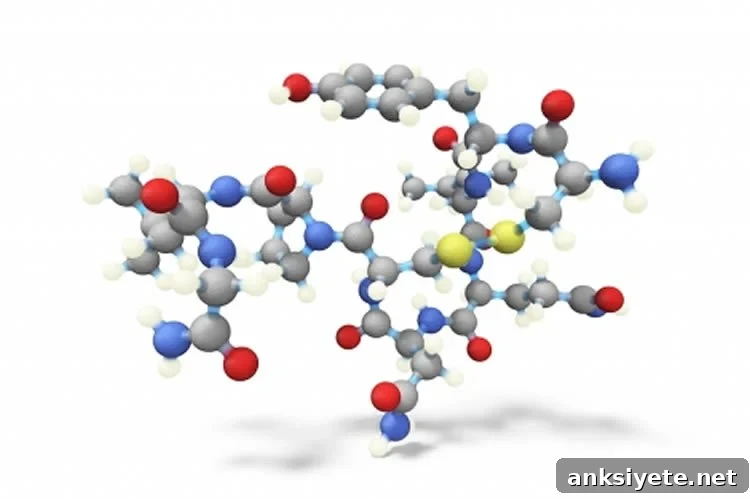
Summary: A new clinical trial will evaluate whether oxytocin can reduce PTSD symptoms and related alcohol abuse in active-duty military personnel.
Source: UCSF
Nightmares. Intrusive memories. Avoidance of certain places. Uncontrolled anger. Persistent fear. Survivor’s guilt.
These are common symptoms of post-traumatic stress disorder (PTSD), a condition that affects a disproportionate number of U.S. combat veterans and active-duty service members. For many of those with PTSD, alcohol misuse becomes a way to cope—creating a dual public health challenge: treating trauma-related symptoms while addressing substance abuse.
A new approach: testing oxytocin
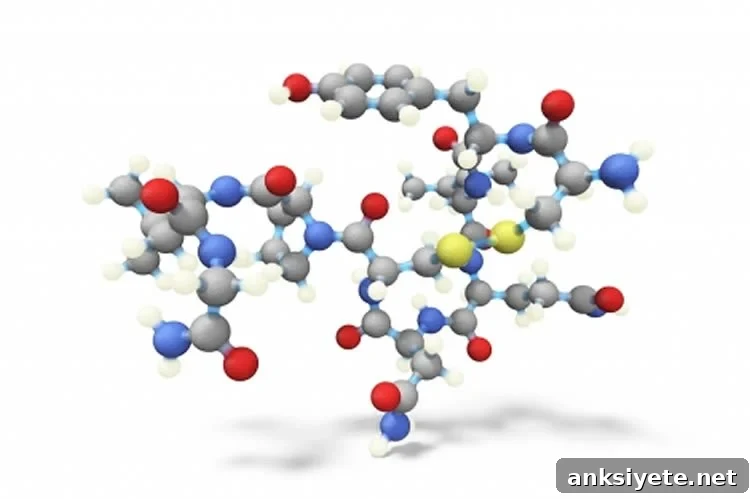
Researchers at the University of California, San Francisco (UCSF) are launching a clinical trial to explore whether oxytocin, a naturally occurring hormone involved in social bonding and stress regulation, can help reduce the stress response triggered by trauma and, in turn, lessen PTSD symptoms and associated alcohol misuse.
Jennifer Mitchell, PhD, an associate professor of neurology at UCSF whose work focuses on the intersection of PTSD and substance use disorders, notes a significant cultural shift within the military. Where once soldiers showing signs of trauma might have been discharged, the military is increasingly recognizing PTSD as a treatable condition and is more willing to support interventions that preserve service members’ careers and well-being.
“The military’s changing attitude allows us to test treatments directly with active-duty personnel,” Mitchell says. “That willingness opens the door to practical, evidence-based options that could help service members remain functional while receiving care.”
Why oxytocin?
Oxytocin is sometimes called the “love hormone” because it is released during childbirth, lactation, and close social interactions. It is present in both men and women and plays roles in social behavior, trust, empathy, and stress modulation. Researchers have been investigating oxytocin’s therapeutic potential across several conditions—such as autism, schizophrenia, substance use disorders, and stress-related illnesses—because many of these disorders share overlapping stress-response pathways.
Mitchell and colleagues hypothesize that oxytocin may blunt the physiological and psychological responses to trauma, helping people with PTSD manage symptoms such as hyperarousal, intrusive thoughts, and social withdrawal. If the hormone can reduce the intensity of the stress response, it may also decrease the drive to self-medicate with alcohol.
Effects on bonding and performance
Some observers have expressed concern that oxytocin could alter service members’ judgment or operational effectiveness by changing social bonds. Mitchell cautions against simplistic assumptions about the hormone. “Oxytocin does influence how we form social bonds and how we define ‘us’ versus ‘them,’” she explains, “but its effects are complex. In people whose social circles have narrowed following trauma, oxytocin might help broaden their sense of connection rather than impair performance.”
Early studies and Mitchell’s prior research on oxytocin for substance use suggest the hormone does not reduce functional capacity in operational settings. Instead, its stress-modulating properties may support better emotional regulation and resilience.
The trial design
Mitchell is beginning a controlled clinical trial at a mental health facility at Fort Gordon in Augusta, Georgia. The study will enroll roughly 65 volunteers from the active-duty population. Participants will receive single doses of oxytocin and then undergo standardized stress-inducing tests to measure physiological and psychological responses.
Researchers will compare stress markers, subjective distress, and behavioral responses before and after oxytocin administration. The study aims to determine whether oxytocin reliably reduces acute stress reactions and whether those reductions translate into improvements in PTSD symptoms and decreases in alcohol use or cravings.
Implications beyond the military
If oxytocin proves effective at reducing trauma-related stress responses, the implications could extend well beyond military populations. PTSD and comorbid substance use are costly—to individuals, families, and health systems. Oxytocin is inexpensive, widely available, and easy to administer, which could make it an attractive adjunctive treatment for civilian PTSD patients as well.
“The economic and human burden of PTSD and alcohol misuse is enormous,” Mitchell says. “If oxytocin can meaningfully reduce stress and help prevent harmful coping behaviors, it could become a valuable tool in both military and civilian clinical settings.”
Source: UCSF. This article summarizes a planned clinical trial investigating oxytocin as a potential treatment for PTSD and related alcohol misuse in active-duty military personnel. Results will be reported when the study is complete.
Image credit: Image adapted from UCSF materials. No external links included in this summary.