
Looking at a brain tumor’s epigenetic signature may help guide therapy.
A large, multinational analysis of the molecular features of gliomas—the most common malignant brain tumor—shows how epigenetic patterns can clarify why some patients with apparently slow-growing tumors decline rapidly while others with aggressive tumors survive far longer. The research proposes a refined glioma classification based on DNA methylation profiles and related molecular markers that could improve prognosis, influence clinical decision-making, and point toward more targeted therapies.
The study was led by investigators at Columbia University Medical Center (CUMC), Ribeirão Preto Medical School (FMRP) at the University of São Paulo (USP), and The University of Texas MD Anderson Cancer Center and was published in the journal Cell.
Today, neuropathologists commonly classify gliomas as low-grade or high-grade by examining tumor tissue under the microscope. While histology often separates clearly indolent from clearly aggressive tumors, that approach can misclassify a meaningful fraction of cases, producing under- or over-treatment. The new analysis shows that integrating epigenetic and genomic data can more precisely predict tumor behavior and better stratify patients for appropriate therapy.
Previous work had identified IDH (isocitrate dehydrogenase) mutations as a key marker: IDH-mutant gliomas generally behave less aggressively than IDH-wildtype tumors. But IDH status alone did not explain all clinical variation—some IDH-mutant tumors progressed quickly and some IDH-wildtype tumors had unexpectedly favorable outcomes. The current study sought to resolve these inconsistencies by examining DNA methylation, an epigenetic mechanism that controls gene expression, alongside other molecular features.
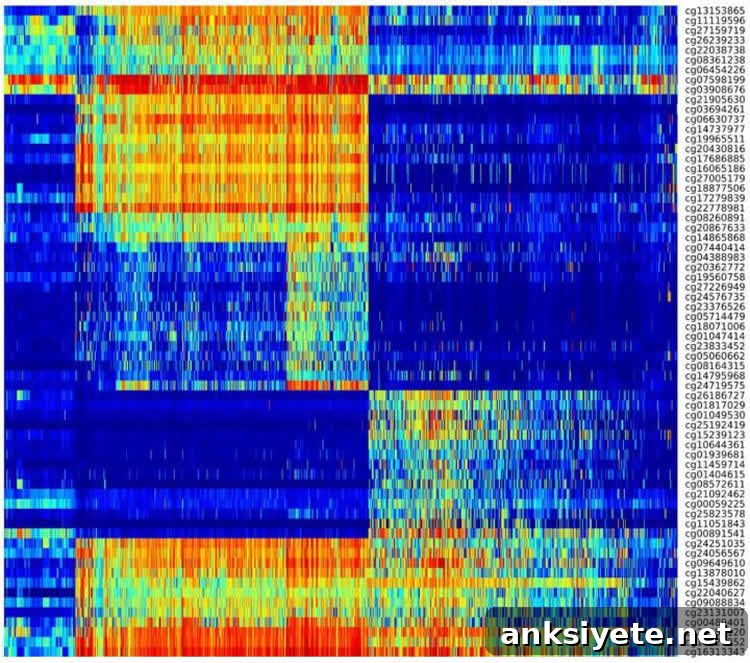
Researchers analyzed 1,122 low- and high-grade adult diffuse glioma samples from The Cancer Genome Atlas (TCGA). They mapped DNA methylation patterns and integrated them with genomic alterations to identify molecular subtypes. The analysis revealed that, within IDH-mutant gliomas, the degree of DNA methylation is the strongest predictor of progression: tumors with extensive methylation tended to progress slowly, while a small subset (around 6 percent) with markedly lower methylation progressed rapidly despite appearing similar to other IDH-mutant tumors by histology.
Conversely, among IDH-wildtype gliomas—typically the more lethal group—about 6 percent exhibited molecular features associated with better clinical outcomes. Those tumors resembled pilocytic astrocytomas, a generally favorable childhood brain tumor, in their molecular profile, suggesting a distinct biology that may explain their comparatively good survival.
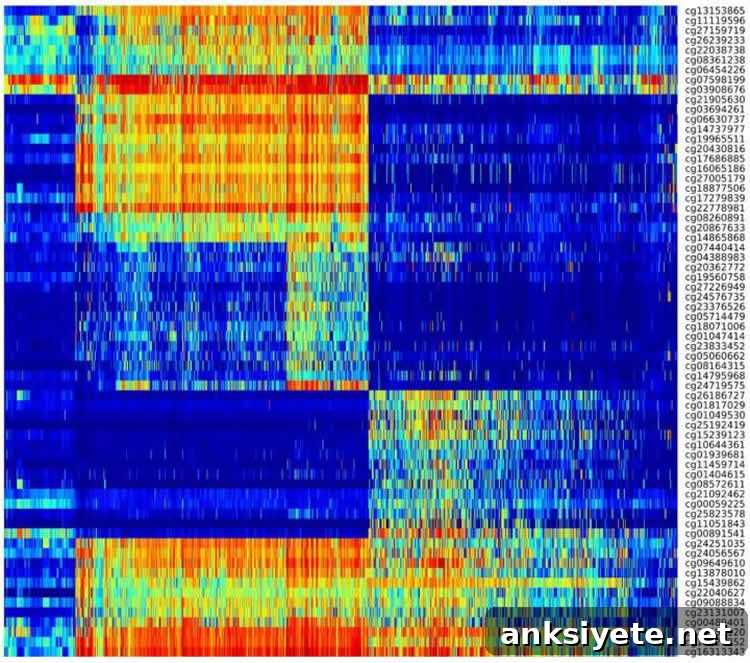
The study authors emphasize that DNA methylation profiling refines glioma classification beyond histology and IDH status, defining clinically meaningful subgroups that span traditional low- and high-grade categories. As co-senior author Houtan Noushmehr, PhD, notes, combining epigenomic signatures with genomic data revealed unexpected mixtures of low- and high-grade tumors within the same epigenetic subtypes and offered new insight into how gliomas progress between grades.
Senior co-author Roel Verhaak, PhD, highlighted that the work expands understanding of the somatic alteration landscape in glioma and underscores DNA methylation profiles as a practical approach for clinical classification. In addition to methylation subtypes, the integrated analysis identified previously unrecognized genetic alterations that may contribute to glioma development and could serve as potential therapeutic targets.
While this study focused on molecular classification rather than prescribing specific therapies, the findings have immediate clinical implications. The methylation-based classification can help clinicians identify patients with IDH-mutant tumors who may require closer monitoring or more aggressive treatment, and conversely detect IDH-wildtype cases that might avoid unnecessarily intensive therapy.
The researchers have submitted a patent for molecular probes that can predict glioma clinical outcomes. The authors report no other conflicts of interest.
Funding: This study was supported by grants from the São Paulo Research Foundation (FAPESP) (2015/07925-5, 2015/02844-7, 2014/08321-3, 2014/02245-3), the National Institutes of Health (U24CA143883, U24CA143858, U24CA143840, U24CA143799, U24CA143835, U24CA143845, U24CA143882, U24CA143867, U24CA143866, U24CA143848, U24CA144025, U54HG003067, U54HG003079, U54HG003273, U24CA126543, U24CA126544, U24CA126546, U24CA126551, U24CA126554, U24CA126561, U24CA126563, U24CA143731, U24CA143843, P30CA016672, P50 CA127001, R01 CA190121, P01 CA085878), and the Cancer Prevention & Research Institute of Texas.
Source: Karin Eskenazi – Columbia University Medical Center
Image Credit: Lab of Antonio Iavarone/Columbia University Medical Center
Abstract
Molecular Profiling Reveals Biologically Discrete Subsets and Pathways of Progression in Diffuse Glioma
Highlights
• Comprehensive molecular profiling of 1,122 adult diffuse grade II, III, and IV gliomas
• Telomere length and telomere maintenance defined by somatic alterations
• DNA methylation profiling reveals subtypes of IDH-mutant and IDH-wildtype glioma
• Integrated molecular analysis of progression from low-grade to high-grade disease
Summary
Therapy development for adult diffuse glioma has been limited by incomplete knowledge of the somatic alterations that drive these tumors and by suboptimal disease classification. Using integrated molecular data from 1,122 diffuse gliomas, the study defines genes and pathways associated with glioma subtypes and clarifies relationships among genomic alterations, telomere maintenance mechanisms, and DNA methylation patterns. ATRX alterations, but not TERT promoter mutations, were associated with increased telomere length. DNA methylation profiles recapitulated and refined recent classifications based on IDH mutation and 1p/19q co-deletion, identifying clinically relevant subgroups. Notably, one IDH-mutant subtype showed DNA demethylation and poor outcome, while a subset of IDH-wildtype diffuse gliomas resembled pilocytic astrocytoma and had relatively favorable survival. A clearer molecular taxonomy of glioma can guide prognosis and inform future therapeutic strategies.
The full study, including the complete list of contributors and detailed methods, was published in Cell under the title “Molecular Profiling Reveals Biologically Discrete Subsets and Pathways of Progression in Diffuse Glioma.”