
Summary: Researchers at the University of Missouri developed a new transgenic rat model that replicates key features of Alzheimer’s disease, including amyloid-β plaque accumulation and cerebrovascular changes, and can be used to study disease mechanisms and potential interventions.
Source: University of Missouri Columbia.
Alzheimer’s disease affects more than 5.5 million Americans and ranks among the most expensive conditions to treat, according to the Alzheimer’s Association. It is marked by progressive accumulation of protein plaques in the brain, yet suitable animal models that reproduce both the behavioral and vascular features of the disease are limited. A research team at the University of Missouri has created a transgenic rat model that expresses human amyloid precursor protein (APP) and presenilin 1 (PS1), enabling studies of amyloid-β accumulation, cerebral amyloid angiopathy, and memory deficits. The work was published in PLOS ONE.
“One of the defining traits of Alzheimer’s is the progressive accumulation of amyloid-β plaques in the brain,” said Yuksel Agca, associate professor of veterinary pathology and a researcher in the Comparative Medicine Program in the MU College of Veterinary Medicine. “Two proteins, APP and PS1, are linked to Alzheimer’s in humans, and those targets have guided many experimental studies. By modeling APP and PS1 together in rats, we can study how amyloid-β accumulates and how that accumulation affects both cognition and the brain’s vasculature, which may point to strategies to reduce harmful plaque formation.”
The investigators generated double transgenic female rats (APP+PS1) that overexpress human APP and PS1 and compared them with single transgenic APP21 rats (overexpressing APP only) and wild-type Fischer rats. To evaluate learning and spatial memory, they used the Barnes maze, a behavioral test that records how rodents navigate a circular platform to find an escape hole based on spatial cues. During the acquisition phase, both APP21 and APP+PS1 rats committed significantly more errors than wild-type controls, indicating slower learning. After a retention interval, the APP+PS1 rats made notably more errors than both APP21 and wild-type rats, demonstrating impaired memory retention consistent with cognitive decline.
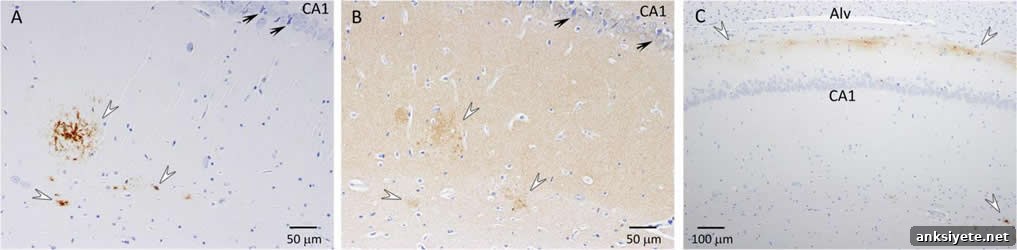
Following behavioral testing, the team measured amyloid-β levels via serum assays and examined brain tissue by immunohistochemistry and histopathology. The APP+PS1 rats showed widespread amyloid-β deposits in the hippocampus and dense plaques in cortical regions; many of these dense plaques also contained tau protein. In addition to parenchymal plaques, the APP+PS1 animals exhibited significant vascular pathology: extensive amyloid deposition in cortical and leptomeningeal blood vessel walls consistent with cerebral amyloid angiopathy, venous collagenosis, enlarged blood vessels, and expanded perivascular spaces. These vascular changes mirror features commonly seen in human Alzheimer’s disease and contribute to impaired brain function and clearance of toxic proteins.
“These rat models offer a valuable translational tool,” Agca said. “Rats have shorter lifespans and larger brains than mice, which can make certain experimental and surgical approaches easier and faster to evaluate. A robust rat model that reproduces both cognitive deficits and vascular pathology provides an opportunity to test therapeutic strategies, investigate mechanisms of amyloid accumulation and clearance, and explore lifestyle or pharmacological interventions that could delay onset or progression of Alzheimer’s.”
Agca also emphasized that while animal models are essential for understanding disease processes and testing treatments, lifestyle factors such as a balanced diet and regular exercise are known to support brain health and may help reduce the risk or delay the progression of protein accumulation in people.
The study, titled “Memory deficiency, cerebral amyloid angiopathy, and amyloid-β plaques in APP+PS1 double transgenic rat model of Alzheimer’s disease,” appears in PLOS ONE. Funding was provided by University of Missouri Research Incentive Funds and the National Institutes of Health (P40 OD011062). Contributors included Diana Klakotskaia, a graduate student in the Department of Psychological Science in the MU College of Arts and Science; Cansu Agca, a researcher in the Department of Veterinary Pathobiology; Rachel A. Richardson; Edward G. Stopa; Todd R. Schachtman; and Yuksel Agca. The authors note that the content is their responsibility and does not necessarily represent official views of the funding agencies.
Funding: National Institutes of Health and University of Missouri research support.
Source: Jeff Sossamon, University of Missouri Columbia.
Publisher: NeuroscienceNews.com (original press coverage).
Image credit: Yuksel Agca, MU College of Veterinary Medicine.
Original research: Open access article in PLOS ONE: “Memory deficiency, cerebral amyloid angiopathy, and amyloid-β plaques in APP+PS1 double transgenic rat model of Alzheimer’s disease” by Diana Klakotskaia, Cansu Agca, Rachel A. Richardson, Edward G. Stopa, Todd R. Schachtman, and Yuksel Agca. DOI: 10.1371/journal.pone.0195469.
Memory deficiency, cerebral amyloid angiopathy, and amyloid-β plaques in APP+PS1 double transgenic rat model of Alzheimer’s disease
In transgenic rat models, researchers compared double transgenic female APP+PS1 rats, single transgenic APP21 rats, and wild-type Fischer rats to assess differences in cognition and brain pathology. Behavioral testing with the Barnes maze revealed that APP21 and APP+PS1 rats learned more slowly than wild-type controls, and APP+PS1 rats showed impaired memory retention. Immunohistochemistry demonstrated extensive amyloid-β accumulation in the hippocampus and dense cortical plaques containing tau in APP+PS1 brains. Vascular pathology included cerebral amyloid angiopathy with Aβ deposits in vessel walls, venous collagenosis, enlarged blood vessels, and expanded perivascular spaces. Together, these behavioral and histopathological findings indicate that the APP+PS1 rat model captures several core features of Alzheimer’s disease and may serve as a useful platform for future studies of disease mechanisms and interventions.