
Summary: A new study reports on the role a microRNA plays in major depressive disorder.
Source: University of Alabama at Birmingham.
A University of Alabama at Birmingham (UAB) study identifies the microRNA miR-124-3p as an important molecular player in major depressive disorder (MDD).
Researchers at UAB report that the small, neuron-enriched microRNA miR-124-3p is consistently elevated in multiple models and samples of depression. The study found higher levels of miR-124-3p in the prefrontal cortex of rodents subjected to corticosterone-induced stress, in postmortem brain tissue from humans diagnosed with MDD, and in blood serum from living patients with MDD who were not taking antidepressants. These convergent findings suggest miR-124-3p may be both a contributor to MDD pathogenesis and a candidate biomarker for diagnosis and treatment development.
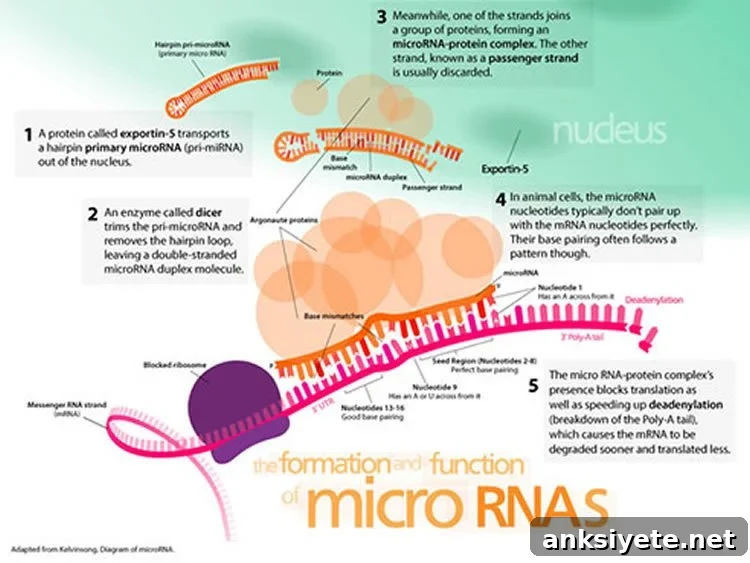
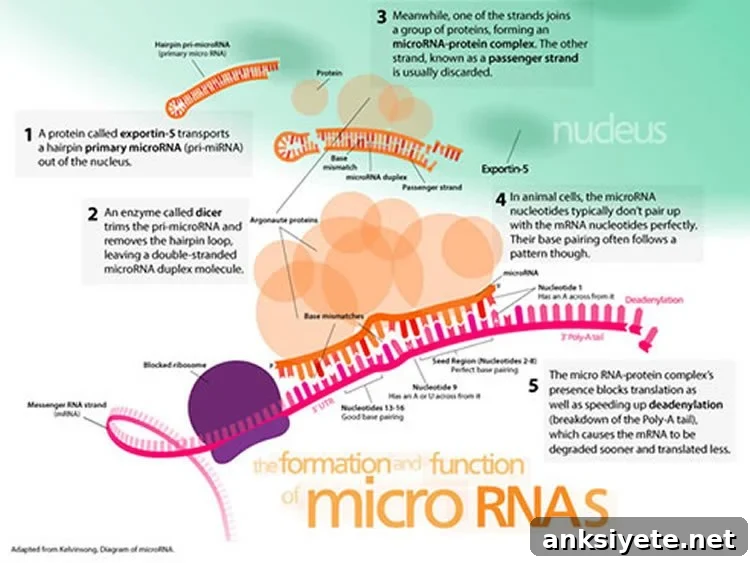
Major depressive disorder is a prevalent psychiatric illness that increases suicide risk and ranks among the leading causes of disability worldwide. Better understanding of molecular drivers and potential biomarkers is critical because many patients do not respond adequately to current treatments. MicroRNAs (miRNAs) are short non-coding RNAs that regulate gene expression by interacting with messenger RNA and the RNA-induced silencing complex (RISC). More than a thousand miRNAs are active in the brain, where they influence stress responses, synaptic function, and neuronal plasticity.
In prior work, the research team observed coordinated changes in several miRNAs in the prefrontal cortex of individuals with MDD. Because the prefrontal cortex governs executive function and helps regulate the stress response through the hypothalamic-pituitary-adrenal (HPA) axis, the authors investigated whether stress exposure could drive similar miRNA dysregulation in an animal model.
Using a corticosterone-treated rat model to mimic chronic stress, the investigators found coordinated miRNA dysregulation in the prefrontal cortex, with miR-124-3p showing the most pronounced and consistent elevation. They then combined computational genomics, cell culture experiments, biochemical binding assays, epigenetic analyses, and human tissue and serum studies to evaluate the functional relevance of miR-124-3p to MDD.
Key findings from the study include:
- Computational analysis identified eight high-confidence target genes for miR-124-3p. These targets are implicated in stress response and neural function. Four of the predicted target genes were significantly down-regulated in the prefrontal cortex of corticosterone-treated rats, and the reductions inversely correlated with miR-124-3p levels.
- The four down-regulated genes contained evolutionarily conserved miR-124-3p binding sites across several higher vertebrate species, supporting functional significance.
- In cultured neuroblastoma cells, forced overexpression of miR-124-3p produced significant repression of two predicted targets, corroborating the computational predictions with in vitro functional data.
- Biochemical assays using immunoprecipitated RISC complexes from prefrontal cortex neurons of depressed-model rats showed significant binding of miR-124-3p to two of the target transcripts, demonstrating direct interaction in vivo.
- Chromosomal mapping localized the primary source of mature miR-124-3p to a site on chromosome 3 out of three possible genomic loci. Near the miR-124 promoter on chromosome 3 the team identified two CpG islands, which are susceptible to epigenetic modification. In corticosterone-treated rats the miR-124-3 promoter was hypomethylated and the expression of DNA methyltransferase Dnmt3a was significantly reduced, suggesting an epigenetic mechanism for miR-124-3p upregulation.
- Human data reinforced these experimental observations: in analysis of postmortem prefrontal cortex tissue from 15 control subjects and 15 individuals with MDD, miR-124-3p expression was significantly higher in the MDD group while three of the predicted target genes showed lower expression. Additionally, serum levels of miR-124-3p were elevated in a cohort of 18 antidepressant-free MDD patients compared with 17 healthy controls.
The authors conclude that miR-124-3p displays consistent depression-associated dysregulation across species and experimental systems and that its downstream gene targets show altered expression consistent with functional consequences. These results support miR-124-3p as a putative epigenetic signature of MDD and as a promising avenue for biomarker development and novel therapeutics aimed at restoring normal gene regulation in stress-related mood disorders.
Authors of the paper include Yogesh Dwivedi, Ph.D. (Elesabeth Ridgely Shook Endowed Professor and director of Translational Research, UAB Mood Disorders Program, Department of Psychiatry), Bhaskar Roy, Ph.D., Michael Dunbar, and Richard C. Shelton, M.D., all affiliated with the UAB Department of Psychiatry and Behavioral Neurobiology. Shelton holds the Charles Byron Ireland Chair of Psychiatric Research at UAB.
Funding: This research was supported by National Institute of Mental Health grants MH082802, MH081099, MH101890, MH100616 and MH107183, and by an American Foundation for Suicide Prevention grant, SRG-XXXX-001778-1209.
Abstract
Identification of microRNA-124-3p as a Putative Epigenetic Signature of Major Depressive Disorder
Major depressive disorder is a leading contributor to global disease burden and many patients remain resistant to current treatments due to incomplete understanding of underlying mechanisms. MicroRNAs serve as molecular switches of gene expression and can reveal regulatory networks relevant to psychiatric conditions. This study combined in vitro experiments, a rodent depression model, and analysis of human postmortem brain and serum to examine miR-124-3p, a neuron-specific miRNA that is highly dysregulated under stress. The authors identified a set of target genes involved in stress response and neural plasticity, demonstrated that miR-124-3p is epigenetically regulated, and showed altered interaction of miR-124-3p with RISC in MDD. Serum measurements in antidepressant-free MDD subjects mirrored brain dysregulation. Overall, the findings implicate miR-124-3p in MDD pathophysiology and suggest it may serve as both a therapeutic target and a biomarker for disease processes.