
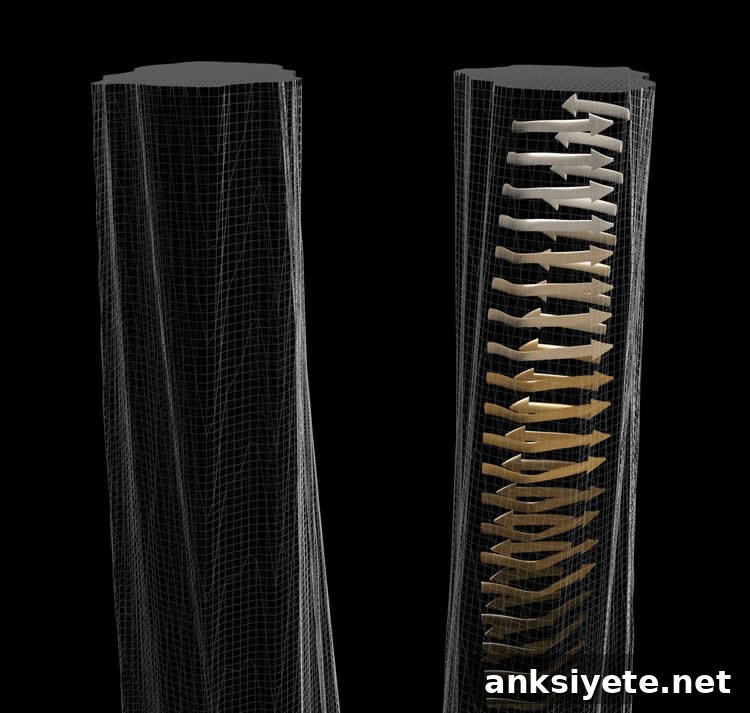
Summary: Researchers have determined the three-dimensional structure of infectious prions.
Source: PLOS
Newly Deciphered Structure Suggests How Infectious Prions Replicate
Infectious prions (PrPSc)—misfolded forms of the normal cellular prion protein (PrPC)—propagate by converting normal PrPC into the same misfolded form, causing fatal neurodegenerative disease. Until now, the molecular details of how this conversion occurs have been poorly understood. A study published in PLOS Pathogens reports the three-dimensional structure of a large portion of PrPSc and offers new mechanistic insights that challenge previous models of prion replication.
The discovery of DNA’s double helix in 1953 immediately clarified how genetic material could be copied. Researchers have hoped that solving the three-dimensional structure of PrPSc would provide an analogous breakthrough for understanding prion replication and for designing structure-based therapies. A collaborative team led by Holger Wille and Howard Young (University of Alberta, Canada) and Jesús Requena (University of Santiago de Compostela, Spain) applied electron cryomicroscopy (cryo-EM) to brain-derived infectious prion material to address this challenge.
Prion-infected brain tissue contains a heterogeneous mix of PrPSc variants because the core protein carries different molecular attachments such as lipids and sugars. This heterogeneity makes high-resolution structural analysis difficult. To reduce variability while preserving infectivity, the researchers studied PrPSc isolated from transgenic mice that express a version of the prion protein lacking the glycosylphosphatidylinositol (GPI) anchor. Removing the GPI anchor produced a more homogeneous preparation of brain-derived PrPSc that still retained disease-causing activity and the ability to convert normal PrPC.
In diseased brains, PrPSc often assembles into fibrils. Cryo-EM imaging and subsequent analysis of the GPI-anchorless PrPSc fibrils revealed that the fibrils are composed of two intertwined protofilaments of defined volume. Because cryo-EM preserves native structure, these measurements impose strict constraints on possible conformations: the protofilaments observed can only match the measured dimensions if individual PrPSc molecules fold back onto themselves in a specific way.
Detailed analysis of the cryo-EM data, consistent with related studies, indicates that the basic building block of these mammalian GPI-anchorless PrPSc fibrils is a four-rung β-solenoid architecture. β-solenoids are repetitive protein folds dominated by stacked β-sheets. The authors propose that each β-sheet “rung” in the PrPSc solenoid acts as a template that promotes formation of corresponding β-structure in incoming, unfolded PrP molecules.
This four-rung β-solenoid model allows the researchers to rule out several previously proposed templating mechanisms for in vivo prion replication. Rather than relying on simple, highly specific pairings like DNA base pairing, the conversion of PrPC into PrPSc appears to depend on a more complex ensemble of molecular forces that govern how nascent β-rungs align with pre-existing ones. According to the model, the top and bottom β-rungs of the solenoid are particularly prone to aggregation and serve as the active templating edges.
When an additional β-rung forms at one of these sticky edges, it generates a new aggregation-prone surface that can template the next rung, allowing the process to proceed iteratively until the entire incoming PrP molecule adopts the infectious solenoid conformation. The double fibrils observed in cryo-EM represent two protofilaments that have intertwined, each built from stacked four-rung β-solenoids.
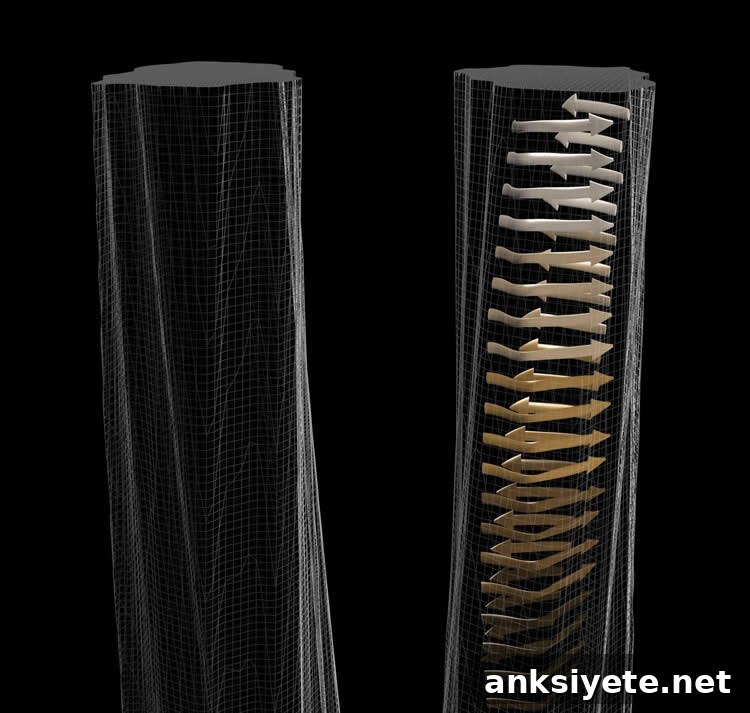
The authors note that higher-resolution structures and analysis of additional PrPSc variants will be necessary to generalize these findings across different prion strains and species. Nevertheless, their cryo-EM data provide strong support for a model in which GPI-anchorless PrPSc fibrils consist of stacks of four-rung β-solenoids that pair into double fibrils. This architecture offers a coherent molecular mechanism for how mammalian prions replicate by templating β-structure onto unfolded prion protein substrates.
Funding: Research support came from multiple sources including the Alberta Prion Research Institute, Alberta Innovates Bio Solutions, Alberta Livestock & Meat Agency, the Canada Foundation for Innovation, and European and Spanish grants. Funders did not influence study design, data collection and analysis, decision to publish, or manuscript preparation.
Competing interests: One author is an employee of FEI Company (Eindhoven, The Netherlands); the authors state this does not alter adherence to PLOS Pathogens policies on sharing data and materials.
Original research: The study, titled “The Structural Architecture of an Infectious Mammalian Prion Using Electron Cryomicroscopy,” reports cryo-EM reconstructions, Fourier-transform analyses indicating a repeating unit near 19.1 Å, and molecular volume measurements that together support the four-rung β-solenoid model and a corresponding replication mechanism for infectious PrPSc.
PLOS. “Newly Deciphered Structure Suggests How Infectious Prions Replicate.” NeuroscienceNews. Published September 2016. Research article by Ester Vázquez-Fernández, Matthijn R. Vos, Pavel Afanasyev, Lino Cebey, Alejandro M. Sevillano, Enric Vidal, Isaac Rosa, Ludovic Renault, Adriana Ramos, Peter J. Peters, José Jesús Fernández, Marin van Heel, Howard S. Young, Jesús R. Requena, and Holger Wille in PLOS Pathogens.