
RIP1 Identified as a Molecular Switch Regulating Glioblastoma Cell Survival
Researchers at UT Southwestern Medical Center have identified a cellular switch that may be turned on or off to slow and potentially halt the growth of glioblastoma, the most common and aggressive form of malignant brain tumor.
In a study published in Cell Reports, investigators found that the protein RIP1 serves as a critical mediator of tumor cell fate in glioblastoma. Depending on its state, RIP1 can either support tumor cell survival or direct cells toward self-destruction. Because RIP1 is present in most glioblastomas, the team believes it represents a promising target for new drug development aimed at these treatment-resistant tumors.
Key Findings: RIP1, EGFRvIII and NF-κB
The research explored how RIP1 interacts with the cell surface receptor variant EGFRvIII and how both influence NF-κB, a family of regulatory proteins known to promote tumor growth and survival. Using experimental animal models, the investigators demonstrated that when RIP1 activity is suppressed, NF-κB signaling is reduced and the growth-promoting signals tied to tumor progression are inhibited. Conversely, activating RIP1 under certain conditions can push cancer cells into a death program, effectively causing them to self-destruct.
This dual role positions RIP1 as a molecular switch: one state favors survival and proliferation through NF-κB pathway activation, while an alternative state drives cell death. The study further clarifies how interactions between wild-type EGFR and the mutant form EGFRvIII influence RIP1-mediated NF-κB activation in glioblastoma cells.
Clinical Relevance and Potential Treatment Pathways
Gliomas account for about 30 percent of brain tumors and include highly aggressive subtypes such as glioblastomas, astrocytomas, oligodendrogliomas, and ependymomas. Many gliomas are fast-growing and resistant to current therapies, making the identification of new molecular targets essential to advance treatment options. The discovery that RIP1 can be manipulated to switch off growth-promoting signals or to trigger cell death highlights a potential avenue for therapeutic development that could complement or improve on existing approaches.
Senior author Dr. Amyn Habib, associate professor of neurology and neurotherapeutics at UT Southwestern and staff neurologist at the VA North Texas Health Care System, emphasized the significance of the finding: “Our study identifies a new mechanism involving RIP1 that regulates cell division and death in glioblastomas. For individuals with glioblastomas, this finding identified a target for the development of a drug treatment option that currently does not exist.”
Research Support and Collaborators
The study was supported by the National Institutes of Health, NASA, and the Cancer Prevention and Research Institute of Texas. UT Southwestern investigators who contributed include former postdoctoral researcher Dr. Vineshkumar Puliyappadamba, senior research associate Dr. Sharmistha Chakraborty, former research assistant Sandili Chauncey, and senior research scientist Dr. Li Li from the Department of Neurology and Neurotherapeutics. Additional contributors included Dr. Kimmo Hatanpaa (associate professor of pathology), Dr. Bruce Mickey (director of the Annette G. Strauss Center in Neuro-Oncology), Dr. David Boothman (professor of radiation oncology and pharmacology in the Harold C. Simmons Comprehensive Cancer Center), and Dr. Sandeep Burma (associate professor of radiation oncology).
Institutional Context
UT Southwestern’s Department of Neurology and Neurotherapeutics is consistently ranked among the top neurology programs in the nation. Physicians and researchers at the center regularly evaluate and treat some of the most challenging neurology and neuro-oncology cases referred from across the region and beyond, strengthening the institute’s capacity to translate molecular discoveries into potential clinical trials and therapies.
Notes and References
Original research: “Opposing Effect of EGFRWT on EGFRvIII-Mediated NF-κB Activation with RIP1 as a Cell Death Switch” by Vineshkumar Thidil Puliyappadamba, Sharmistha Chakraborty, Sandili S. Chauncey, Li Li, Kimmo J. Hatanpaa, Bruce Mickey, Shayan Noorani, Hui-Kuo G. Shu, Sandeep Burma, David A. Boothman, and Amyn A. Habib. Published in Cell Reports, August 2013.
Contact: Remekca Owens – UT Southwestern Medical Center
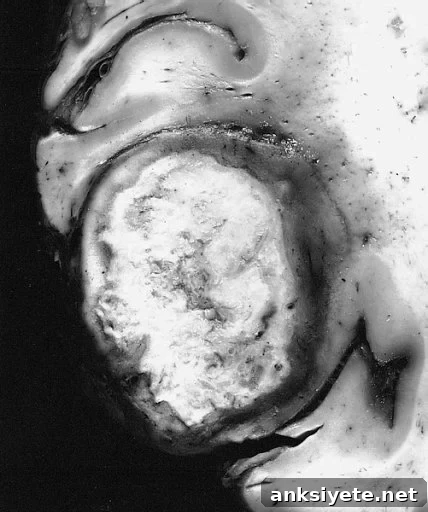
Image credit: The glioblastoma brain slice image is credited to the Armed Forces Institute of Pathology and is in the public domain.