
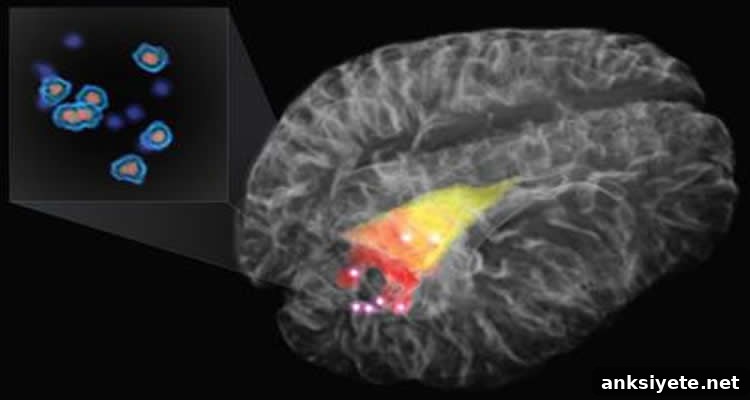
New intraoperative probe improves tumor removal and may extend survival for brain cancer patients
Researchers at the Montreal Neurological Institute and Hospital – The Neuro, McGill University and the MUHC, together with Polytechnique Montréal, have developed a handheld intraoperative probe that detects invasive brain cancer cells in real time. Using Raman spectroscopy, this new tool allows surgeons to identify cancerous tissue that is visually indistinguishable from healthy brain tissue, improving the precision of tumor removal and potentially reducing recurrence.
Surgeons frequently face the challenge that invasive brain cancer cells can blend into surrounding healthy tissue, making complete resection difficult. Dr. Kevin Petrecca, Chief of Neurosurgery and co-senior author of the study published in Science Translational Medicine, explains that leaving behind microscopic clusters of cancer cells contributes to recurrence and worsens prognosis. By enabling more accurate detection of invasive cells during surgery, the handheld Raman probe helps surgeons remove more tumor while sparing normal brain tissue, which can translate into better outcomes for patients.
Developed in collaboration with Dr. Frédéric Leblond of Polytechnique Montréal, the probe uses a laser to measure the light scattered by molecules in tissue. That scattered light produces a spectroscopic signature that reflects the molecular composition of the sampled tissue. According to the researchers, the Raman spectroscopy probe demonstrates greater than 92% accuracy in identifying cancer cells that have infiltrated normal brain, detecting tumor infiltration from multiple glioma grades.
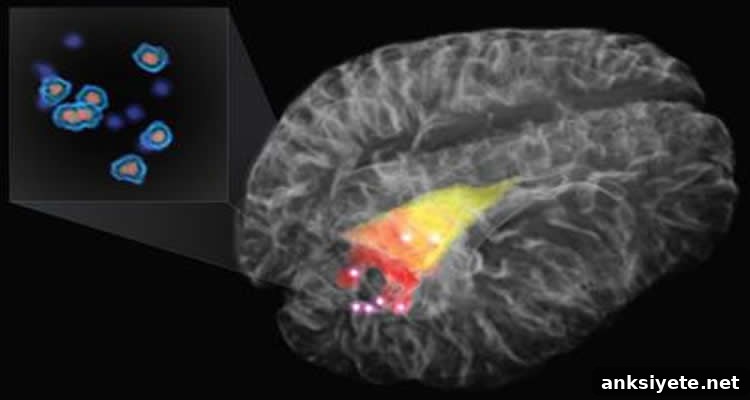
The team tested the Raman probe in patients with grade 2, 3 and 4 gliomas, a group of highly invasive brain tumors. The device detected infiltrating cancer cells across these grades, supporting a broad clinical application in glioma surgery. As the investigators note, there is mounting evidence that the extent of tumor removal correlates with prognosis across invasive glioma grades. Improved intraoperative detection therefore has important implications for long-term patient outcomes.
Beyond its detection performance, the probe is designed to be portable and compatible with standard surgical workflows so that it can be used directly in the operating room. Real-time feedback during surgery gives neurosurgeons immediate information about tissue status at the resection margins, helping guide decisions about how much tissue to remove while minimizing damage to critical brain areas. This balance between maximizing tumor removal and preserving neurological function is central to improving quality of life and survival for patients with brain cancer.
To evaluate clinical benefit, the Montreal Neurological Institute and Hospital will launch a trial that will test whether use of the Raman spectroscopy probe improves outcomes for patients with newly diagnosed and recurrent glioblastoma. If the trial confirms the device’s positive impact on surgical completeness and patient survival, the portable intraoperative Raman probe could become a new standard of care for brain tumor surgeries.
This interdisciplinary study was led by co-senior authors Dr. Kevin Petrecca (The Neuro) and Dr. Frédéric Leblond (Polytechnique Montréal). Kelvin Mok (The Neuro) and Dr. Michael Jermyn (The Neuro and Polytechnique Montréal) are listed as co–first authors. Additional contributors include Jeanne Mercier, Joannie Desroches, Julien Pichette, Karl Saint-Arnaud, Liane Bernstein, Marie-Christine Guiot, and others. Funding for the work came from the Fonds de recherche du Québec–Nature et technologies, the Natural Sciences and Engineering Research Council of Canada, and the Groupe de recherche en sciences et technologies biomédicales.
The study demonstrates a practical, high-accuracy method for intraoperative detection of invasive brain cancer cells using Raman spectroscopy. By providing immediate molecular-level information about tissue composition, this approach addresses a major unmet need in neurosurgery: reliably distinguishing infiltrative tumor from normal brain at the surgical margin. The researchers emphasize that widespread adoption will depend on clinical trial results that confirm improved patient outcomes when the probe is used to guide resection.
Contact: Anita Kar – McGill University
Source: McGill University press release
Image Source: Image credited to Science Translational Medicine; Petrecca K, Leblond F et al., adapted from the McGill press release
Original Research: Abstract for “Intraoperative brain cancer detection with Raman spectroscopy in humans” by Michael Jermyn, Kelvin Mok, Jeanne Mercier, Joannie Desroches, Julien Pichette, Karl Saint-Arnaud, Liane Bernstein, Marie-Christine Guiot, Kevin Petrecca, and Frederic Leblond in Science Translational Medicine. Published online; doi: 10.1126/scitranslmed.aaa2384