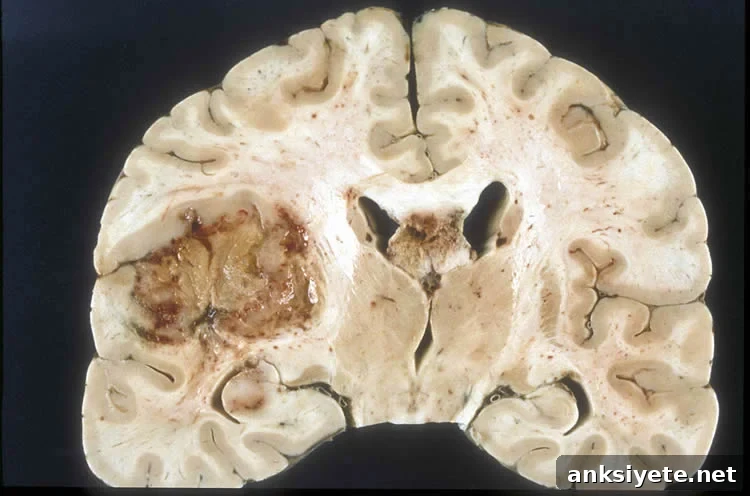
Summary: An experimental drug, PAC-1, that prompts cancer cells to self-destruct has been approved for a clinical trial in patients with anaplastic astrocytoma and glioblastoma. PAC-1 crosses the blood-brain barrier and has shown promising results in cell lines, rodent models and canine patients.
Source: University of Illinois.
PAC-1, a small molecule that activates procaspase-3 and triggers cancer-cell apoptosis, has been cleared for a phase Ib clinical trial in people with anaplastic astrocytoma and glioblastoma multiforme. This trial will test the safety of PAC-1 in combination with the standard brain-cancer chemotherapy temozolomide in patients whose disease has progressed after first-line therapy.
The brain-cancer extension builds on an ongoing phase I trial of PAC-1 given alone to patients with advanced solid tumors and lymphoma. Phase I studies focus on safety and dose-finding rather than efficacy, and the new arm will begin PAC-1 dosing at 375 mg per day with incremental increases to evaluate tolerability when combined with temozolomide.
PAC-1 is notable for its ability to penetrate the blood-brain barrier, a major obstacle for most anticancer drugs aimed at brain tumors. The compound was discovered more than a decade ago by Paul Hergenrother, professor of chemistry at the University of Illinois, and selectively activates procaspase-3—an enzyme that is often overexpressed in many cancers. When procaspase-3 is activated, it initiates apoptotic cell death.
“Most cancers have elevated levels of procaspase-3,” Hergenrother said. “When it is turned on, procaspase-3 kills cells.” Cancer cells frequently suppress this cell-recycling pathway, and PAC-1 is designed to restore procaspase-3 activation, preferentially targeting cancer cells because of their higher enzyme levels.
Preclinical testing included studies in human cancer cell lines and rodent models, followed by trials in pet dogs with naturally occurring cancers under the guidance of veterinary oncologist Timothy M. Fan, professor of veterinary clinical medicine at Illinois. Canine studies evaluated PAC-1 alone and in combination with standard chemotherapies and radiation, including a trial in dogs with malignant glioma that mimicked human glioblastoma treatment.
Compared to many rodent models, naturally occurring cancers in dogs can resemble human tumors more closely in genetics, tumor environment and response to therapy. Rodent models typically require implantation of human tumor cells and immunocompromised animals, which limits the ability to replicate immune interactions. Dogs, by contrast, develop spontaneous tumors and share clinical and biological features with human cancers, making them a valuable complementary model for translational research.
In previous canine studies, PAC-1 combined with doxorubicin produced tumor reductions in dogs with lymphoma and osteosarcoma. Trials so far report that PAC-1 has been generally well tolerated in animals, with occasional gastrointestinal side effects. In the canine glioma trial, three dogs received daily oral PAC-1 together with temozolomide and curative-intent radiation. All three achieved at least a partial response (greater than 30 percent tumor reduction), and one dog achieved a complete response by serial MRI, with a 100 percent reduction in tumor mass 84 days after the combination treatment.
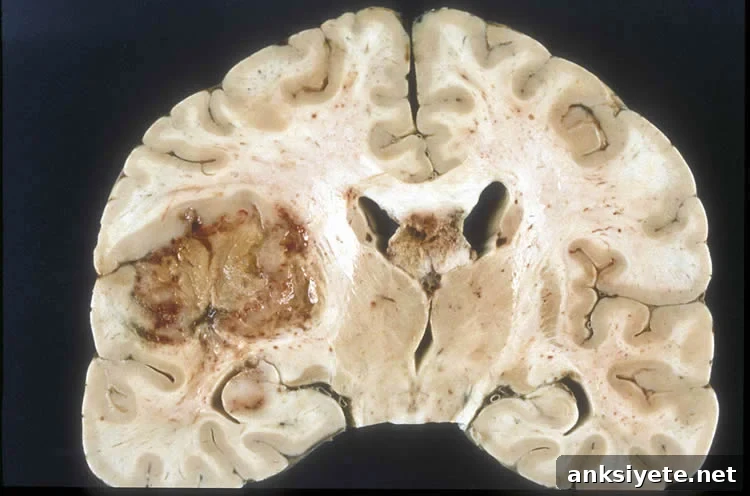
Medical oncologist Arkadiusz Dudek, who chairs the clinical advisory board for Vanquish Oncology (the company sponsoring the trials), reported that the single-agent PAC-1 trial has been well tolerated at doses up to 450 mg per day and that no patients in the first five dose cohorts have discontinued because of adverse effects. The new brain-cancer cohort will carefully monitor safety of the PAC-1 and temozolomide combination.
Surgery followed by temozolomide is a common first-line approach for anaplastic astrocytoma and glioblastoma. For glioblastoma multiforme, treatment usually involves maximal surgical resection, radiation, and oral temozolomide. Despite these interventions, glioblastoma frequently recurs because microscopic tumor cells spread along blood vessels and infiltrate brain tissue, making complete surgical removal difficult. Median survival with standard therapy remains roughly 15 months.
Fan emphasized that a larger study in dogs would be necessary to demonstrate reproducibility of the therapeutic effects and to quantify PAC-1’s specific contribution. Vanquish Oncology, a company co-founded by Hergenrother and licensed to advance PAC-1 into clinical development, will continue to sponsor human trials. Determining definitive safety and efficacy will require several years of rigorous human clinical testing.
Financial and institutional disclosures: Hergenrother is chief science officer for Vanquish Oncology; Fan is vice president of preclinical development; and Dudek chairs the clinical advisory board. All have financial ties to the company.
Planned human clinical sites include the University of Illinois Cancer Center in Chicago; Regions Hospital Cancer Care Center in St. Paul, Minnesota; and Johns Hopkins University School of Medicine in Baltimore.
Hergenrother leads and Fan is a member of the research theme “Anticancer Discovery: From Pets to People” at the Carl R. Woese Institute for Genomic Biology at the University of Illinois.
Funding: This research was supported by the National Institutes of Health and the Virginia and D.K. Ludwig Fund for Cancer Research.
Source: Matt Wood – University of Illinois. Publisher: Organized by NeuroscienceNews.com. Image source: NeuroscienceNews.com image is in the public domain. Original research published in the journal Oncotarget: “Synergistic and targeted therapy with a procaspase-3 activator and temozolomide extends survival in glioma rodent models and is feasible for the treatment of canine malignant glioma patients” by Avadhut D. Joshi et al., published online July 7, 2017.
Abstract
Synergistic and targeted therapy with a procaspase-3 activator and temozolomide extends survival in glioma rodent models and is feasible for the treatment of canine malignant glioma patients
Purpose: Glioblastoma is an aggressive brain cancer with a median survival near 15 months. Standard therapy involves ionizing radiation plus the DNA-alkylating agent temozolomide (TMZ). PAC-1 is a blood-brain barrier-penetrant small molecule that activates procaspase-3 and has shown the ability to synergize with pro-apoptotic chemotherapies. The study examined whether PAC-1 enhances TMZ activity and whether adding PAC-1 to standard treatment is feasible in spontaneous canine malignant gliomas.
Experimental Design: Using glioma cell lines and gene expression databases, researchers identified procaspase-3 as a potential target in many glioblastomas. PAC-1 was tested alone and combined with TMZ in cultured glioma cells and in orthotopic rodent glioma models, and three dogs with spontaneous gliomas were treated with a human-like glioblastoma protocol including PAC-1.
Results: Procaspase-3 expression in gliomas correlates with tumor grade and poorer prognosis. PAC-1 is cytotoxic to glioma cells in culture and prolongs survival in orthotopic rodent models. PAC-1 increases apoptotic death when added to TMZ in culture, and the combination significantly extends survival in rodent models. In three pet dogs treated with PAC-1, TMZ and radiation, the regimen was well tolerated and produced partial to complete tumor reductions.
Conclusions: The study supports procaspase-3 as a clinically relevant therapeutic target in glioblastoma. Synergy between PAC-1 and TMZ in rodent models and successful feasibility testing in canine patients suggest PAC-1 merits further clinical investigation for treating glioblastoma.