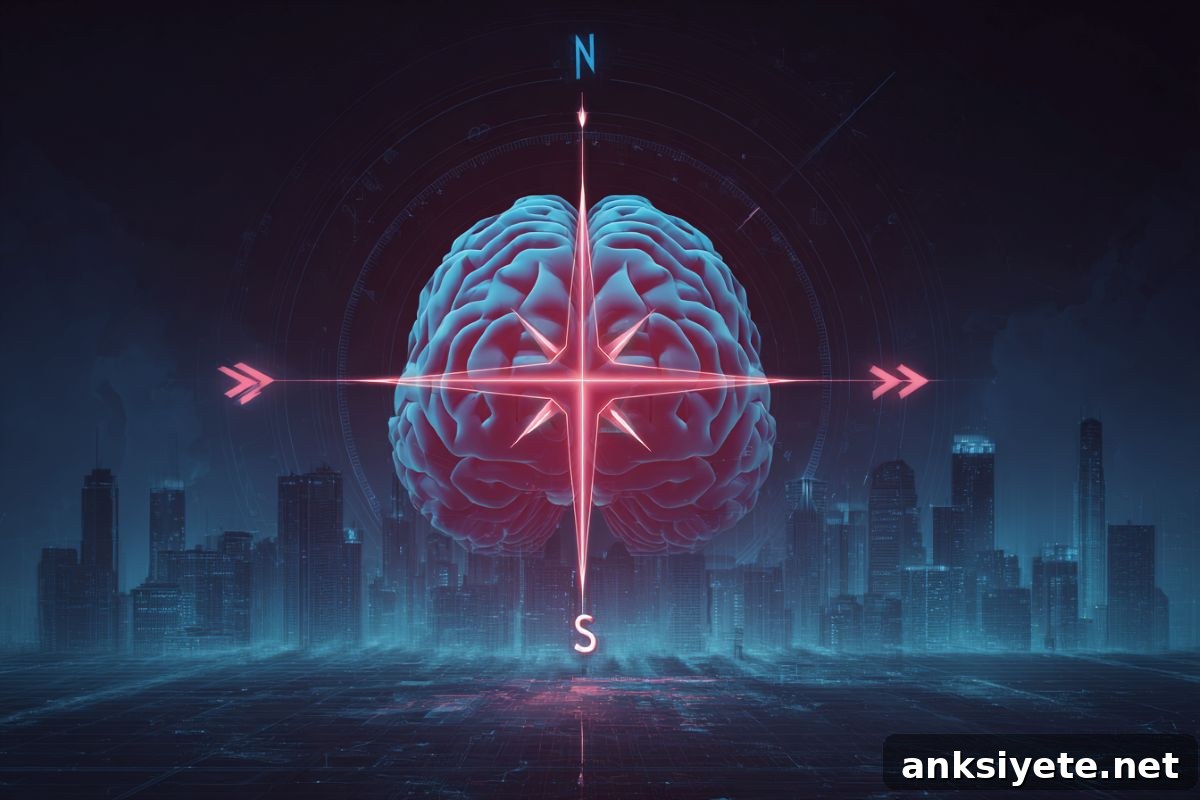
Summary: Researchers used a realistic virtual reality taxi-driving paradigm to investigate how the human brain maintains a stable sense of direction in rich, naturalistic settings. Neuroimaging data revealed two brain areas that consistently encoded the direction a person was facing, forming what the authors describe as a neural compass that aligns orientation with the environment’s north–south axis. These results were robust across different city appearances, task phases, and locations, and they may have implications for identifying and tracking conditions that impair orientation.
In a controlled study published in the Journal of Neuroscience, Zhengang Lu and Russell Epstein from the University of Pennsylvania collected neuroimaging recordings while 15 participants completed a virtual taxi-driving task in a simulated city. Participants navigated the environment to pick up and drop off passengers while visual details of the city and the driving contexts were varied. By comparing brain activity across these variations, the team aimed to find neural signals that reliably represented heading direction rather than transient visual features or specific locations.
Key Facts
- Neural compass: Two distinct brain regions carried signals that tracked forward-facing direction across different virtual city designs and task conditions.
- Robust orientation coding: The directional signal persisted despite changes in visual scenery, task phase (for example, picking up versus transporting a passenger), and the participant’s position in the environment.
- Axis alignment: Analyses indicate these regions represent facing direction relative to the environment’s north–south axis, suggesting a stable reference frame for orientation.
- Clinical relevance: Because disorientation is an early or prominent symptom in some neurodegenerative disorders, these brain signals could inform future efforts to detect or monitor such conditions.
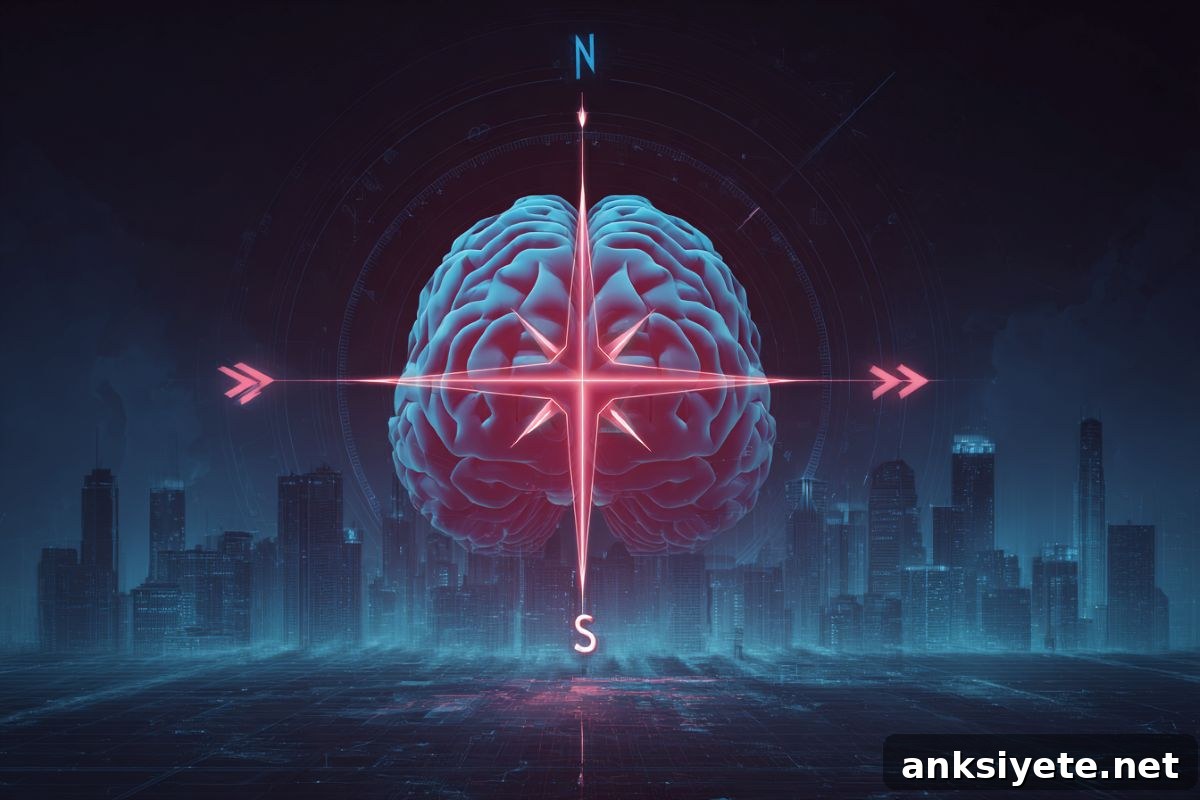
Across the virtual environment, two brain regions demonstrated activity patterns tied to the participant’s forward-facing direction. Importantly, these patterns were not driven solely by local visual cues: they remained consistent when the researchers altered the city’s visual features, and they persisted through different task phases such as searching for a passenger versus driving them to a destination. The signal also generalized across geographic locations within the simulated city, supporting the idea that these areas code for heading in a way that is independent of specific landmarks.
Further analyses suggested that the neural representation encompassed a broad range of headings by referencing a stable environmental axis—the north–south orientation of the city layout. In other words, rather than encoding direction only relative to nearby scenery or momentary goals, these regions appear to anchor orientation to a global axis, much as a compass provides a fixed frame of reference.
The authors interpret these results as evidence of a neural compass mechanism that contributes to stable orientation during natural navigation. Identifying brain regions that track facing direction in a durable and environment-centered way helps clarify how the brain supports wayfinding in complex, changing surroundings.
Says Epstein, “Losing your sense of direction is something that can happen in neurodegenerative diseases, so continuing to explore the function of these two brain regions may help with early detection or monitoring progression of these diseases.
“We’re also interested in understanding how people navigate using both visual and internal cues—this would relate to the challenges faced by people with impaired vision.”
About this navigation and visual neuroscience research news
Author: SfN Media
Source: SfN
Contact: SfN Media – SfN
Image: The image is credited to Neuroscience News
Original Research: The findings will appear in Journal of Neuroscience.