
Summary: Researchers monitored real-time brain activity in mice to reveal how the hippocampus stores and organizes spatial information.
Source: Zuckerman Institute.
Scientists monitor brain-cell activity in mice in real time, revealing how the brain maps locations and encodes goals
Columbia University researchers have identified a key mechanism in the brain’s internal GPS system that helps mice locate desired places. By observing the activity of individual neurons in a specific region of the hippocampus, the team defined distinct roles for cell subpopulations and traced how spatial information is processed during navigation and learning.
The findings were published in the journal Neuron.
“We wanted to compare how the brain behaves during casual exploration versus when it’s searching for a specific goal,” said Attila Losonczy, MD, PhD, principal investigator at Columbia’s Mortimer B. Zuckerman Mind Brain Behavior Institute and associate professor of neuroscience at Columbia University Medical Center, who is senior author on the paper. “Using two-photon microscopy to record single-cell activity in the hippocampus, we were able to directly link the activity of identified cells to navigation behavior — a technical achievement that was not possible until recently.”
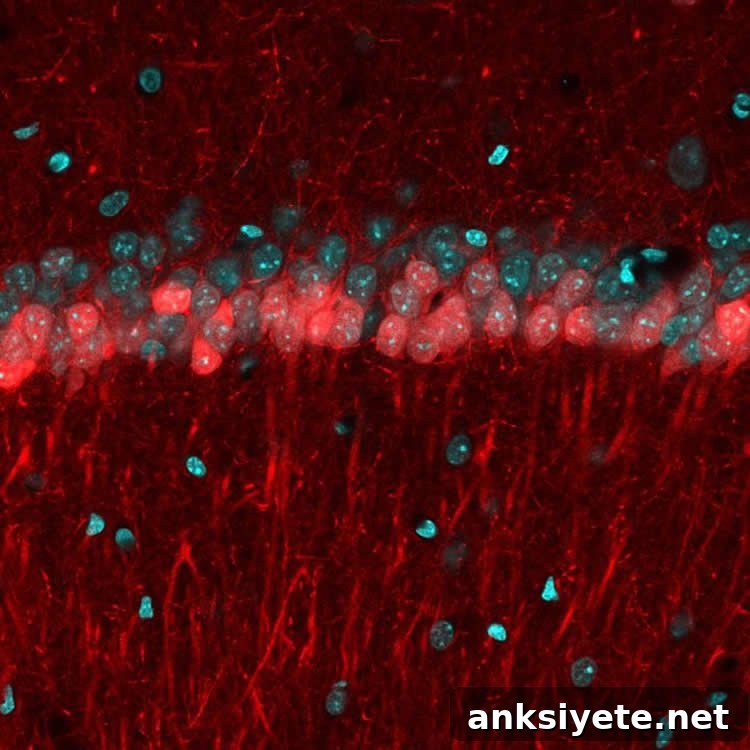
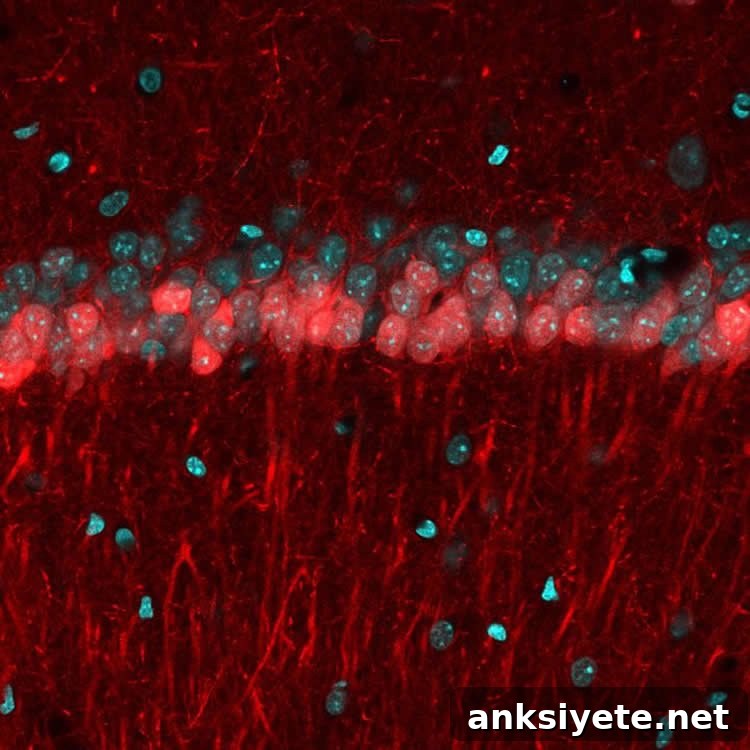
The hippocampus processes spatial and episodic memory through an interconnected circuit of distinct subregions. This study focused on area CA1, the hippocampus’ primary output region, known for encoding location through so-called place cells — a discovery that contributed to the 2014 Nobel Prize in Physiology or Medicine.
“Area CA1 is organized into two radial sublayers — deep and superficial — and researchers have long wondered whether each sublayer serves different functions in learning and memory,” said Nathan Danielson, a doctoral candidate in neuroscience at Columbia University Medical Center and the paper’s first author. “We designed experiments to test that idea directly.”
To record cell activity, the team used head-fixed mice running on a treadmill that presented distinct visual, tactile, and olfactory cues. A two-photon microscope imaged calcium signals in CA1 neurons to monitor activity in deep and superficial sublayers while mice performed two different tasks.
In the first task, mice ran while experiencing a mix of familiar and novel sights and sounds in the environment. In the second, they were trained to find a water reward hidden at a fixed, unmarked position on the treadmill. The experiments were repeated across multiple sessions to track how sublayer activity changed across different behavioral demands and learning stages.
During passive exploration (the first task), neurons in the superficial CA1 sublayer formed stable place maps: their spatial firing patterns remained consistent across sessions. By contrast, neurons in the deep sublayer produced much more dynamic maps that frequently changed from session to session.
When the mice learned the location of the hidden reward during the goal-directed task, deep-sublayer representations became substantially more stable than they had been during exploration. Moreover, the activity of deep-layer neurons was tightly linked to the animal’s ability to find the reward: stronger or more precise reward-related coding in deep cells predicted better task performance. These results suggest complementary roles for the two sublayers in spatial navigation.
“You need two types of information when searching for a specific place,” Danielson explained. “One is a reliable map of the environment, and the other is a marker that highlights the goal. Our data indicate that superficial CA1 provides the stable environmental map, while the deep sublayer flexibly encodes salient, goal-related information — effectively placing an ‘X’ on the map where the reward is located.”
Dr. Losonczy added, “If you later explore a new location, deep-layer cells update the map to mark that place, while the superficial map remains relatively unchanged, preserving a baseline representation of the environment.”
The study highlights how hippocampal architecture supports efficient navigation: a stable spatial map paired with a flexible system for encoding behaviorally relevant goals. “It’s remarkable that such a complex behavior as goal-directed navigation can be represented so precisely in the layered structure of CA1, and even more remarkable that we can observe these dynamics in real time,” Dr. Losonczy said.
Funding: This research was supported by the National Institute of Neurological Disorders and Stroke (F30NS090819), the National Institute of Mental Health (91F31MH105169, 1R01MH100631, 1U01NS090583, 1R01NS094668), the Howard Hughes Medical Institute, the Searle Scholars Program, the Human Frontier Science Program, and the McKnight Foundation.
The authors report no financial or other conflicts of interest.
Source: Anne Holden – Zuckerman Institute
Image source: Image credited to Colasanti et al./Biological Psychiatry.
Original research: Abstract for “Sublayer-specific coding dynamics during spatial navigation and learning in hippocampal area CA1” by Nathan B. Danielson, Jeffrey D. Zaremba, Patrick Kaifosh, John Bowler, Max Ladow, and Attila Losonczy in Neuron. Published online July 7, 2016. DOI: 10.1016/j.neuron.2016.06.020
Zuckerman Institute. “Mouse Study Sheds Light on How the Brain Draws a Map to a Destination.” NeuroscienceNews. 7 July 2016.
Abstract
Sublayer-specific coding dynamics during spatial navigation and learning in hippocampal area CA1
Highlights
• Ca2+ imaging demonstrates sublayer-specific place coding dynamics
• Superficial place maps are more stable than deep maps across timescales
• Goal-oriented learning preferentially stabilizes deep-layer cells
• Reward representation by deep cells predicts task performance
Summary
The hippocampus is essential for spatial processing and episodic memory. Principal CA1 pyramidal cells differ in genetics, morphology, connectivity, and electrophysiology, suggesting that CA1 subpopulations could encode distinct environmental features and contribute differently to learning. To test this, the authors optically monitored calcium activity in deep and superficial CA1 pyramidal cells in head-fixed mice and related sublayer dynamics to behavior and learning. Superficial place maps were more stable during exploration, while deep maps were more flexible. During goal-directed learning, deep representations stabilized and reward-related coding in deep cells predicted behavioral success. These results indicate that superficial CA1 provides a stable map of the environment, whereas deep CA1 supplies a flexible representation shaped by learning about salient features.
“Sublayer-specific coding dynamics during spatial navigation and learning in hippocampal area CA1” by Nathan B. Danielson et al., Neuron. Published online July 7, 2016. DOI: 10.1016/j.neuron.2016.06.020