Summary: Large-scale brain imaging finds surprisingly few clear links between white matter microstructure and children’s reading performance.
Source: MIT
Reading depends on fast, coordinated communication among language regions across the brain, with information traveling along white matter pathways that connect those areas.
Many researchers have proposed that differences in white matter organization could explain why some children struggle to learn to read. If specific white matter tracts were reliably linked to poor reading skills, clinicians might be able to target interventions more effectively. To test this idea at scale, scientists from MIT’s McGovern Institute for Brain Research conducted the largest diffusion-weighted imaging study to date examining white matter and reading ability in children.
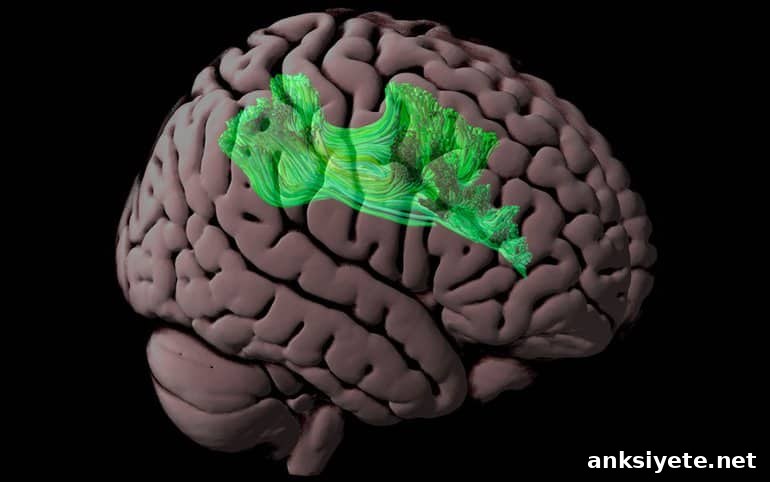
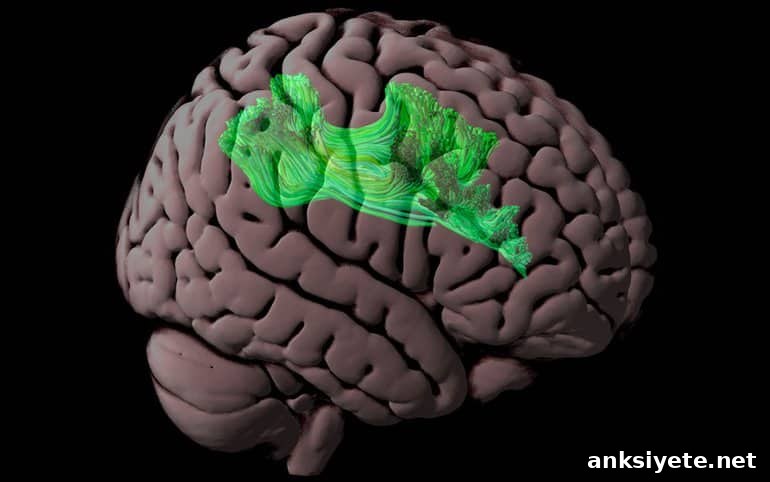
White matter consists of bundles of insulated nerve fibers that act as the brain’s long-range communication network. John Gabrieli, Grover Hermann Professor of Health Sciences and Technology at MIT and senior author of the study, describes white matter as the brain’s connectivity system that enables complex skills such as reading by linking distant processing centers.
Neuroscientists visualize white matter using diffusion-weighted imaging (DWI), an MRI technique that maps how water molecules move along axons. A common summary measure derived from DWI is fractional anisotropy (FA), which reflects factors such as fiber packing, diameter, and degree of myelination. Although FA is an indirect measure, it is widely used as an index of white matter microstructural coherence.
Previous studies have reported lower FA in some white matter tracts of children with low reading scores or dyslexia, but those studies were usually small—often only a few dozen participants—and their results have not been consistent across samples. Because of those limitations, it has been difficult to draw strong conclusions about whether and how white matter differences cause or relate to reading difficulties.
To obtain more reliable evidence, Gabrieli and Steven Meisler, a graduate student in the Harvard Program in Speech and Hearing Bioscience and Technology working in the Gabrieli lab, analyzed DWI scans from 686 children provided by the Child Mind Institute’s Healthy Brain Network. Using advanced preprocessing and tract-analysis methods, they measured FA across 20 white matter tracts that prior work had implicated in reading.
The participant sample spanned a wide range of reading abilities. Contrary to expectations from smaller studies, the researchers did not find significant differences in FA for any of the 20 tracts when comparing children with and without a reading disability. Likewise, there were no robust correlations between overall reading scores and tract FA across the full sample. FA did, however, increase with age across participants, consistent with typical white matter maturation.
When the team conducted more focused analyses, they identified associations between FA and a specific reading skill—nonword (pseudoword) reading—among older children (roughly age 9 and above). Nonword reading tests a child’s knowledge of letter-sound correspondences, because unfamiliar letter strings cannot be recognized from vocabulary and must be decoded phonologically. In this subgroup, lower pseudoword-reading performance was modestly associated with lower FA in two tracts: the right superior longitudinal fasciculus (SLF), which links frontal and parietal language-related regions, and the left inferior cerebellar peduncle (ICP), which carries fibers between the brainstem and cerebellum and may contribute to the precise eye and motor control needed for fluent reading.
These FA differences were small and limited to older children and to the nonword reading measure, so their meaning remains uncertain. Meisler and Gabrieli note that the observed associations could reflect the consequences of prolonged reading difficulty rather than a causal factor that precedes it. In other words, lower white matter coherence in these tracts might develop over time as a result of reduced reading practice or other downstream effects of struggling to read.
Overall, the study suggests that fractional anisotropy, as commonly measured today, does not explain reading ability as broadly as some earlier smaller studies implied. The authors argue that future research should employ more specific or advanced imaging metrics that better capture white matter features directly relevant to information transmission, and should continue to use large, well-characterized samples to avoid spurious findings.
In short, large-sample diffusion imaging did not confirm widespread or large effects of white matter FA on reading ability in childhood. Only subtle associations with a specific decoding skill (nonword reading) emerged in older children, highlighting the need for more refined imaging approaches and longitudinal studies to determine cause and effect.
About this reading and neuroscience research news
Author: Julie Pryor
Source: MIT
Contact: Julie Pryor – MIT
Image: The image is credited to Steven Meisler
Original Research: Open access. “A large-scale investigation of white matter microstructural associations with reading ability” by Gabrieli and Meisler. NeuroImage. DOI: 10.1016/j.neuroimage.2022.118909
Abstract
A large-scale investigation of white matter microstructural associations with reading ability
Reading relies on a distributed brain network, with white matter tracts transmitting information between network nodes. Past studies of fiber-bundle microstructure and reading have produced inconsistent results, likely influenced by small sample sizes and method differences. To address these limitations, we analyzed diffusion MRI data from 686 children aged 5–18 using contemporary acquisition and processing methods. We examined associations between fractional anisotropy (FA) and single-word and single-nonword reading skills across multiple tracts implicated in reading, and tested for group differences in FA between typically reading children and children with reading disabilities. FA increased with age across participants.
Across the whole sample there were no significant correlations between overall reading abilities and tract FA, and no significant FA differences between children with and without reading disabilities. In older children (age 9 and above), higher FA in the right superior longitudinal fasciculus and the left inferior cerebellar peduncle was associated with better nonword reading performance. These results indicate that letter-sound decoding skills, as measured by nonword reading, relate to greater white matter coherence in these specific tracts among older children, as indexed by higher FA.