
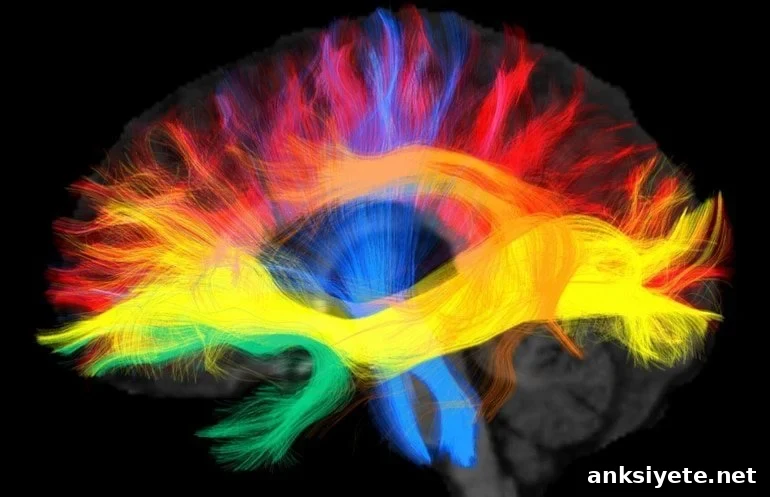
Summary: New research suggests that the language you grow up speaking influences how language-related brain regions are wired. Using high-resolution neuroimaging, researchers compared the structural connectivity of native German and native Arabic speakers and found stronger cross-hemispheric connections in Arabic speakers and stronger left-hemisphere language connectivity in German speakers.
Source: Max Planck Institute
Researchers at the Max Planck Institute for Human Cognitive and Brain Sciences in Leipzig report evidence that native language experience shapes the brain’s structural connectivity, potentially affecting how people process language and think.
Using magnetic resonance imaging (MRI), the team examined detailed brain images from native speakers of two typologically different languages—German and Arabic—and identified measurable differences in the white matter pathways that support language functions.
Doctoral researcher Xuehu Wei, working with senior investigators Alfred Anwander and Angela Friederici, analyzed MRI scans from a cohort of 94 native speakers to test whether lifelong use of a particular language alters the organization of the brain’s language network. The study applied diffusion-weighted imaging and tractography methods to map axonal white matter connections that link language-related cortical regions.
Diffusion-weighted imaging reveals the orientation and integrity of white matter fibers, making it possible to infer how different regions communicate. In this study, those connectivity maps indicated that the wiring of the language connectome is shaped by the processing demands unique to each mother tongue.
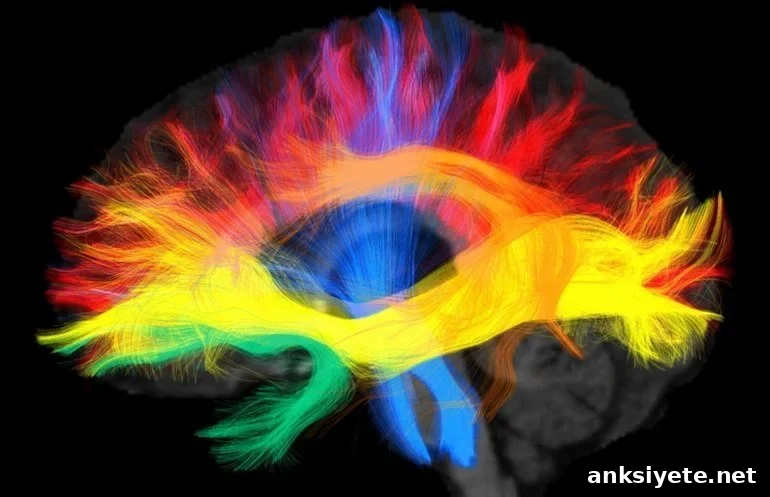
“Arabic native speakers showed stronger connectivity between the left and right hemispheres than German native speakers,” said Alfred Anwander, the study’s last author. This enhanced inter-hemispheric connectivity was particularly evident between regions involved in semantic processing and may relate to the combined semantic and phonological demands characteristic of Arabic.
In contrast, native German speakers exhibited stronger connections within the left hemisphere language network. The researchers suggest this pattern aligns with German’s complex syntactic structures—including freer word order and longer dependencies between sentence elements—which place greater demands on left-hemisphere dorsal pathways associated with syntax processing.
The authors emphasize that brain connectivity is not fixed at birth but is modulated by learning and the linguistic environment during childhood. These developmental influences on white matter organization may shape adult cognitive processing and reasoning. The findings offer direct evidence that the structural language connectome adapts to the characteristic processing demands of the mother tongue.
This investigation is among the first large-scale studies to document structural connectome differences linked to native language. By identifying distinct patterns of intra- and inter-hemispheric connectivity associated with German and Arabic, the research provides a potential neural explanation for cross-linguistic differences in language processing. The team plans follow-up work that will track structural changes over time by studying Arabic-speaking adults as they learn German over a six-month period, to observe how learning a new language might reshape connectivity.
About this neuroscience research news
Author: Press Office
Source: Max Planck Institute for Human Cognitive and Brain Sciences
Contact: Press Office – Max Planck Institute
Image: The image is credited to MPI CBS
Original Research: Open access. “Native language differences in the structural connectome of the human brain” by Xuehu Wei et al., published in NeuroImage.
Abstract
Native language differences in the structural connectome of the human brain
This study asked whether lifelong experience with a specific native language modulates the neuroanatomy of the language structural connectome. The researchers compared white matter connections supporting language and speech production in 94 native speakers of two typologically distinct languages: German, an Indo-European language with complex morphosyntax, and Arabic, a Semitic root-based language.
Using high-resolution diffusion-weighted MRI and tractography-based network statistics, the analysis revealed that German native speakers showed stronger intra-hemispheric connectivity in a dorsal frontal-to-parietal/temporal network typically associated with syntactic processing. By contrast, Arabic native speakers exhibited stronger connectivity among semantic regions, including left temporo-parietal pathways, and stronger inter-hemispheric connections through the posterior corpus callosum linking bilateral superior temporal and inferior parietal areas.
These results suggest that the structural language connectome emerges and adapts in response to environmental factors, notably the characteristic processing demands imposed by the native language. The study highlights the brain’s plasticity in shaping structural networks to support language-specific cognitive functions.