Summary:
A visual psychophysics study led by researchers at the National Institute for Physiological Sciences (NIPS) in Japan shows that human sensitivity to motion depends directly on movement velocity. Testing adults with both planar and three-dimensional dot-motion displays, the investigators found that at a typical walking speed of 1.5 meters per second (≈5.4 km/h) the visual system is markedly more sensitive to contracting optic flow (inward motion that occurs during backward movement) than to expanding optic flow (outward motion associated with forward movement). This velocity-tuned perceptual bias may act as an early-warning mechanism to detect backward instability and help preserve balance.
Key Facts:
- Walking-speed sweet spot: Participants detected finer velocity differences for contracting (inward) motion compared with expanding (outward) motion specifically at 1.5 m/s, a speed that corresponds to typical human walking pace.
- Resolving previous contradictions: Earlier psychophysical studies disagreed about whether forward or backward optic flow is prioritized. This study demonstrates that the perceptual advantage is velocity-dependent and disappears at speeds outside the locomotor range.
- Balance and fall prevention: Because people cannot directly see what is behind them, heightened sensitivity to contracting optic flow provides an important sensory cue for detecting backward sway and initiating compensatory postural responses.
Source: National Institutes of Natural Sciences (NIPS)
Optic flow refers to the continuous pattern of visual motion projected across the retina as we move through the world. When we step forward, the visual scene expands outward from a central focus of expansion; when we move backward or fall back, the scene contracts toward a central focus of contraction. The brain continuously monitors these streaming vectors to estimate speed, determine heading, and support bipedal balance.
Perceptual psychologists and visual neuroscientists have long debated whether the visual system is inherently more sensitive to expanding or contracting motion. Conflicting results in the literature suggested that task conditions, stimulus parameters, or tested speeds might explain the discrepancies.
To address this, Junxiang Luo and colleagues at NIPS designed a set of speed-discrimination experiments that systematically varied optic flow velocity and stimulus format. Their goal was to test whether the previously observed anisotropies depend on ecologically relevant locomotion speeds.
Testing planar and 3D motion at human walking cadence
The research team ran two complementary experiments. In Experiment 1, 27 adults viewed two-dimensional planar dot arrays that moved radially outward (simulating forward translation) or inward (simulating backward translation). In Experiment 2, a separate group of 30 adults viewed stereoscopic three-dimensional displays that simulated actual motion through depth. These stimuli provided both simple and more ecologically realistic optic-flow cues.
On each trial, participants saw two sequential optic-flow displays and judged which one appeared faster. The researchers measured speed-discrimination thresholds—the smallest velocity difference participants could reliably detect between expanding and contracting patterns—across a range of speeds.
The results revealed a clear pattern: speed-discrimination sensitivity for contraction exceeded that for expansion at an intermediate speed of about 1.5 m/s, which matches ordinary walking pace. This advantage for contracting flow was consistent across the planar and 3D simulations. At speeds lower or higher than typical walking, the asymmetry disappeared and sensitivity for expansion and contraction was comparable.
An early-warning system for postural instability
These findings explain why prior studies reached mixed conclusions—many earlier experiments used velocities unrelated to natural gait, masking the speed-specific tuning identified here. The selective sensitivity to contracting optic flow at walking speeds likely has practical and evolutionary value.
When moving forward, people can rely on anticipatory vision, vestibular feedback, and preparatory stepping to recover from trips. Backward instability poses a greater risk: the body cannot easily extend a protective step behind the torso, and vision does not naturally monitor the rear. Enhanced sensitivity to contracting optic flow at locomotor speeds would allow the visual system to detect subtle backward sway and rapidly trigger postural adjustments to prevent falls.
Clinical applications: mobility, rehabilitation, and fall prevention
Understanding the neural computations that underlie this walking-speed advantage has clear clinical implications. Impaired motion perception is associated with increased fall risk in older adults and in patients with neurological disorders such as Parkinson’s disease or vestibular dysfunction.
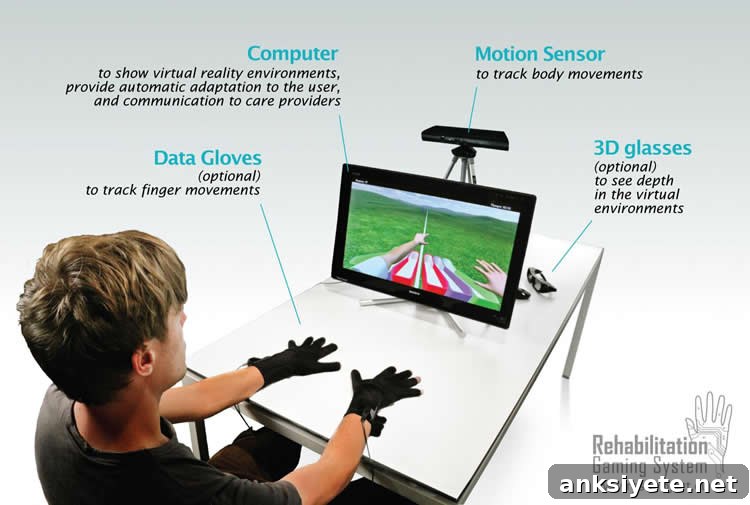
The authors propose that assessing speed-discrimination thresholds for contracting optic flow could serve as a noninvasive diagnostic marker for subclinical balance deficits. Likewise, incorporating velocity-calibrated contracting-flow training into virtual-reality gait rehabilitation programs may help retrain automatic postural reflexes, improve balance responses, and reduce fall incidence.
Editorial Notes:
- This article was edited by a Neuroscience News editor.
- The journal paper was reviewed in full by editorial staff.
- Additional context and clarification were added during editing.
About this visual neuroscience research:
- Media contact: Hayao KIMURA
- Source: National Institutes of Natural Sciences
- Image credit: Image credited to Neuroscience News
- Original research (open access): Journal of Vision (Oct 1, 2026). Title: “Anisotropic speed-discrimination sensitivity for expanding and contracting optic flow.” Authors: Junxiang Luo; Hiroshi Ashida; Isao Yokoi; Hiromasa Takemura.
- DOI: 10.1167/jov.26.10.18
Abstract
Anisotropic speed-discrimination sensitivity for expanding and contracting optic flow
Retinal optic flow provides essential visual signals for locomotion and navigation. Forward self-motion typically produces an expanding radial flow pattern on the retina, while backward motion yields contracting flow. Although expanding optic flow is more common in everyday life, some studies have reported greater sensitivity to contracting flow, which appears during relatively rare events such as walking backward or falling backward.
The basis of this anisotropy has remained unclear. In this study we compared speed-discrimination sensitivity for expanding versus contracting optic flow because speed is a fundamental motion attribute and sensitivity to speed reveals properties of underlying visual mechanisms.
We found that sensitivity was similar for expansion and contraction at low and high speeds but was significantly greater for contraction at an intermediate speed corresponding to ecologically relevant self-motion (walking). This anisotropic pattern appeared for both two-dimensional planar stimuli (Experiment 1) and simulated three-dimensional optic flow (Experiment 2).
These results suggest that anisotropic speed discrimination at typical egomotion speeds may reflect an adaptive visual mechanism that supports postural stability and balance when backward self-motion is rare but potentially dangerous.