
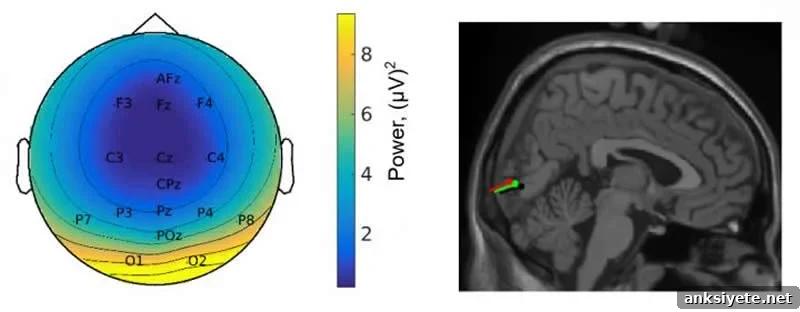
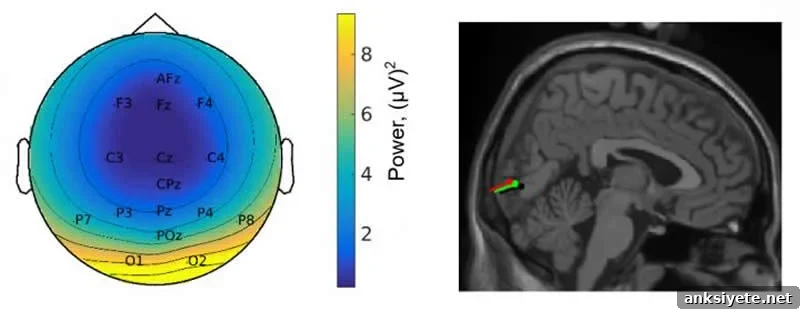
Summary: Walking increases the brain’s processing of peripheral visual input.
Source: University of Wurzburg
How do we perceive our surroundings? Which sensory inputs are handled peripherally and which are processed centrally in the brain? Understanding how movement affects perception is essential for basic neuroscience and may eventually help explain or inform treatments for conditions such as ADHD and Parkinson’s disease.
Most studies of perception and neural activity are conducted under highly controlled conditions: participants sit or lie still—often with their heads fixed—during brain imaging sessions such as MRI. While this approach reduces noise, it captures perception in an artificial state that does not reflect how people typically interact with their environment.
Shift in visual prioritization during locomotion
New research shows that movement changes visual processing: when people walk, their brains and behavior show enhanced processing of peripheral visual information compared with their central vision. This effect is measurable both in behavioral performance and in electrophysiological brain responses.
The shift makes functional sense: peripheral vision conveys critical information about motion, direction, and optic flow that helps guide navigation. “Peripheral visual input provides information about the direction and speed of our movement and therefore plays an important role for navigation,” explains Dr. Barbara Händel of Julius-Maximilians-Universität Würzburg (JMU). Dr. Händel and her colleague Dr. Liyu Cao published their findings in PLOS Biology.
Previous animal studies had shown that increased body movement raises firing rates in visual brain areas. Human behavioral research on how movement affects sensory areas has been limited, but existing studies indicate that cognitive functions can depend on behavioral state—for example, some evidence suggests people learn better while moving. The precise neural mechanisms underlying these effects in humans had remained largely unexplored until now.
Mobile EEG, motion sensors and eye tracking
To study perception during natural behavior, Dr. Händel’s team used a mobile, multi-sensor setup. Participants wore EEG electrode caps and a small amplifier while walking; signals were transmitted wirelessly to a laptop carried in a backpack. The experimental setup also included motion sensors, video glasses, and a portable eye-tracking device to record gaze and blinks.
Although technically demanding, this approach is necessary to understand perceptual strategies that operate during everyday movements. “We have to take this step if we want to understand human perceptual strategies during natural behavior,” says Dr. Händel. Research on perception during motion is still developing, and mobile neurotechnology enables scientists to ask new, ecologically valid questions.
Key findings and implications
The study reports that walking increases the contrast-dependent influence of peripheral visual input on central vision. This enhancement appears in stimulus-locked EEG measures—specifically steady-state visual evoked potentials (SSVEPs)—and aligns with improved perceptual performance for peripheral stimuli during locomotion. Additionally, ongoing alpha oscillations (around 10 Hz) correlated with walking-induced changes in SSVEP amplitude, suggesting alterations in inhibitory neural processes during movement.
Building on these neurophysiological results, a follow-up behavioral experiment showed greater contrast sensitivity for peripheral versus central stimuli while subjects walked. Together, these neurophysiological and behavioral findings in humans complement animal research and indicate that locomotion modulates early visual activity in ways that affect perception.
These results raise many further questions: Is the movement-related shift limited to vision, or do other sensory systems show similar modulation? Beyond navigation, might this shift influence cognitive functions such as memory or creative thinking?
Animal studies have already demonstrated that movement can improve learning, and many cultures have linked walking to creativity. “For example, the Peripatetics, a philosophical school around Aristotle, often discussed ideas while walking, which inspired their name,” notes Dr. Händel. The researchers also observed that blinking rates increase with walking—an effect previously associated with creative problem solving—highlighting connections among body movement, eye behavior, and cognition.
Funding and collaborations
This research was supported by a Starting Grant from the European Research Council (ERC), a competitive award for outstanding early-career scientists. Dr. Händel conducts this work at the Chair of Cognitive Psychology at JMU Würzburg, led by Professor Wilfried Kunde. The study involved 30 participants and benefited from collaboration with the JMU Sports Centre, which provided a sports hall for the walking experiments—a practical and appreciated contribution to the project.
Source:
University of Wurzburg
Media contact:
Barbara Händel – University of Wurzburg
Image credit:
Barbara Händel
Original research (open access):
“Walking enhances peripheral visual processing in humans.” Liyu Cao, Barbara Händel. PLOS Biology. DOI: 10.1371/journal.pbio.3000511
Abstract (summary)
Most cognitive studies suppress voluntary body movement, yet animal research shows that locomotion alters neural responses in early visual areas. This human study demonstrates that walking increases the impact of peripheral visual input on central processing, as revealed by SSVEPs and by improved peripheral contrast sensitivity. Correlations with alpha oscillations point to an altered inhibitory state during walking. These converging neurophysiological and behavioral results indicate that locomotion changes early visual processing and that such neural modulation has specific perceptual consequences.