
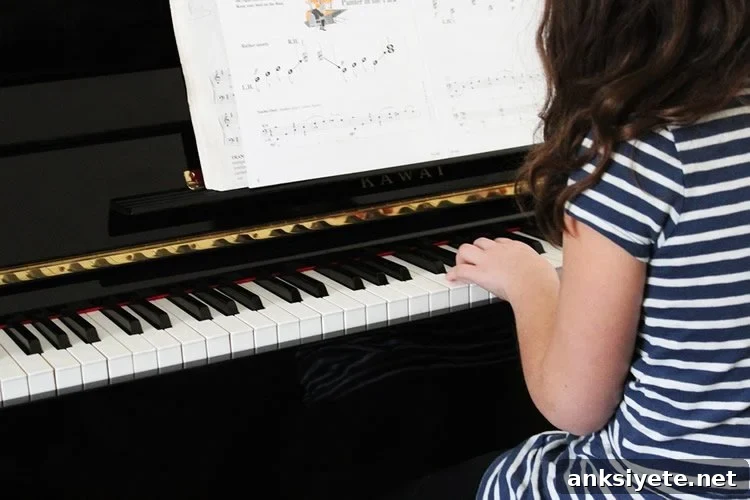
Summary: A new study shows that trained pianists exhibit stronger brain-wave synchronization when improvising, suggesting that creativity can be a distinct, trainable mental state.
Source: University of Western Ontario.
While an undergraduate studying film production and jazz performance at York University, Joel Lopata noticed a striking contrast between the two programs.
“In the jazz program, students were developing a practical language of creative engagement. In film, much of the training was theoretical and less focused on hands-on creative practice,” Lopata recalls. He went on to earn a PhD in Education from Western in 2015, focusing his research on creativity and the mental space associated with jazz performance.
Lopata became particularly interested in improvisation — a central element of jazz — and whether practicing that skill influences a person’s ability to access a creative state. He pursued graduate research to examine how that creative mental space emerges, whether it can be taught, and how it might transfer to other educational settings.
His doctoral study, published in the journal Neuropsychologia and conducted with Education professor Elizabeth Nowicki and Psychology professor Marc Joanisse of the Brain and Mind Institute, measured brain activity in pianists as they listened to, played back, or freely improvised jazz melodies.
The experiment included 22 pianists (13 men and 9 women). During each task, participants wore electroencephalography (EEG) caps that recorded brain-wave activity. Researchers compared neural responses between pianists who had formal training in musical improvisation and those who did not.
Results showed that trained improvisers demonstrated a distinct increase in synchronization of brainwaves — especially in frontal upper alpha-band activity — when improvising compared with when they were playing back rehearsed material. This stronger synchronization was concentrated in frontal regions of the brain, particularly on the right side, indicating a unique pattern of activity tied to improvisatory creativity. Untrained pianists did not show the same increase in synchronization during improvisation.
Further supporting these neural findings, expert listeners who later evaluated the recordings tended to prefer the performances that displayed higher synchronization. In other words, the neural signature associated with improvisation correlated with higher-quality creative output as judged by professionals.
These observations suggest that the creative mental state is not merely a poetic idea but a measurable brain state that is more likely to occur in individuals who have received explicit, formal training in improvisation. Lopata interprets this as evidence that spontaneous creative processing can be nurtured through structured instruction rather than arising only informally or spontaneously.
“We recorded EEGs while musicians — both with and without improvisation training — improvised freely and compared that to more deliberate playback tasks,” Lopata said. “We found a distinct pattern of activity in the front-right brain area during improvisation, consistent with what we call a creative mental state. This state differs from the more analytical, logical modes the brain adopts during rote playback or critical thinking.”
The study raises two central questions: what exactly occurs in the brain during creativity, and can creativity be taught? Lopata’s data point toward both biological predisposition and educational influence. He suggests that while creativity involves a training-dependent brain state, genetic or innate aptitude likely plays a mediating role.
“Genetics appear to set a baseline aptitude for creative thinking,” Lopata notes. “People can improve their creative abilities through training, but to reach elite levels of creative performance may require an innate predisposition that formal training then develops into advanced skill.”
Looking ahead, Lopata hopes to identify specific pedagogical practices and curricula that best cultivate this creative mental state in higher education and beyond. Understanding how to reliably foster spontaneous creative processing across different domains could have wide implications for arts education and other fields that rely on innovation.
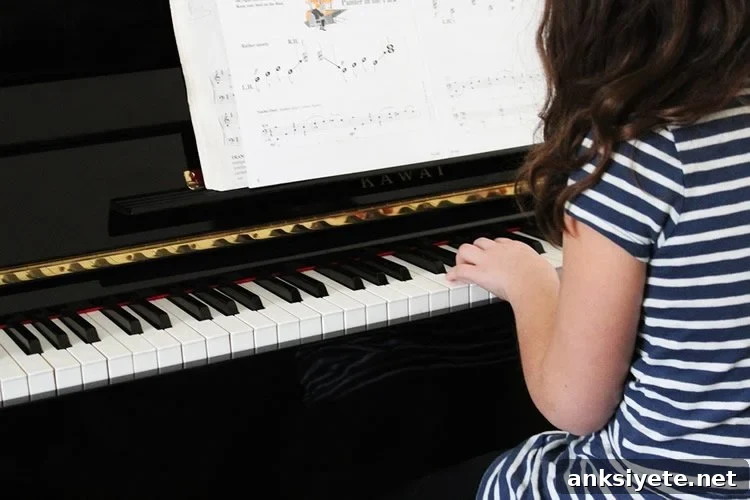
Source: Adela Talbot, University of Western Ontario.
Publisher: Organized by NeuroscienceNews.com.
Image source: NeuroscienceNews.com (public domain).
Original research: Abstract for “Creativity as a distinct trainable mental state: An EEG study of musical improvisation” by Joel A. Lopata, Elizabeth A. Nowicki, and Marc F. Joanisse, published in Neuropsychologia, March 18, 2018.
DOI: 10.1016/j.neuropsychologia.2017.03.020
Abstract
Creativity as a distinct trainable mental state: An EEG study of musical improvisation
This study used alpha-band EEG to examine how creative mental states relate to the production of artistic work in skilled musicians. We contrasted frontal upper alpha-band activity across tasks with high and low creative demands by recording EEG while skilled musicians listened to, played back, and improvised jazz melodies. Neural responses were compared between musicians trained in improvisation and those without formal improvisation training. Consistent with our predictions, frontal upper alpha-band activity increased during tasks demanding greater creativity (improvisation) compared with less creative tasks (rote playback), and this effect was strongest in musicians with formal improvisation training. The magnitude of this neural effect also correlated with objective ratings of performance quality. These findings support the view that creativity can manifest as a distinct mental state and suggest that spontaneous creative processing is more effectively developed through formal training than through informal experience alone.