
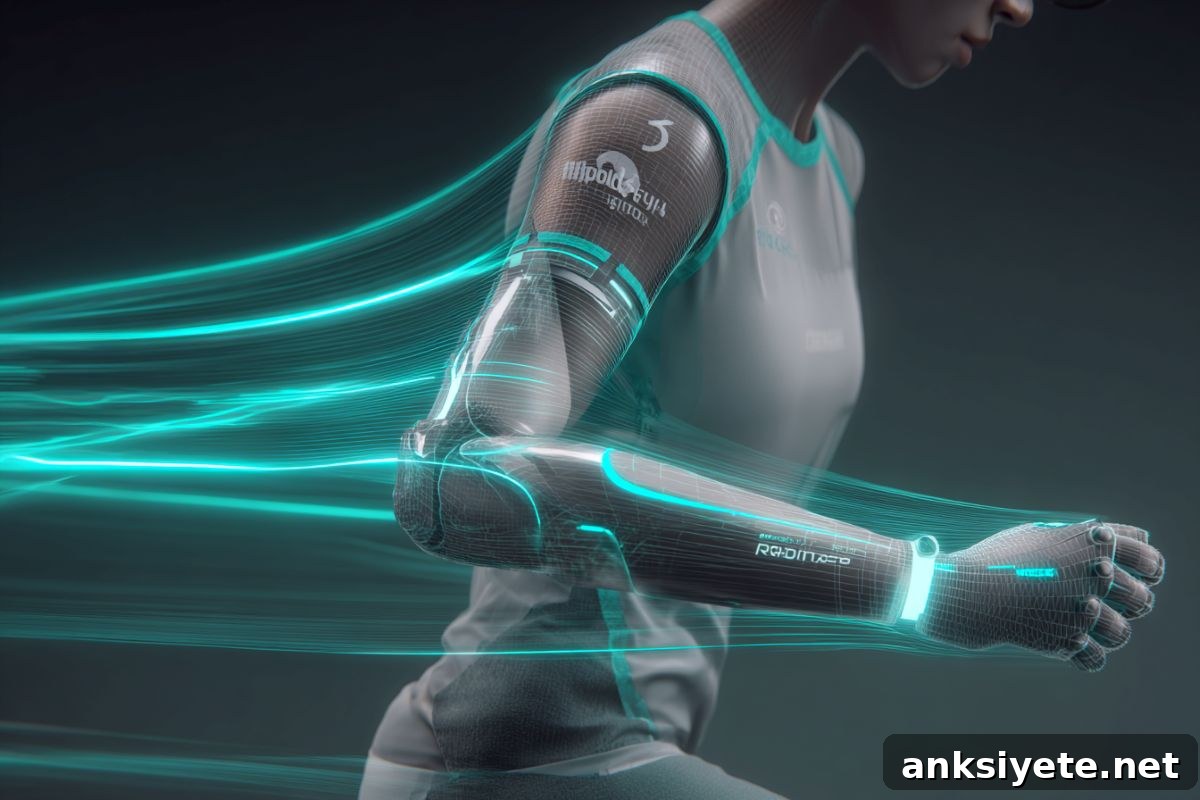
Summary: As AI-enabled prosthetic limbs gain more autonomy, a central challenge remains: how to make an independently moving robotic arm feel like a natural extension of the user’s body. A virtual reality study by researchers at TUT shows that timing matters—movement speed determines whether the brain accepts or rejects an autonomous limb.
The team simulated a prosthetic forearm that flexed toward targets without direct user control and tested six different movement durations. They found a clear “Goldilocks” effect: movements that lasted about one second produced the strongest feelings of body ownership, highest perceived usability, and a greater sense of agency. Movements that were much faster (125 ms) or much slower (4 s) reduced ownership and comfort, with the fastest speeds provoking the most discomfort despite being judged more “competent.”
Key Findings
- Goldilocks speed: A movement duration near one second maximized body ownership and usability.
- Rejection at extremes: Very fast (125 ms) and very slow (4 s) movements significantly lowered users’ sense of agency and acceptance.
- Competence vs. comfort: Faster actions can appear more competent but feel less natural and more unsettling.
- Broader relevance: These results apply to other wearable and augmentative robotics—such as extra limbs and exoskeletons—that act semi-autonomously.
- Value of VR: Virtual reality enabled safe testing of autonomous prosthetic behaviors and user perceptions before such devices are widely available.
Source: TUT
Why this matters
When a limb acts independently of a person’s intention, it can feel alien or unsettling, even if it increases functional performance. Much prosthetics research focuses on decoding intention from biosignals (EMG, EEG) to let users directly control devices. But advances in machine learning and AI make autonomous and semi-autonomous assistance increasingly plausible. To ensure users accept these future prostheses, designers must consider not only accuracy and speed but also how movement characteristics interact with human perception.
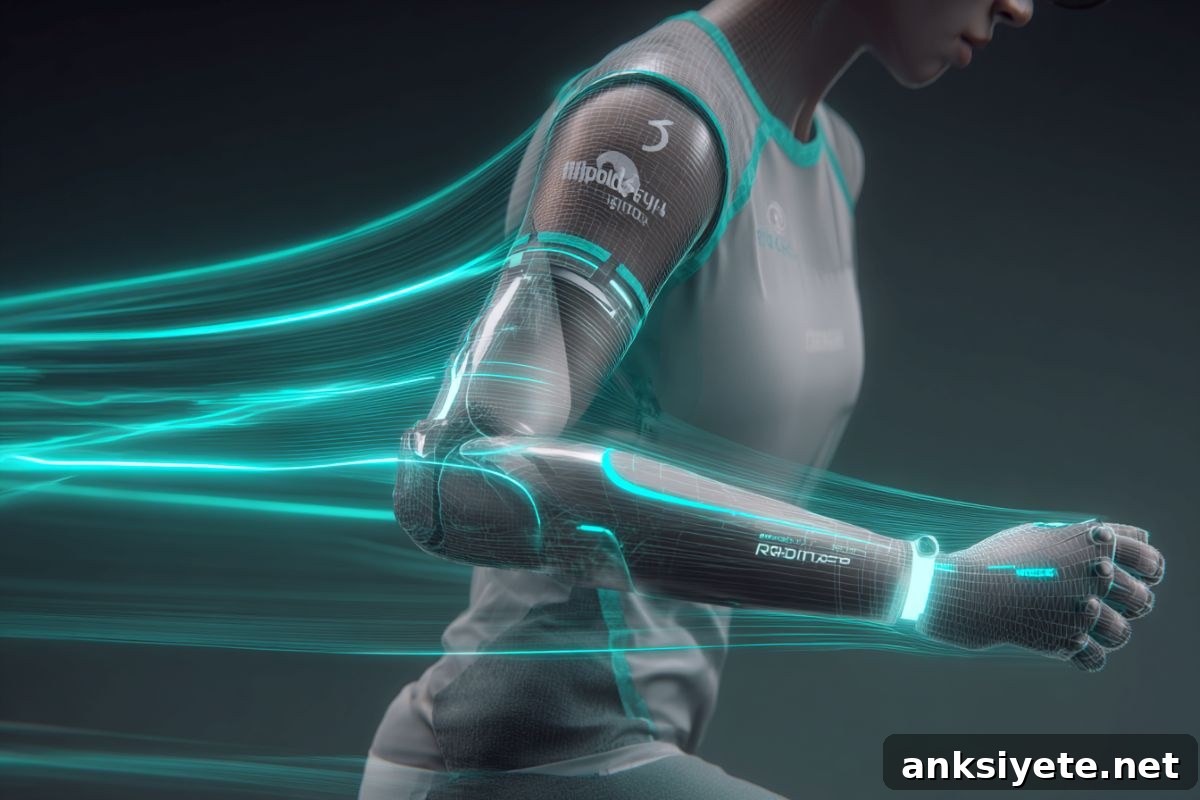
In the VR experiment, participants embodied an avatar whose left forearm was replaced by a prosthetic forearm that moved autonomously along smooth, minimum-jerk trajectories. The prosthetic performed a simple reaching task while movement duration varied across six levels, from very fast to very slow. After each condition, participants rated body ownership, sense of agency, usability (System Usability Scale), and social impressions including perceived competence, warmth, and discomfort.
Results showed that ownership, agency, and usability peaked at the moderate speed (around 1 second per movement). Both extremes—very fast and very slow movements—reduced these subjective measures. Perceived competence increased at moderate and moderately fast speeds, but discomfort was highest at the fastest speed. Warmth did not vary systematically with speed.
These findings suggest designers of autonomous prostheses and other robotic body augmentations should prioritize human-like timing in movement profiles. Matching expected human temporal dynamics appears more important for psychological integration than simply maximizing mechanical speed.
Implications and next steps
Beyond informing prosthetic controllers, the study’s insights extend to supernumerary robotic limbs, exoskeletons, and wearable robots that serve as functional extensions of the body. An important open question is adaptation: prolonged daily use may shift what users accept as “normal.” A device that initially feels fast or odd could become embodied through repeated use, improving usability and acceptance over time. Future research should examine long-term adaptation and learning in real-world contexts.
Using virtual reality is a practical method to evaluate psychological and design requirements in advance, allowing researchers to safely explore control strategies that are not yet widely deployed in physical devices.
Funding: This research was supported by JSPS KAKENHI (JP22KK0158), the Murata Science and Education Foundation, JST (JPMJFS121), and MEXT (202334Z302).
Key Questions Answered
A: Speed shapes whether the arm feels like an extension of the body or an external tool. Speeds that align with typical human movement expectations help the brain accept the limb as part of the self.
A: Yes. When autonomous motion matches humanlike timing, people reported a higher sense of agency despite not directly initiating the movement.
A: Prostheses can be capable of high-speed motion, but designers should tune default or everyday movements to natural speeds to promote comfort and embodiment. High-speed capabilities may still be useful for specific tasks.
Editorial Notes
- Article edited by a Neuroscience News editor.
- Journal paper reviewed in full by staff.
- Contextual background added for clarity.
About this research news
Author: Shino Okazaki
Source: TUT
Contact: Shino Okazaki – TUT
Image credit: Neuroscience News
Original research: Movement speed of an autonomous prosthetic limb shapes embodiment, usability and robotic social attributes in virtual reality by Hapuarachchi, H., Inoue, Y., Shigemasu, H., & Kitazaki, M., Scientific Reports. DOI: 10.1038/s41598-026-38977-8 (open access).
Abstract
Movement speed of an autonomous prosthetic limb shapes embodiment, usability and robotic social attributes in virtual reality
Autonomous prosthetic limbs can restore function and appearance for people with limb loss, but psychological integration requires understanding how movement characteristics influence embodiment. In a VR study with nineteen healthy participants, an amputated virtual avatar used an autonomous prosthetic lower left arm that moved at six speeds along minimum-jerk trajectories. After reaching tasks at each speed, participants rated body ownership, agency, usability, competence, warmth, and discomfort. Ownership, agency, and usability peaked at moderate speeds (movements lasting ~1 s) and were significantly lower for both very fast (125 ms) and very slow (4 s) movements (p < 0.05). Competence was higher at moderate and moderately fast speeds; discomfort was highest at the fastest speed. Overall, moderate movement speeds favor positive user perception and suggest an optimal speed range for enhancing embodiment and usability.