
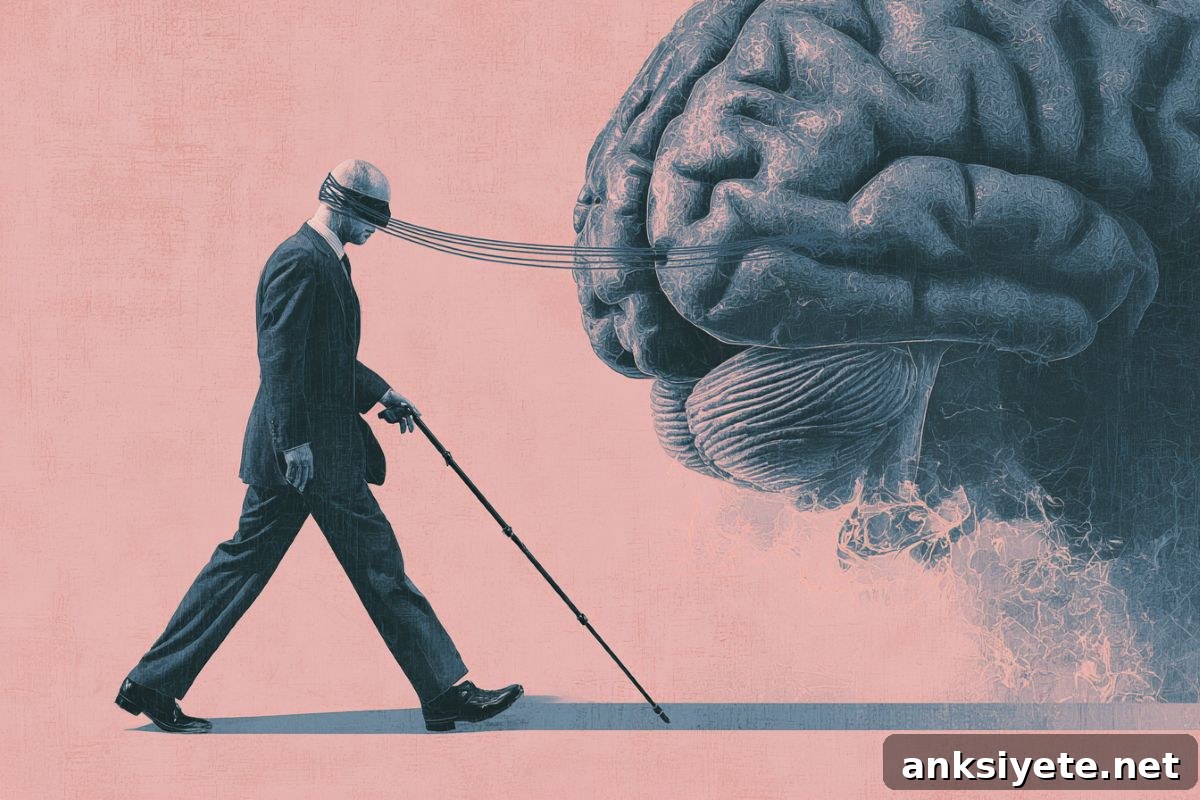
Summary: A new study reveals how the human brain rapidly reorganizes its neural circuitry to preserve walking stability when vision is degraded. Using Bangerter™ occlusion foils to simulate low-quality vision in healthy adults, researchers combined pattern-reversal visual evoked potentials (PR-VEPs) with resting-state functional MRI (rs-fMRI) to measure immediate brain changes after walking. The findings show a two-part compensatory strategy: a broad, rigid activation of primary sensorimotor pathways together with a targeted increase in connectivity between motor execution and higher-order cognitive control regions. These results offer a clear neural roadmap to guide personalized, multimodal mobility rehabilitation for people with low vision.
Key Facts
- Low-vision simulation: Researchers applied Bangerter™ occlusion foils to produce stable, low-quality visual input and confirmed a measurable decline in visual pathway processing efficiency via PR-VEPs.
- Paracentral lobule response: Under normal vision, walking reduced the amplitude of low-frequency fluctuations (ALFF) in the right paracentral lobule versus rest. When vision was occluded, ALFF in this region rebounded slightly after walking, indicating a rapid local functional adjustment.
- Widespread sensorimotor activation: Walking engaged multiple visuomotor and sensorimotor regions, including bilateral calcarine and middle temporal gyri, the supplementary motor areas, the right cuneus, bilateral precentral gyri, and the right cerebellar lobule VI.
- Core compensatory connection: The strongest adaptive change was an increased functional connectivity between the right precentral gyrus (motor execution) and the middle frontal gyrus (cognitive control), which likely serves as a primary compensatory pathway when visual input is reduced.
- Clinical implications: The authors advocate for integrated visual-somatosensory training that targets these specific pathways, supporting development of personalized brain-level rehabilitation programs for people with low vision.
Source: Chinese Medical Journal
Vision functions as a navigation radar for human locomotion, delivering environmental data that the brain uses to guide motor decisions through sensorimotor integration. When visual input is impaired, how does the brain reorganize to preserve walking stability?
Understanding this neural adaptation can inform new approaches to motor rehabilitation for people with visual impairment. This study simulated visual degradation with Bangerter™ foils and combined electrophysiological measures (PR-VEPs) with rs-fMRI to compare visual processing and walking-related brain activity in healthy young adults under normal vision and visual occlusion.
Published in Volume 139, Issue 06 of the Chinese Medical Journal (March 20, 2026), the study confirmed that simulated visual impairment reduced visual signal-processing efficiency and validated the occlusion model. Rs-fMRI analyses showed that after walking with normal vision, ALFF decreased in the right paracentral lobule compared with rest. In contrast, ALFF in that region increased slightly after walking when vision was occluded, reflecting a rapid local adaptive change.
Across conditions, walking activated multiple visuomotor pathways that support basic locomotion: bilateral calcarine and middle temporal gyri, bilateral supplementary motor areas and the right cuneus, bilateral precentral gyri, and right cerebellar lobule VI. Crucially, visual occlusion further strengthened functional connectivity between the right precentral gyrus and the middle frontal gyrus, suggesting this connection acts as a compensatory bridge that supplements missing visual information with increased cognitive control over motor execution.
Overall, the brain appears to preserve walking function under degraded vision by combining broad, stable activation of core sensorimotor circuits with focused enhancement of specific connections that integrate motor plans with executive control. These neural adjustments form a concrete blueprint for targeted rehabilitation strategies.
Future rehabilitation programs could use combined visual-somatosensory training—mixing tactile feedback, balance exercises, and any residual visual cues—to deliberately engage and strengthen the right precentral-to-middle frontal pathway and other key networks. By driving functional changes at the brain level, such multimodal interventions may help low-vision patients regain safer, more confident mobility.
Funding information: This work was supported by the National Natural Science Foundation of China (grant number: 81600760).
Key Questions Answered:
A: The eyes continuously stream spatial and environmental information to the brain, which integrates that visual data with motor control processes to make split-second adjustments while walking. When vision is degraded, that primary mapping tool is weakened, and the brain rapidly reconfigures its processing pathways to preserve balance and forward motion.
A: The right precentral gyrus governs motor execution, while the middle frontal gyrus supports higher-level cognitive control and planning. Strengthening communication between these regions helps the brain replace lost visual guidance with more conscious, executive control of movement, improving coordination under uncertain sensory conditions.
A: Rehabilitation can shift from purely physical practice to brain-informed, multimodal training. Therapies that combine tactile cues, balance tasks, and residual visual input can be designed to specifically activate and strengthen the precentral-to-frontal pathways, encouraging neural plasticity that supports safer, more stable walking.
Editorial Notes:
- This article was edited by a Neuroscience News editor.
- The journal paper was reviewed in full.
- Additional context was provided by staff editors.
About this visual neuroscience research news
Author: Tingting Yang
Source: Chinese Medical Journal
Contact: Tingting Yang – Chinese Medical Journal
Image: Image credited to Neuroscience News
Original Research: Open access. “Resting-state functional magnetic resonance imaging study on the effects of visual status on walking-related brain functions in healthy young adults” by Mingxin Ao, Ruilan Dai, Xiaoming Shi, Yunan Zhou, Mingxuan Gao, and Yingfang Ao. DOI: 10.1097/CM9.0000000000004040
Abstract
Resting-state functional magnetic resonance imaging study on the effects of visual status on walking-related brain functions in healthy young adults
Background:
Visual input supports locomotion through sensorimotor integration, but the neural mechanisms that allow the brain to adapt to reduced vision are not fully understood. This study examined how visual occlusion affects interactions within sensorimotor networks during walking.
Methods:
Twelve healthy young adults (8 males, 4 females; mean age 24.0 ± 2.1 years) were recruited from the Department of Ophthalmology at Peking University Third Hospital between December 2024 and September 2025. Pattern-reversal visual evoked potentials were recorded under normal vision and under simulated visual occlusion (Snellen equivalent ~20/60). Resting-state fMRI data were acquired to calculate amplitude of low-frequency fluctuations (ALFF) and seed-based functional connectivity focused on visuomotor integration regions. A one-way repeated-measures analysis of variance compared three within-subject conditions: seated rest, level walking with normal vision, and level walking with visual occlusion.
Results:
Checkerboard stimuli with large (1°) and small (15′) checks were used. Under 1° stimulation, visual occlusion prolonged binocular P100 latency and reduced N75–P100 amplitude (all P < 0.05). For 15′ stimulation, occlusion significantly decreased N75–P100 and P100–N135 amplitudes (all P < 0.001). Rs-fMRI showed reduced ALFF in the right paracentral lobule after walking (peak MNI coordinates: 3, –39, 66; P < 0.001, F = 14.009). Walking activated multiple visuomotor pathways (all P < 0.001), including bilateral calcarine and middle temporal gyri, right calcarine and middle frontal gyri, bilateral supplementary motor areas and right cuneus, bilateral precentral gyri, and right cerebellar lobule VI. Visual occlusion specifically strengthened functional connectivity between the right precentral and right middle frontal gyri (peak MNI: 27, 57, 27; F = 16.456, P < 0.001).
Conclusions:
Core visuomotor pathways remain active to support locomotion, while increased connectivity between the right precentral and middle frontal gyri appears to be a key compensatory mechanism when visual input is reduced. These findings support targeted multimodal rehabilitation strategies designed to engage and reinforce specific brain networks to improve mobility in people with visual impairment.