
Summary: Global dementia cases are projected to reach 139 million by 2050. To accelerate prevention and treatment efforts, researchers at Texas A&M have received $1.325 million in seed grants to advance studies focused on environmental drivers of cognitive decline and novel therapies.
A recent study investigates how environmental stressors — in particular disruption of the circadian rhythm — speed cognitive aging by impairing the brain’s immune cells. The research team is now testing an innovative extracellular vesicle (EV) therapy designed to protect microglia and reduce the neuroinflammation linked to Alzheimer’s disease.
Key Research Findings
- The Circadian Trigger: Disrupted sleep-wake cycles, common among night-shift workers and people with irregular schedules, activate microglia, the brain’s primary immune and clearing cells.
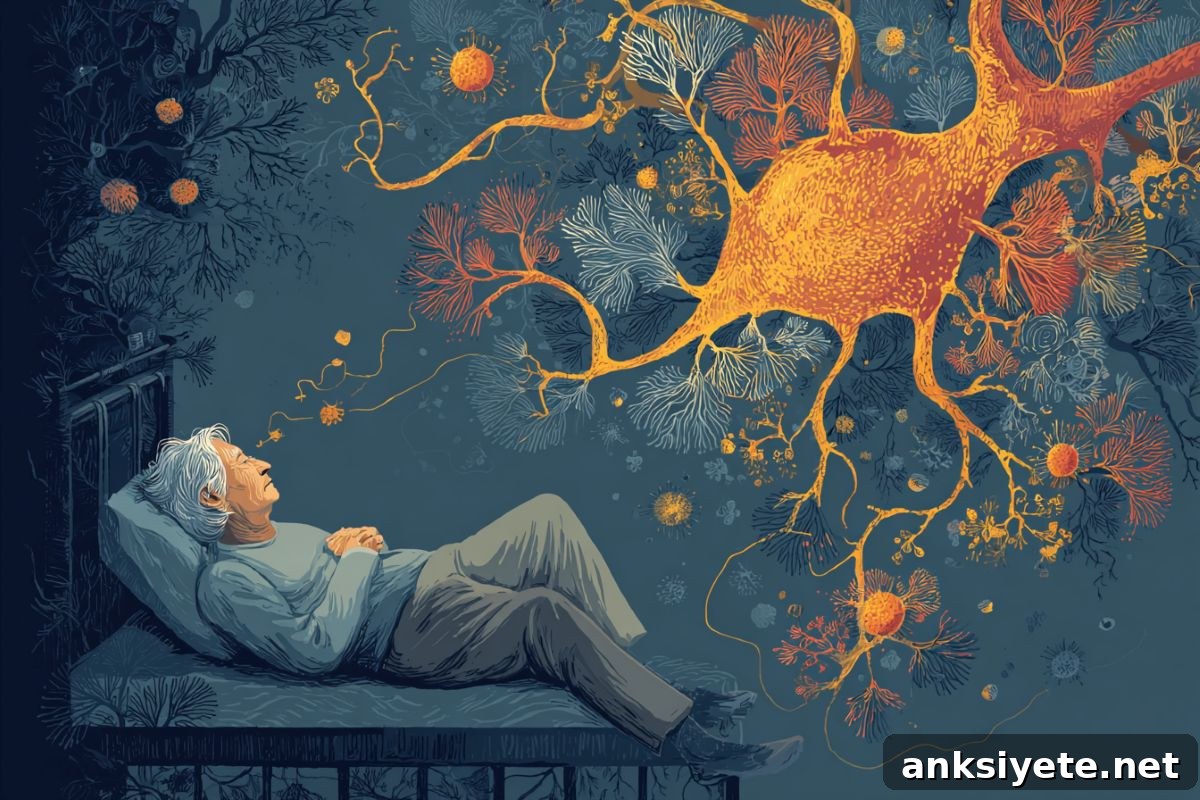
- “Stress-Primed” Microglia: Healthy microglia display a branched, tree-like shape that supports surveillance and repair. Souza’s team identified microglia with abnormal branching — so-called stress-primed cells — which indicates altered function and a shift toward a dysfunctional state.
- Debris and Plaque Buildup: When microglia stop clearing damaged cells and amyloid plaques effectively, debris accumulates. This accumulation is a major contributor to dementia onset and progression.
- EV Therapy Breakthrough: Developed by Ashok Shetty, extracellular vesicle therapy uses nanoparticles derived from stem cells that carry anti-inflammatory and protective proteins. These EVs interact with microglia to keep them in a protective, noninflammatory state.
- Environmental vs. Genetic Risk: Souza highlights that only about 3% of Alzheimer’s risk is strictly genetic, while the remaining 97% is influenced by environmental and lifestyle factors — underscoring the importance of studying sleep, work patterns, and other modifiable risks.
Source: Texas A&M
Alzheimer’s disease and other dementias affect roughly 55 million people worldwide, including about 7.2 million in the United States. With roughly 10 million new cases each year, global prevalence is expected to rise to 78 million by 2030 and 139 million by 2050.
Responding to these trends, Texas A&M Health and the Division of Research launched the Dementia & Alzheimer’s Research Initiative (DARI) to speed early detection, prevention, and more effective treatments. DARI recently distributed $1.325 million in seedling grants to support 11 Texas A&M research projects focused on Alzheimer’s and related dementias.
Karienn Souza, a research assistant professor at the Naresh K. Vashisht College of Medicine at Texas A&M University, is among the inaugural 2026 seedling grant recipients.
In collaboration with David Earnest, Souza published a study examining how chronically disrupted circadian rhythms—similar to those experienced during extended shift work—may accelerate cognitive aging. The team developed an animal model to study how long-term misaligned sleep-wake cycles affect the brain’s immune response.
Their findings were striking. Chronic circadian disruption led to sustained activation of microglia, the brain’s clean-up crew that also modulates inflammation. Over time, these changes impaired microglial function and increased conditions that favor damage and plaque accumulation.
“Microglia are immune cells in the brain that change shape and function in response to the brain’s environment,” Souza explains. “They can transition from a surveillance, protective state to an inflammatory state, depending on the signals they receive. In our model, circadian disruption shifted microglia toward a stress-primed form that appears less able to clear debris.”
The working hypothesis is straightforward: when microglia are compromised, the brain’s ability to remove damaged cells and toxic proteins such as amyloid declines. This persistent accumulation can contribute to cognitive decline and the progression of dementia over time.
Using DARI funding, Souza’s project applies the circadian-disruption model to test whether Shetty’s EV therapy can prevent or reverse microglial dysfunction and the inflammation linked to dementia. Shetty’s prior work suggests that stem-cell-derived EVs carry proteins and signals that keep microglia in a protective, noninflammatory state, reducing the inflammation and cellular damage associated with Alzheimer’s pathology.
If successful, the EV approach could preserve healthy microglial function, limiting the chronic inflammation that contributes to neurodegeneration. The current seed grant will generate preliminary data to better understand how environmental risks like irregular work schedules influence Alzheimer’s vulnerability and to refine strategies for preventing disease progression.
“Only about 3% of Alzheimer’s risk is genetic; the majority is environmental,” Souza emphasizes. “That makes it essential to identify and mitigate environmental triggers and to develop targeted therapies that counteract their effects.”
For Souza, DARI also provides a platform for collaboration between early-career investigators and established experts. “DARI enables partnerships that combine different areas of expertise,” she says. “Collaborating with a leader in aging and inflammation like Dr. Shetty gives us a much stronger chance to develop interventions that could change many lives.”
Key Questions Answered:
A: It’s not that simple. Chronic circadian disruption is a significant environmental stressor. Over time, persistent sleep-wake misalignment can prime the brain’s immune cells to stop clearing toxic debris, which may accelerate cognitive aging and increase the risk of neurodegenerative disease.
A: Extracellular vesicles are nano-sized particles released by cells, including stem cells, that carry proteins, lipids and signaling molecules. In therapy, EVs deliver protective signals to brain immune cells to encourage a noninflammatory, neuroprotective state.
A: That is the goal. By identifying modifiable environmental triggers — such as irregular social or work schedules — and developing interventions like EV therapy to counteract their effects, researchers aim to reduce risk and prevent or delay disease onset.
Editorial Notes:
- This article was edited by a Neuroscience News editor.
- Journal paper reviewed in full.
- Additional context added by staff.
About this Alzheimer’s disease research news
Author: Laura Tolentino
Source: Texas A&M
Contact: Laura Tolentino – Texas A&M
Image: The image is credited to Neuroscience News