
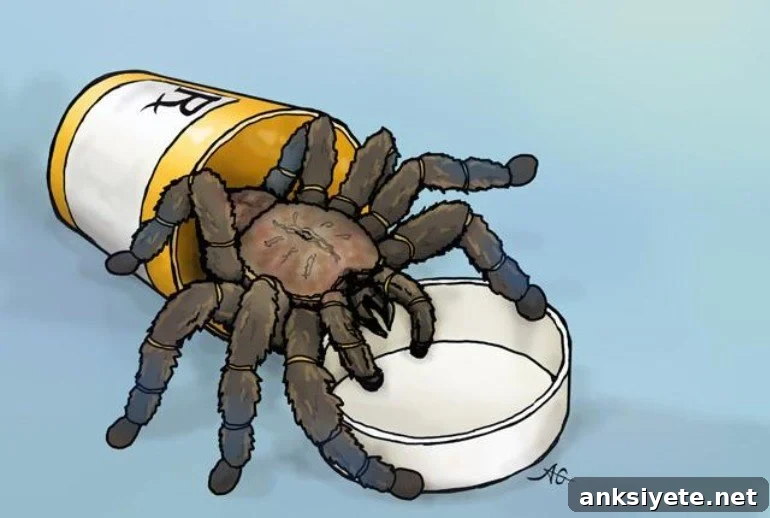
Summary: A tarantula’s venom disables its prey by targeting voltage-gated sodium channels, blocking the voltage sensor that generates electrical signals in nerve cells.
Source: UW Medicine
Large, hairy tarantulas may look intimidating, but their venom contains a highly effective hunting toxin that is drawing attention from medical researchers. New structural data shed light on how this toxin immobilizes prey and point to promising strategies for developing safer treatments for chronic pain.
Researchers studying the venom of a bird-catching Chinese tarantula found that the toxin behaves like a biochemical stinger. Using high-resolution cryo-electron microscopy (cryo-EM), the team captured how the toxin wedges itself into the voltage sensor of sodium channels—tiny protein pores in cell membranes that generate the electrical currents responsible for nerve and muscle signals. By locking the sensor in its resting position, the toxin prevents the channel from activating and stops electrical signaling.
The study, published in the journal Molecular Cell, provides a detailed molecular picture of this trapping mechanism and explains the speed and potency of the tarantula’s venom. “The action of the toxin has to be immediate because the tarantula has to immobilize its prey before it takes off,” said William Catterall, professor of pharmacology at the University of Washington School of Medicine and senior author of the study, along with Ning Zheng, professor of pharmacology and an investigator at the Howard Hughes Medical Institute.
Although tarantulas are often regarded as ugly or dangerous, their toxins reveal a specific biochemical strategy: stabilizing the resting state of the voltage sensor on voltage-gated sodium channels and shutting down channel function. Understanding this mechanism at high resolution creates opportunities for rational drug design aimed at blocking sensory nerve signals involved in pain.
Chronic pain is a major clinical challenge and current treatments can lead to serious risks, including opioid addiction and overdose. Catterall emphasized the urgent need for safer, non-addictive analgesics, and said the structural insights from tarantula toxin action may guide the development of targeted pain medicines that avoid those risks.
Capturing the functional toxin–channel complex has been difficult, however, so the researchers engineered a chimeric sodium channel to reveal the interaction. They grafted the toxin-binding region of the human Nav1.7 channel—a channel subtype that plays a central role in pain signaling—onto a bacterial model channel. This chimeric construct stabilized the channel–toxin complex long enough for cryo-EM imaging and produced a clear view of how the toxin binds.
The structure shows that the toxin uses a key lysine residue that acts like a stinger, penetrating a cluster of negative charges in the S3–S4 linker of the voltage sensor and locking it in the resting conformation. This resting-state–specific interaction explains how the toxin achieves high affinity and rapid immobilization. Similar toxins from other spiders and arthropods use related mechanisms to paralyze prey.
The specific human channel region used in the chimera is from Nav1.7, which transmits pain signals from the peripheral nervous system to the spinal cord and brain. Because Nav1.7 is so closely tied to pain perception, it is a prime target for next-generation pain therapeutics. “Our structure of this potent tarantula toxin trapping the voltage sensor of Nav1.7 in the resting state provides a molecular template for future structure-based drug design of next-generation pain therapeutics that would block function of Nav1.7 sodium channels,” Catterall said.
Lead authors of the study were Goragot “George” Wisedchaisri and Lige Tonggu from the UW School of Medicine Department of Pharmacology. Other contributors included Tamer M. Gamal El-Din and Eedann McCord, now with the Department of Physiology and Biophysics at the UW medical school. The researchers reported no competing interests.
About this neuroscience research news
Source: UW Medicine
Contact: Leila Gray – UW Medicine
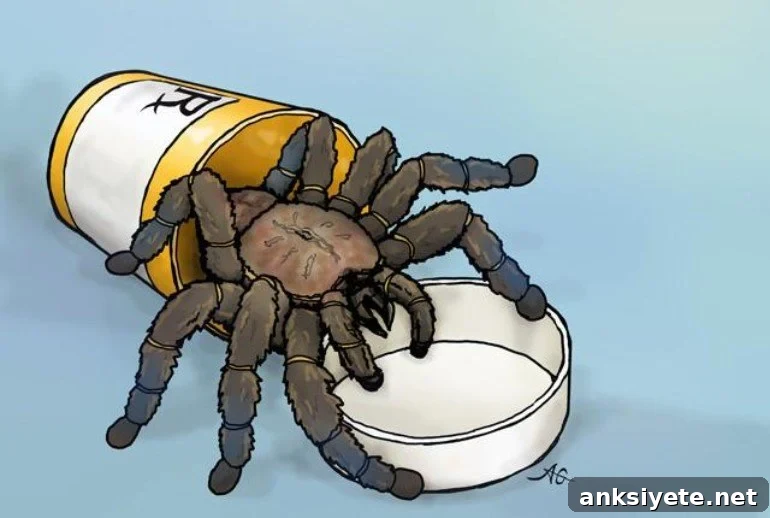
Image: The image is credited to Alice C. Gray
Original Research: Closed access. “Structural Basis for High-Affinity Trapping of the NaV1.7 Channel in Its Resting State by Tarantula Toxin” by William Catterall et al., Molecular Cell. DOI: 10.1016/j.molcel.2020.10.039
Abstract
Structural Basis for High-Affinity Trapping of the NaV1.7 Channel in Its Resting State by Tarantula Toxin
Voltage-gated sodium channels initiate electrical signals and are common targets of gating-modifier neurotoxins, including tarantula toxins that trap the voltage sensor in its resting state. Because capturing the functionally relevant toxin–channel complex has been challenging, the structural basis of tarantula-toxin action remained unclear. Here, researchers engineered the model sodium channel NaVAb with voltage-shifting mutations and the toxin-binding site of human NaV1.7, an attractive pain target. This mutant chimera enabled determination of the cryo-EM structure of the channel arrested by tarantula toxin. The structure reveals a high-affinity, resting-state-specific interaction in which a key lysine residue of the toxin penetrates a triad of carboxyl groups in the S3–S4 linker of the voltage sensor. By defining this binding mode, the study establishes a high-resolution docking and resting-state locking mechanism for huwentoxin-IV and provides a structural foundation for developing future resting-state-targeted analgesic drugs.