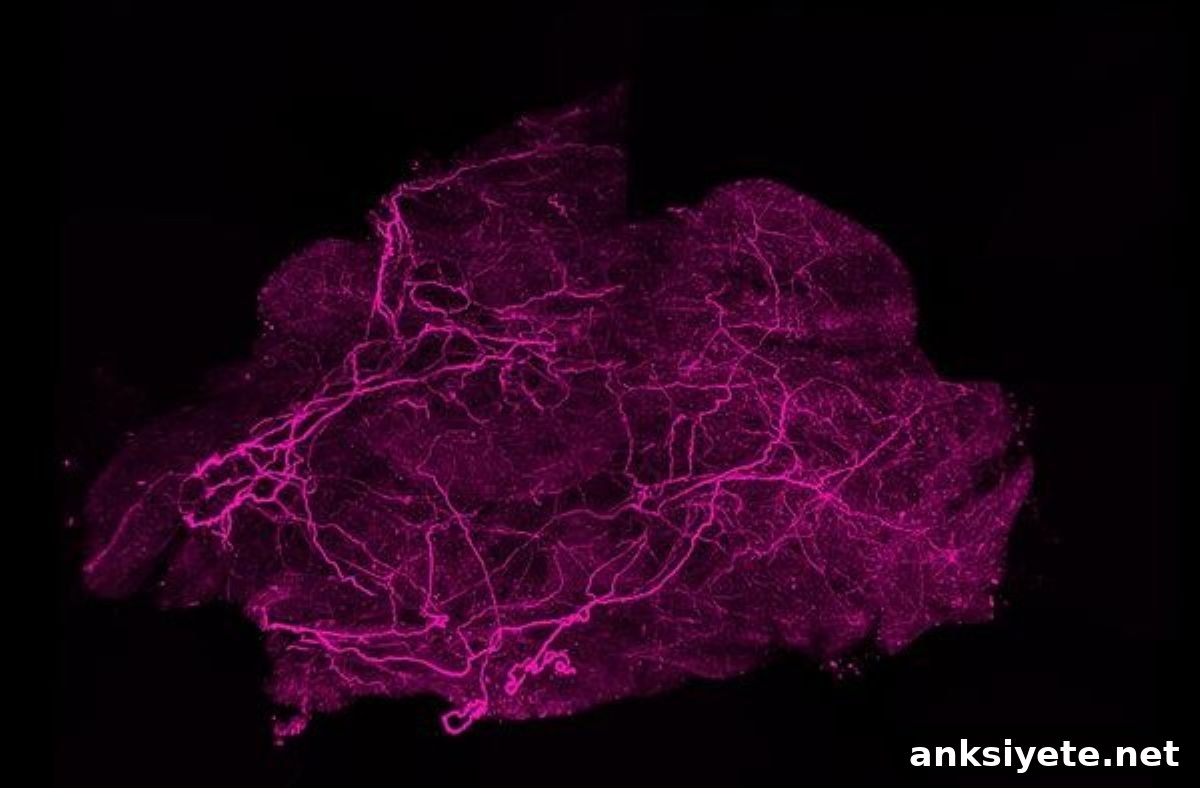
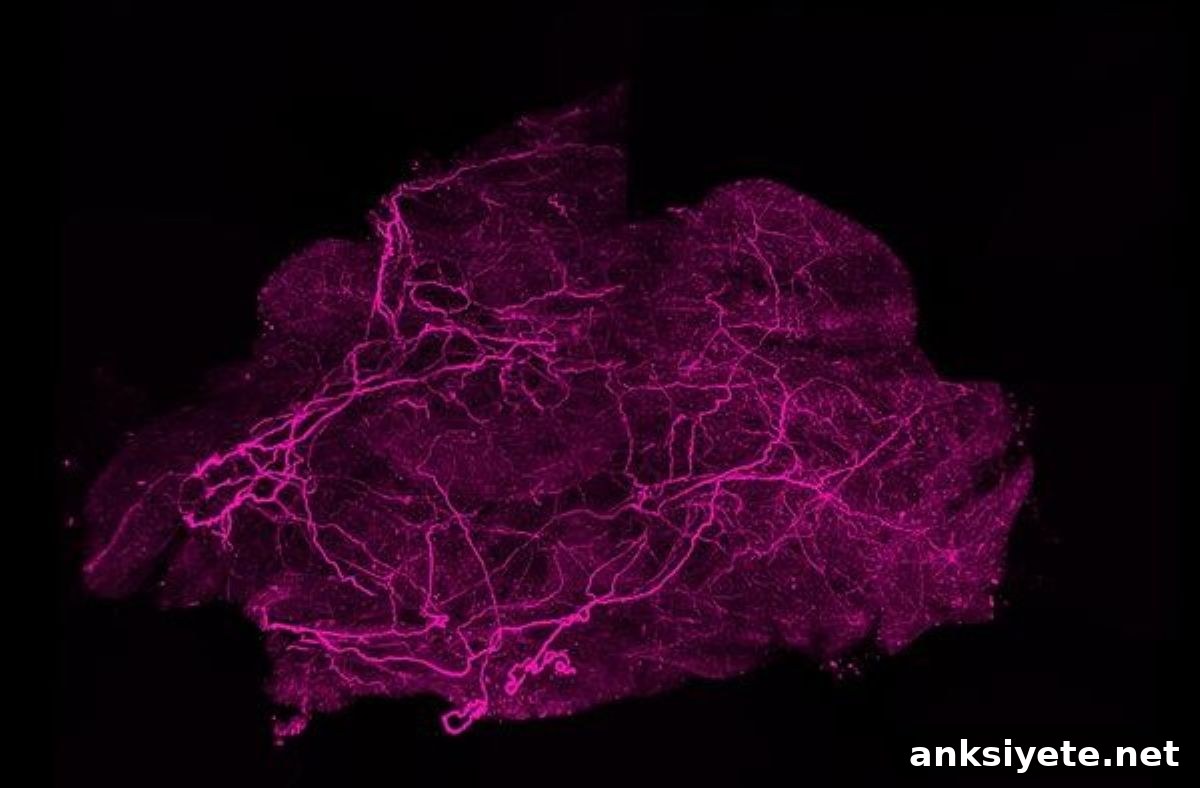
Summary: While many current weight-loss treatments such as GLP-1 medications reduce appetite, researchers have identified a different strategy: increasing energy expenditure by enhancing the body’s natural heat-producing tissue, brown adipose tissue (brown fat). New work explains how a protein called SLIT3 coordinates growth of the nerve and blood vessel networks that brown fat needs to burn calories effectively.
The study shows that SLIT3 is cleaved into two distinct fragments that act as a “split signal”: one fragment promotes blood vessel growth to supply fuel, and the other promotes sympathetic nerve growth to relay the brain’s “turn on” signal. Without this coordinated neurovascular infrastructure, brown fat cannot respond to cold or act as a metabolic sink that consumes glucose and lipids. These findings point to potential obesity treatments that focus on increasing energy outflow rather than only reducing intake.
Key Facts
- Split Signal Mechanism: Brown fat cells secrete SLIT3, which is cleaved by the enzyme BMP1 into two functionally distinct fragments. One fragment drives angiogenesis (blood vessel growth), the other promotes sympathetic innervation (nerve growth).
- Metabolic Sink Concept: When activated, brown fat draws in glucose and lipids and dissipates that chemical energy as heat (thermogenesis) instead of storing it as white fat, helping to lower circulating nutrients.
- PLXNA1 Receptor: The receptor PLXNA1 binds one SLIT3 fragment and controls nerve density in brown fat. Mice lacking PLXNA1 in brown fat failed to maintain body temperature in the cold because their tissue lacked appropriate innervation and vascular support.
- Evidence in Humans: Analysis of fat tissue from more than 1,500 people revealed that SLIT3 gene expression correlates with markers of metabolic health, inflammation, and insulin sensitivity in obesity, suggesting human relevance.
Source: NYU
Researchers map how SLIT3 activates brown fat by expanding its blood vessel and nerve networks.
Published in Nature Communications, this study challenges the prevailing focus on appetite suppression by offering an alternative: boost energy expenditure through the body’s thermogenic machinery. Brown fat is a specialized tissue that, unlike white fat which stores energy, converts glucose and lipids into heat during cold exposure. That heat production—thermogenesis—relies on dense networks of blood vessels and sympathetic nerves within brown fat.
“During thermogenesis, chemical energy is released as heat instead of being stored as white fat,” said Farnaz Shamsi, assistant professor of molecular pathobiology at NYU College of Dentistry and the study’s senior author. “By rapidly taking up and using fuel sources from the body and recent meals, brown fat functions as a metabolic sink that prevents excess nutrients from being stored.”
Brown fat requires two interdependent systems to work: sympathetic nerves to receive rapid activation signals from the brain in response to cold, and blood vessels to deliver oxygen and nutrients and to help circulate generated heat. Prior research emphasized stimulating brown adipocytes directly, but less was known about how the tissue builds and coordinates the vascular and neural networks that enable sustained thermogenic activity.
Using single-cell RNA sequencing, Shamsi’s lab previously identified SLIT3 as a secreted factor from brown adipocyte progenitors. In the current study, the team identified BMP1 as the protease that cleaves SLIT3 into SLIT3-N and SLIT3-C fragments. They then demonstrated that each fragment has a separate role: one fragment promotes angiogenesis and the other promotes sympathetic innervation.
“It’s an elegant, bifurcated signaling system,” Shamsi said. “Two components derived from a single protein independently regulate distinct but tightly coordinated processes—vascular expansion and neural innervation—ensuring brown fat responds effectively to environmental cues.”
The researchers also identified PLXNA1 as a receptor for SLIT3-C that is essential for sympathetic nerve growth within brown fat. In mouse studies, deletion of Slit3 or of Plxna1 in brown fat produced tissues with sparse nerves and insufficient vasculature; those mice were unable to maintain core temperature during cold exposure, demonstrating a functional consequence of disrupted neurovascular growth.
To assess relevance for humans, the research team analyzed fat samples from more than 1,500 people, including individuals with obesity. They found that SLIT3 expression levels were associated with measures of tissue health, inflammation, and insulin sensitivity, supporting a role for this pathway in human metabolic regulation.
Unlike weight-loss drugs that mainly reduce food intake by modifying appetite, interventions based on improving brown fat infrastructure aim to raise energy expenditure. By enhancing the SLIT3-BMP1-PLXNA1 axis, therapies could “renovate” existing brown fat—improving its wiring and blood supply so it more efficiently draws in and burns excess nutrients.
“Simply having brown fat is not enough; you need the right internal infrastructure for heat production,” Shamsi emphasized. Mapping how SLIT3 fragments coordinate vascular and neural growth reveals multiple potential targets to boost thermogenesis and metabolic health.
Additional authors include Tamires Duarte Afonso Serdan, Heidi Cervantes, Benjamin Frank, Akhil Gargey Iragavarapu, Qiyu Tian, Daniel Hope, Halil Aydin, Chan Hee Choi, Paul Cohen, Anne Hoffmann, Matthias Blüher, Adhideb Ghosh, Christian Wolfrum, Matthew Greenblatt, and Gary Schwartz, representing institutions including NYU College of Dentistry, Rockefeller University, University of Leipzig, ETH Zurich, Weill Cornell Medical College, and Albert Einstein College of Medicine.
Funding: Research support included grants from the National Institutes of Health (K01DK125608, R03DK135786, R01DK136724, RC2DK129961, R35GM150942), the G. Harold and Leila Y. Mathers Charitable Foundation, the American Heart Association (24CDA1271852), the Einstein-Mount Sinai Diabetes Center, the NYU Dentistry Department of Molecular Pathobiology, and the Boettcher Foundation.
Key Questions Answered
Q: If I have brown fat, why am I not losing weight automatically?
A: Having brown fat alone does not guarantee continuous calorie burning. The tissue must be properly innervated and vascularized to receive activation signals and the oxygen and nutrients necessary for thermogenesis. Without that internal “infrastructure,” brown fat remains largely dormant.
Q: How is this different from drugs like Ozempic or Wegovy?
A: Most GLP-1 drugs reduce appetite and therefore decrease the energy coming in. The SLIT3 pathway offers an opposing approach by increasing energy expenditure. Improving brown fat’s structure could raise the body’s baseline energy burn by turning up thermogenesis.
Q: Can we grow more weight-loss tissue?
A: Rather than creating large amounts of new brown fat, the study suggests optimizing the function of existing brown fat by enhancing its neural and vascular networks through the SLIT3-PLXNA1 pathway.
About this neurology and aging research news
Author: Rachel Harrison
Source: NYU
Contact: Rachel Harrison – NYU
Image credit: Shamsi Lab, NYU College of Dentistry
Original Research: Open access. Title: SLIT3 fragments orchestrate neurovascular expansion and thermogenesis in brown adipose tissue. DOI: 10.1038/s41467-026-70310-9. Authors: Tamires Duarte Afonso Serdan, Heidi Cervantes, Benjamin Frank, Akhil Gargey Iragavarapu, Qiyu Tian, Daniel Hope, Chan Hee J. Choi, Anne Hoffmann, Adhideb Ghosh, Christian Wolfrum, Matthew B. Greenblatt, Paul Cohen, Matthias Blüher, Halil Aydin, Gary J. Schwartz & Farnaz Shamsi. Published in Nature Communications.
Abstract (condensed)
Brown adipose tissue (BAT) controls body temperature through adaptive thermogenesis and requires coordinated brown adipogenesis, angiogenesis, and sympathetic innervation to function. The study demonstrates that adipocyte progenitors secrete SLIT3, which BMP1 cleaves into SLIT3-N and SLIT3-C fragments that independently drive angiogenesis and sympathetic innervation. PLXNA1 is identified as a receptor for SLIT3-C, essential for sympathetic innervation of BAT. These findings reveal a bifurcated but integrated mechanism by which SLIT3 fragments synchronize neurovascular expansion and thermogenesis, and they highlight a previously underappreciated role for adipocyte progenitors in regulating tissue innervation.