
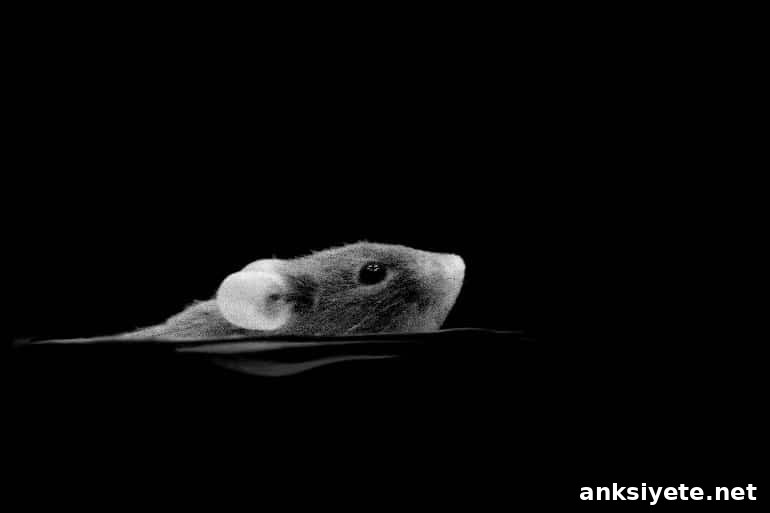
Summary: A small population of retinal neurons, called OFF ganglion cells, can detect tiny decreases in light and appear to be specialized for shadow detection.
Source: Aalto University
Mice rely on a dedicated neural pathway in the retina to detect shadows, and this pathway can register shadows at nearly the faintest possible level of dimming, according to new research from Aalto University and the University of Helsinki. The same retinal circuit exists in humans, suggesting potential applications for probing visual disorders with unusually high precision.
To assess shadow sensitivity, researchers placed mice in a nearly pitch-dark maze where the exit was marked only by a black spot that was just barely darker than its surroundings. By tracking the animals’ behavior and recording neural responses at the back of the eye—the retina—the team identified the neuronal source of this remarkable sensitivity.
The recordings showed that a specific set of retinal neurons, known as OFF ganglion cells, reliably signaled the extremely small drop in light level caused by the barely visible spot. These cells increase their firing when light levels drop, making them well suited to detect shadows in very dim conditions.
“Our aim is to connect molecular-scale events all the way up to behavior,” says Professor Petri Ala-Laurila, who holds appointments at both Aalto and the University of Helsinki. His group previously demonstrated that ON ganglion cells are used to detect the faintest light increments in darkness. This new work addresses the complementary task: detecting the faintest shadows where just a few photons are missing.
The researchers also developed a tightly constrained model of the fundamental limits of shadow detection based on the physical properties of photoreceptors and retinal circuitry. After accounting for unavoidable losses—such as the fact that not every photon that reaches a receptor is absorbed—and the neural noise introduced during processing, they found that both the animals’ behavior and the responses of the most sensitive OFF ganglion cells approached the theoretical limit.
“Our modeling shows that visually guided behavior and the most sensitive OFF ganglion cells act as near-perfect detectors of tiny light decrements,” says Dr. Johan Westö, one of the study’s joint first authors.
Because the experiments were performed under extremely low light, they demanded meticulous technical control. “The visual system’s sensitivity to the faintest shadows forces us to carry out experiments at exceptionally low light levels,” notes Nataliia Martyniuk, the study’s other joint first author. At higher light levels many additional retinal circuits become active, which would have obscured the signals relevant to this specific task.
Ala-Laurila emphasizes the ecological relevance of the findings: “Mice can detect unbelievably dim shadows. A reduction of just a few photons across thousands of rod receptors can be enough for the animal to notice a shadow. This sensitivity likely reflects the strong evolutionary pressure to detect predators under very low light.”
These results illustrate how the retina divides the work of interpreting light: thousands of photoreceptors feed into ON and OFF pathways that perform distinct computations. ON ganglion cells specialize in signaling light increments, while OFF ganglion cells are tuned to decrements, effectively making them modular detectors of light and shadow at the earliest stage of visual processing.
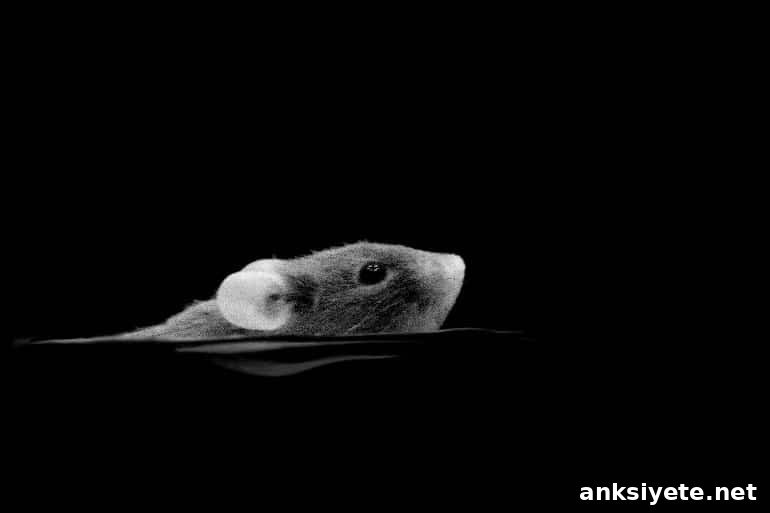
“By performing substantial computation in the retina itself, the system offloads work from downstream brain areas and simplifies subsequent processing,” Ala-Laurila adds. He further suggests that this principle, demonstrated here at very low light levels, likely extends to brighter conditions and to other sensory systems and neural circuits.
Importantly, the retinal circuitry that feeds ON and OFF ganglion cells is largely conserved in humans. Ala-Laurila points out that testing the function of specific retinal cell types under starlight-like conditions could have clinical value. Many visual disorders selectively affect particular retinal cell populations, and assessments performed at extremely low light levels—where every photon matters—could reveal dysfunction earlier or with greater specificity than conventional tests.
“I hope to see novel diagnostic methods that exploit very low light testing to detect visual diseases with much greater sensitivity during my lifetime,” he says.
About this visual neuroscience research news
Author: Press Office
Source: Aalto University
Contact: Press Office – Aalto University
Image: The image is in the public domain
Original Research: Open access. “Retinal OFF ganglion cells allow detection of quantal shadows at starlight” by Johan Westö et al. Current Biology
Abstract
Retinal OFF ganglion cells allow detection of quantal shadows at starlight
Highlights
- Mice can detect quantal shadows produced by the absence of a few photons across thousands of rods
- Behavioral responses guided by shadows depend on the most sensitive retinal OFF ganglion cells
- The limit for detecting these quantal shadows is determined by retinal losses and intrinsic neural noise
Summary
Perception of light in darkness can require only a handful of photons, and previous work has linked such performance to the retinal ON pathway. However, the neural mechanisms that establish the limits of shadow detection in very dim light were not fully understood. This study identifies the retinal OFF pathway as the key circuit enabling mice to detect the faintest shadows and shows that behavior is constrained by the physical losses and neural noise inherent to retinal processing. In dim-light conditions, light increments and decrements are therefore encoded separately by the ON and OFF retinal pathways, respectively.