
Summary: Researchers have developed a new method that enables soft robots to move with motions closer to biological limbs.
Source: Harvard.
Tool simplifies the design of soft robots that bend and twist like real joints.
Designing a soft robot to move in natural, limb-like ways — bending like a finger or twisting like a wrist — has traditionally involved lengthy cycles of prototyping and trial and error. Researchers at the Harvard John A. Paulson School of Engineering and Applied Sciences (SEAS) and the Wyss Institute for Biologically Inspired Engineering have developed a method to automatically produce actuator designs that achieve a predetermined motion, reducing guesswork and accelerating development.
The researchers describe this work in a paper published in The Proceedings of the National Academy of Sciences.
“Instead of designing these actuators empirically, we wanted a tool where you could plug in a motion and it would tell you how to design the actuator to achieve that motion,” said Katia Bertoldi, the John L. Loeb Associate Professor of the Natural Sciences and a coauthor of the study.
Although a bending or twisting motion may look straightforward when observed in a human finger or wrist, reproducing such motions in a soft robotic device is complex. A single actuator type rarely produces the required combination of movements, so engineers must arrange sequences of segments that each contribute a different deformation while controlling them from one source.
“The design is so complicated because one actuator type is not enough to produce complex motions,” explained Fionnuala Connolly, a SEAS graduate student and the paper’s first author. “You need a sequence of actuator segments, each performing a different motion, and ideally you want to drive them with a single input.”
The team’s method builds on analytical modeling of fluid-powered, fiber-reinforced soft actuators. By combining nonlinear elasticity theory with optimization routines, the approach accepts a desired kinematic trajectory as input and computes the optimal geometric and material parameters for an actuator that will follow that trajectory when pressurized. In other words, the design process is inverted: the intended motion defines the actuator structure rather than the other way around.
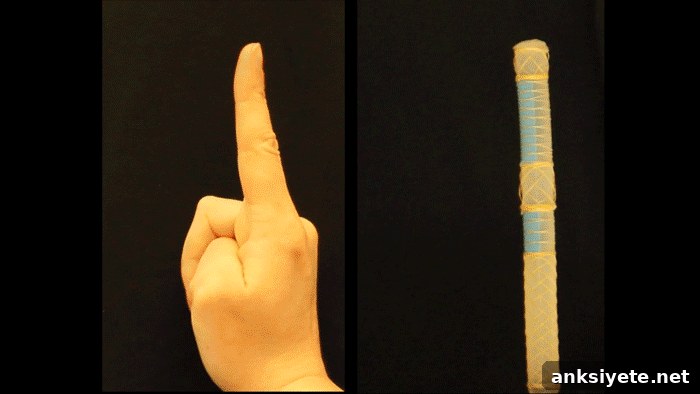
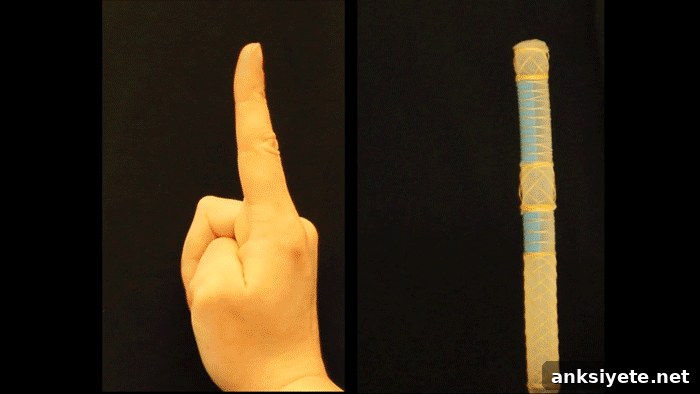
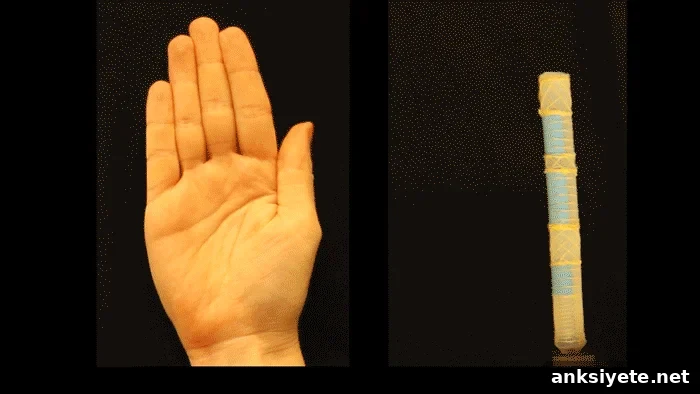
To validate their modeling strategy, the researchers fabricated actuators designed by the algorithm and tested their performance experimentally. They demonstrated soft actuators that reliably reproduce motions inspired by an index finger and a thumb, where a single pressure source can cause the device to bend and twist in coordinated ways. These experimental results confirm that the mathematical model can predict and guide the construction of practical soft robotic components.
“This research streamlines the process of designing soft robots that can perform complex movements,” said Conor Walsh, the John L. Loeb Associate Professor of Engineering and Applied Sciences, Wyss Institute Core Faculty Member, and coauthor of the paper. “It can be used to design a robot arm that follows a specific path or a wearable device that assists with limb movement.”
A key practical outcome of the work is that the new design methodology will be integrated into the Soft Robotic Toolkit, an online open-source resource developed at SEAS. The toolkit supports researchers, educators, and innovators by providing design guidance, fabrication instructions, modeling tools, and control approaches for soft robots. Including an automatic design capability directly in this resource makes it easier for users to translate a desired motion into a manufacturable actuator.
Source: Leah Burrows, Harvard SEAS
Image credit: Harvard SEAS
Original research: “Automatic design of fiber-reinforced soft actuators for trajectory matching” by Fionnuala Connolly, Conor J. Walsh, and Katia Bertoldi, published online December 19, 2016 in PNAS. doi:10.1073/pnas.1615140114
Abstract
Automatic design of fiber-reinforced soft actuators for trajectory matching
Soft actuators produce motion in soft robots and have enabled many innovative applications. However, efficient and systematic tools to design actuators for specific functions are still needed. Mathematical modeling of soft actuators remains an emerging field but holds promise to provide quantitative insights into actuator response and to guide design. In this work, the authors focus on fluid-powered, fiber-reinforced actuators, which are capable of a wide variety of motions. They present a design strategy that uses a kinematic trajectory as input and applies analytical modeling based on nonlinear elasticity together with optimization to determine the optimal design parameters for an actuator that will follow the specified trajectory when pressurized. The approach is experimentally validated, and the paper demonstrates the method by designing actuators that replicate the motions of the index finger and thumb.
“Automatic design of fiber-reinforced soft actuators for trajectory matching” by Fionnuala Connolly, Conor J. Walsh, and Katia Bertoldi in PNAS. Published online December 19, 2016. doi:10.1073/pnas.1615140114