
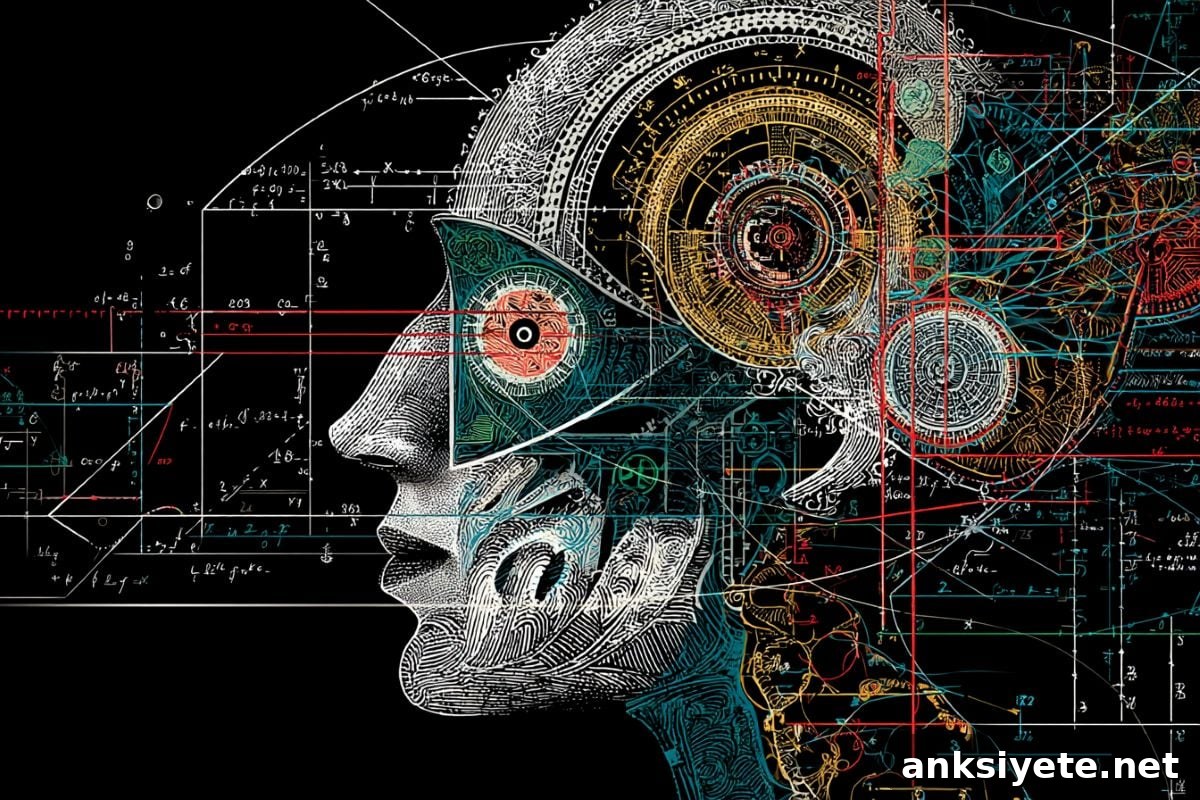
Summary: A bold, interdisciplinary research programme called Quantum Emotions will investigate how intense human feelings distort the way we store and order memories. Combining psychology, cognitive neuroscience and mathematical tools adapted from quantum theory, the team aims to explain why some emotionally charged moments remain vividly precise while others suffer temporal distortion and fall out of sequence.
Researchers at Newcastle University will blend experimental psychology, neural measurement and advanced mathematical modelling—methods informed by quantum formalism—to map how emotion reshapes the timing and accuracy of episodic memory. The project addresses a central puzzle: why do certain emotional milestones stay sharply defined in our recollection while neighbouring events lose their chronological place?
Key Facts
- The Quantum Order Parallel: Standard psychological models often fail to predict how emotions change the sequence of stored experiences. Quantum mathematics, which handles situations where order matters and operations do not commute, offers a formal language suited to capture order-dependent changes in memory.
- Decoding Life’s Narrative: Temporal order gives structure to memory and forms the narrative of our lives. The project will examine behavioural signatures and the neural circuits engaged when distress or euphoria causes memories to misalign in time.
- Global Scientific Alliance: Led by Dr Barbara-Anne Robertson at Newcastle, the team will partner with top quantum cognition researchers in Japan and Sweden to develop and validate real-world cognitive models grounded in quantum-inspired formalisms.
- Cross-Sector Clinical Applications: Characterising the mathematical pathways of emotional memory sequencing could enhance research on cognitive ageing, improve psychiatric assessment, and strengthen the evaluation of eyewitness testimony in legal contexts.
- Building National Capacity: The project is supported by a £1.2 million UKRI Cross-Council grant that will fund workshops, training events and a national network to grow expertise in Quantum Cognition and support future large-scale bids.
Emotions shape memory precision and sequence
Temporal order is central to how we remember events and construct coherent life stories. Yet emotional arousal can reorganise memory: some moments become exceptionally vivid, while the surrounding timeline becomes jumbled. The Quantum Emotions project seeks to characterise those changes with mathematical precision and to link behavioural effects to underlying neural mechanisms.
Dr Jonte Hance, Head of the Quantum Group at Newcastle University, explained: “This is an exciting opportunity to use ideas from quantum theory to model systems outside of physics, like emotional memory, where the order of events really matters.” The team will adapt quantum-inspired mathematical tools—developed to handle order-dependent phenomena—to model complex memory behaviours that classical psychological frameworks struggle to capture.
The research programme will combine controlled behavioural experiments, cognitive-neuroscience methods and rigorous computational modelling. By mapping when and how emotional intensity alters memory formation, retrieval and sequencing, the project aims to produce predictive models that describe not only that memory distortions occur but how and why specific events remain sharp while others lose their place in time.
Alongside laboratory work, project funding will support workshops and training events to cultivate a national research community in Quantum Cognition. These activities are designed to foster interdisciplinary collaboration, teach new analytical techniques, and prepare teams for future collaborative funding opportunities.
Advancing memory science
Dr Barbara-Anne Robertson, Lecturer in the School of Psychology and project lead, said: “We are thrilled to receive this prestigious UKRI grant, which places Newcastle University at the heart of the rapidly growing field of Quantum Cognition. Through collaborations with world‑leading experts in Japan and Sweden, we will develop quantum models to explore how emotions shape the organisation of our memories.”
She added that this funding will enable the team to build new analytical tools for emotional memory research, with potential benefits for ageing populations, mental health assessment and forensic practice. The project also aims to extend the application of quantum formalism into complex real-world cognitive processes in novel ways.
Key Questions Answered:
A: No. The Quantum Emotions project does not claim that brain tissue is a quantum computer. Instead, researchers are using the mathematical framework of quantum theory because it naturally describes situations where the order of events changes outcomes. Those mathematical tools can model irregular, order-dependent cognitive phenomena that classical approaches struggle to capture.
A: Intense emotions trigger neurochemical and attentional changes that bias how experiences are encoded and later retrieved. The Newcastle team intends to use quantum-inspired models to move beyond describing distortion to predicting which events will remain precise and which will lose temporal coherence, and to explain the mechanisms that produce these divergent outcomes.
A: Eyewitness memory can be reliable for specific perceptual details yet unreliable for the order of events—especially under stress. By creating mathematical tools that map how trauma and emotion reshape chronological recall, the project aims to give forensic psychologists better methods to evaluate the reliability of testimony and to bring cognitive science into legal assessments more robustly.
Editorial Notes:
- This article was edited by a Neuroscience News editor.
- Journal paper reviewed in full.
- Additional context added by staff.
About this memory and quantum neuroscience research news
Author: Helen Rae
Source: Newcastle University
Contact: Helen Rae – Newcastle University
Image: The image is credited to Neuroscience News