
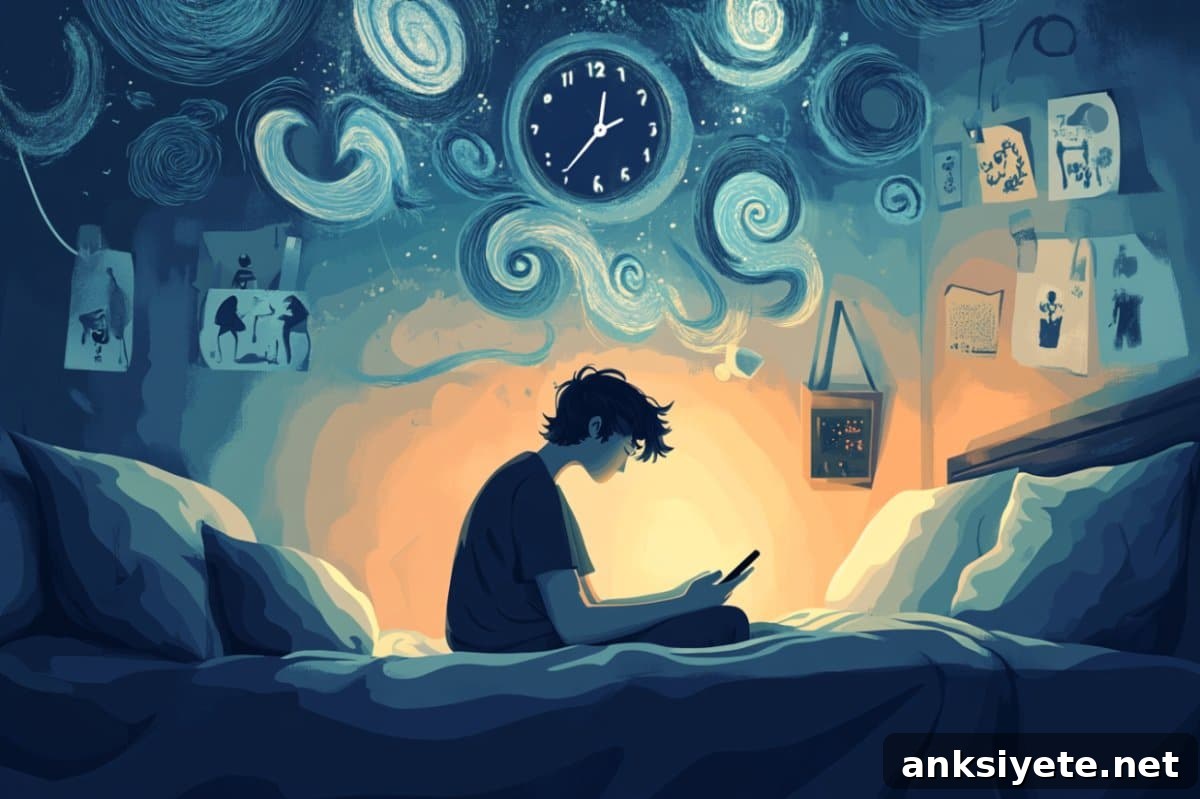
Summary: New research presented at SLEEP 2025 finds that bedtime procrastination in young adults is linked to specific personality traits—particularly higher neuroticism and lower conscientiousness and extraversion—and to emotional patterns resembling depressive tendencies. These relationships persisted even after accounting for chronotype, indicating that emotional health and personality contribute to delaying bedtime beyond natural sleep-wake preferences.
The study highlights that habitual bedtime delay is not simply a matter of poor planning or weak willpower. Instead, many who chronically postpone sleep report fewer positive emotions and greater negative affect, suggesting that difficulties with emotional regulation at night may be a key factor. This insight points to new directions for interventions aimed at improving sleep health in young adults.
Key Findings
- Emotional profile: Individuals who regularly delay bedtime reported more symptoms consistent with depressive affect and experienced fewer positive emotional states.
- Personality associations: Bedtime procrastination was significantly associated with higher neuroticism and lower levels of conscientiousness and extraversion.
- Independent of chronotype: These associations remained after statistically adjusting for chronotype (preference for morningness or eveningness), indicating the effects are not solely explained by natural sleep timing preferences.
- Behavioral implications: Procrastinators tended not to seek out engaging or rewarding activities at night and appeared to struggle with regulating negative emotions prior to sleep.
Study details
Researchers enrolled 390 young adults with a mean age of 24. Participants completed a chronotype questionnaire to determine whether they naturally prefer later or earlier sleep schedules. They also completed a standard personality inventory assessing the five major traits—neuroticism, extraversion, openness, agreeableness, and conscientiousness—and kept a daily sleep diary for 14 days to measure bedtime procrastination behaviors.
Lead author Steven Carlson, a doctoral candidate in the Department of Psychology at the University of Utah, noted that those who habitually postponed bedtime were less likely to report seeking out exciting or enjoyable evening activities. “Instead, bedtime procrastinators reported emotional experiences consistent with depression—tending toward negative emotions while lacking positive emotional experiences,” he said.
Why this matters for sleep health
According to the American Academy of Sleep Medicine, adequate sleep is essential for physical and mental health. The AASM recommends adults regularly obtain seven or more hours of sleep per night to support optimal well-being. Bedtime procrastination reduces available sleep opportunity and can therefore undermine these recommendations.
Understanding the psychological and emotional drivers of bedtime delay is important because it broadens the focus beyond time-management strategies. If emotional dysregulation, negative affect, and depressive tendencies contribute to delaying sleep, then interventions that target mood and pre-bedtime emotional states—such as brief mood regulation techniques, cognitive-behavioral approaches, or relaxation practices—may complement traditional sleep hygiene and planning strategies.
Implications for research and practice
The findings suggest several practical and research implications. Clinicians working with young adults who report insufficient sleep might assess for personality traits and emotional patterns that predispose to bedtime delay. Researchers can build on this work by testing whether reducing negative affect or increasing positive evening experiences reduces bedtime procrastination and improves total sleep time.
Carlson emphasized the potential to translate these results into targeted treatments: “Given how common bedtime procrastination is and its impact on sleep health, we hope to explore whether interventions that reduce negative emotions before bed can effectively reduce bedtime procrastination.”
About this personality and sleep research news
Author: Hannah Miller
Source: AASM
Contact: Hannah Miller – AASM
Image: The image is credited to Neuroscience News
Original research: Findings to be presented at SLEEP 2025