
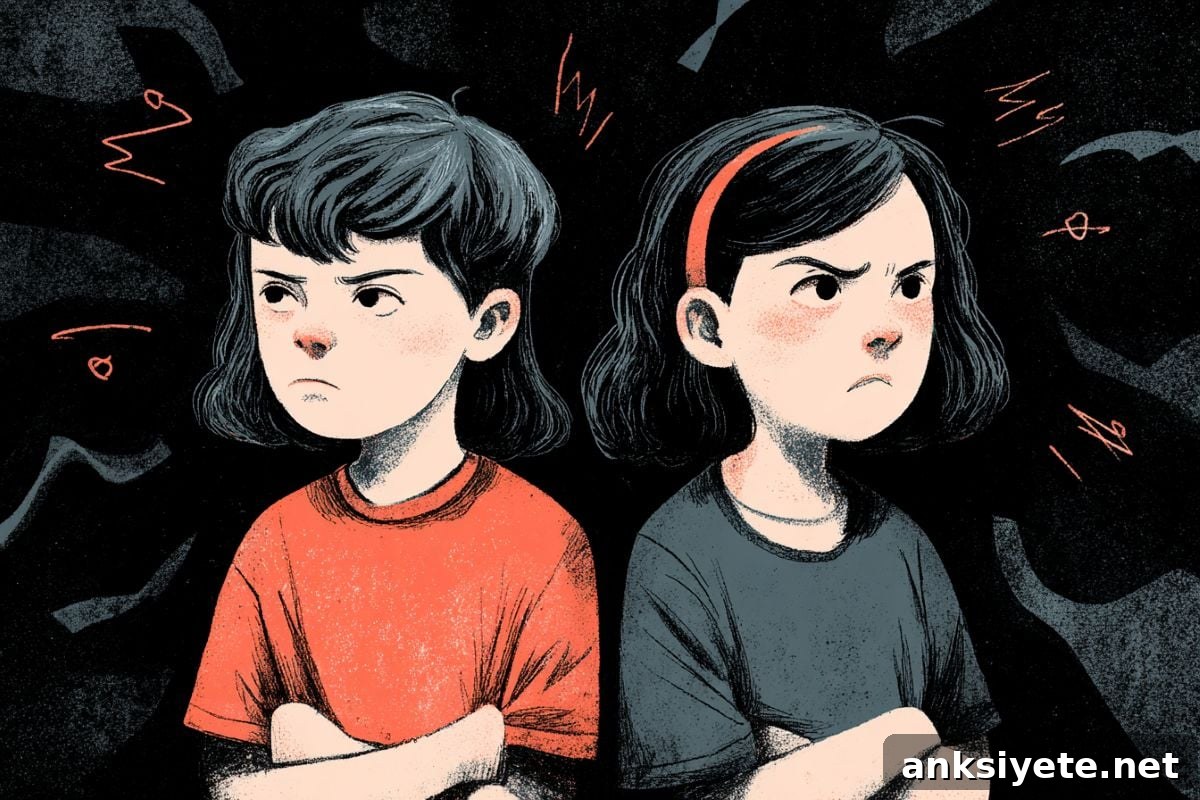
Summary: A recent longitudinal study provides the first direct evidence that parental disapproval — especially maternal disapproval — can reliably disrupt children’s friendships. Tracking 394 public-school students over two school years, researchers measured how mothers’ negative opinions and explicit prohibitions shaped the course of close peer relationships.
The findings show that mothers can be remarkably effective at ending unwanted friendships: when a mother expresses strong disapproval or forbids a friendship, the chances of that friendship dissolving rise substantially. At the same time, researchers caution that this approach has serious developmental costs. Heavy-handed prohibition often damages the broader social environment, increases defiant behavior, and can leave vulnerable children isolated or confined to equally troubled peer groups.
Key Facts
- The Friendship Hitmen: This multiwave study represents the first empirical demonstration that parental forbiddance frequently precedes friendship termination, establishing maternal interference as a powerful mechanism for dissolving unwelcome peer ties.
- The Dissolution Rate: The research followed 394 Lithuanian students (ages 9–14) across three assessments. Despite remaining in the same classroom group the following year, roughly one-third of identified best-friend pairs did not survive, and many of those breakups were associated with mothers’ negative views of the friend.
- Degrading the Interpersonal Environment: Maternal disapproval often works indirectly. Even when it does not immediately end a friendship, it erodes perceived warmth and support within the relationship, especially from the friend’s point of view, gradually undermining the bond until it collapses.
- The Developmental Shift: The overall pathway from disapproval to reduced support to dissolution was consistent across ages, but effects varied by grade. In primary school, maternal objections more strongly reduced perceptions of support, while in middle school, low perceived support more strongly predicted abrupt breakups.
- Severe Long-Term Parental Costs: Lead author Brett Laursen and colleagues emphasize that dissolving a friendship is not a straightforward success. Removing a social connection can leave children with few acceptable alternatives, elevate emotional and behavioral problems, increase susceptibility to bullying, and strain the parent-child relationship.
Source: FAU
Parents often dislike some of their children’s companions and may openly discourage those relationships. But does expressing disapproval actually work as a parenting strategy? A new two-year longitudinal study from Florida Atlantic University and Mykolas Romeris University examines that question directly. The answer: forbidden friends frequently become former friends.
Researchers followed the best friendships of 394 Lithuanian public-school students (200 boys and 194 girls) between ages 9 and 14 across three consecutive semesters. Children reported whether their mothers disapproved of or forbade their friendships, and both members of each friendship pair rated the relationship’s warmth and social support.
The study focused on reciprocated best friendships — pairs of children who both identified one another as a best friend for the majority of at least one school year. Although many of these pairs remained in the same classes the subsequent year, about one-third of these close friendships later dissolved. In a substantial portion of those cases, children reported that their mothers had expressed dislike or prohibited the friendship.
Published in Child Development, the paper reports both direct and indirect pathways linking perceived maternal disapproval to friendship dissolution. In some instances, children respond directly to parental pressure by disengaging from the relationship. In other cases, maternal objections slowly undermine the friend’s experience of the partnership, reducing warmth and support and ultimately leading to a breakup.
“Maternal interference in peer relationships can be quite successful,” said Brett Laursen, Ph.D., senior author and professor of psychology. “Mothers are very effective relationship ‘hitmen.’ Most friendships don’t survive condemnation by mothers.”
First author Goda Kaniušonytė, Ph.D., explains that the mechanism is often a mix of direct compliance and gradual emotional degradation: some children relent to parental arguments or alter behavior to keep peace at home, while others see the friendship’s emotional climate deteriorate until it becomes unsustainable.
Although maternal disapproval frequently ends friendships, the researchers strongly counsel against heavy-handed prohibition. Forbidding a friend may be easy, but replacing that social tie is difficult. Children who lose a friend often face limited alternatives and may end up with equally problematic peers or no friends at all — increasing risk for emotional problems, defiance, bullying, and weakened parent-child trust.
“Short-term gains from disapproval come with long-term costs,” Laursen said. “Rather than imposing bans, parents are usually better off building warmth, open communication, and support at home. Those conditions strengthen the parent-child bond and help children develop the judgment and resilience they need to choose healthy friends and resist negative peer pressure.”
Co-author Mary Page Leggett-James, Ph.D., contributed to the analysis during her doctoral work; funding for the study came from the European Social Fund, the Research Council of Lithuania, and a Centers of Excellence initiative at Mykolas Romeris University.
Key Questions Answered:
A: Although forbidding a friendship may stop the tie quickly, the study shows this strategy is often counterproductive. Removing a friend is relatively easy; helping a child replace that important social connection is hard. Children forced away from a peer often have few attractive alternatives and may end up isolated or choosing other troublesome companions.
A: The effect can be both direct and indirect. Some children comply with parental arguments or change behavior to avoid conflict at home. More commonly, maternal disapproval creates ongoing tension that depletes the friendship’s emotional warmth and perceived support — particularly from the friend’s perspective — until the relationship disintegrates.
A: The evidence suggests parents should invest in a warm, supportive, and communicative home environment. A strong parent-child relationship helps children recognize unhealthy peer behavior, resist negative influence, and select healthier friendships on their own, avoiding the long-term harms that often follow blunt prohibition.
Editorial Notes:
- This article was edited by a Neuroscience News editor.
- The journal article was reviewed in full by staff.
- Additional explanatory context was added by the editorial team.
About this social neuroscience research news
Author: Gisele Galoustian
Source: FAU
Contact: Gisele Galoustian – FAU
Image: The image is credited to Neuroscience News
Original Research: Open access. “Perceived maternal disapproval of peer affiliates forecasts child friendship dissolution” by Goda Kaniušonytė, Mary Page Leggett-James, and Brett Laursen. Child Development
DOI: 10.1093/chidev/aacag047
Abstract
Perceived maternal disapproval of peer affiliates forecasts child friendship dissolution
Parents who express disapproval of their children’s friends often do so to disrupt the affiliation. This study tests whether that practice succeeds. Participants were 394 Lithuanian public-school students (200 boys, 194 girls), ages 9–14, nearly all ethnic Lithuanian. Across two school years, students completed surveys three times reporting perceived friendship support and maternal disapproval of peer affiliates. Stable reciprocated best friends (N = 197) were identified from nominations during the first year; about one-third of these friendships dissolved later. Longitudinal dyadic mediation analyses showed that perceived maternal disapproval predicted subsequent friendship dissolution both directly and indirectly through declines in friends’ perceptions of social support.