
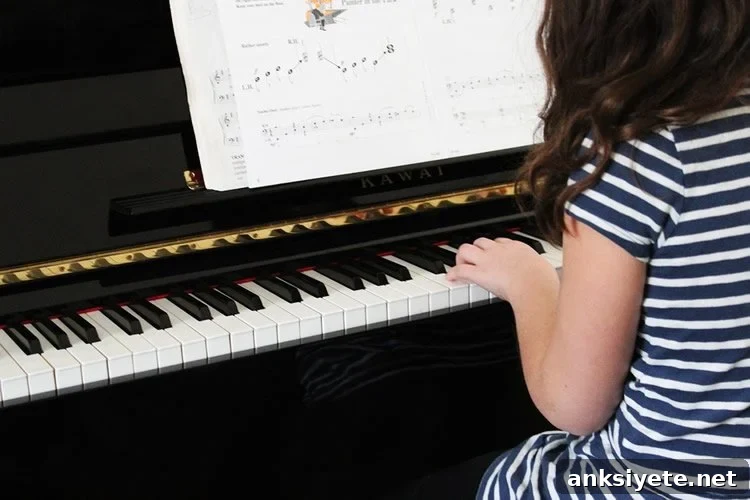
Summary: A new clinical trial finds that one-on-one musical activities such as singing and instrument play can significantly improve social communication skills and family quality of life for school-age children with autism, and are associated with altered brain connectivity in networks involved in auditory and motor processing.
Source: University of Montreal
One-on-one musical activities—singing, rhythmic play and instrument use—delivered by trained therapists improved social communication skills and family quality of life for children with autism spectrum disorder (ASD), and produced measurable changes in brain connectivity, according to research conducted by teams at Université de Montréal and McGill University.
Interest in the relationship between ASD and music goes back to the earliest clinical descriptions of autism, when some individuals were noted to show heightened musical abilities. Despite many encouraging anecdotal reports about music’s positive effects on people with autism, strong clinical and neuroscientific evidence has been limited. This randomized clinical trial was designed to address that gap by testing whether a structured music intervention could yield measurable behavioral and neural benefits.
Researchers from the International Laboratory for Brain, Music and Sound (BRAMS) at Université de Montréal and the School of Communication Sciences and Disorders (SCSD) at McGill invited 51 children with ASD, ages 6 to 12, to take part in an 8–12 week intervention study. Before treatment began, parents completed standardized questionnaires assessing their child’s social communication skills, symptom severity, and overall family quality of life. Each child also underwent resting-state functional MRI to establish baseline brain connectivity patterns.
The children were randomly assigned to one of two groups. The music group (n = 26) received individual sessions that emphasized improvisation, song, rhythm, and responsive musical exchange with a therapist. Sessions lasted 45 minutes and focused on reciprocal interaction—turn-taking, shared attention and vocal or instrumental exchange—within a musical context. The control group (n = 25) received a non-musical but structurally matched behavioral intervention with the same therapist and comparable opportunities for reciprocal play and social engagement, but without musical activities.
After the intervention period, parents of children in the music group reported statistically significant improvements in social communication skills and in family quality of life compared with families in the non-music control group. Neither group showed measurable reductions in overall autism severity on the instruments used, which the investigators suggest may reflect limitations of current symptom measures rather than absence of benefit.
Resting-state MRI data revealed neural changes that corresponded with behavioral improvements. Children in the music group showed increased connectivity between auditory regions and motor and subcortical networks—connections important for coordinating perception and action during social exchange—and decreased connectivity between auditory and visual regions, a pattern that is often observed as over-connected in autism. Importantly, the degree of post-intervention auditory–motor connectivity correlated with communication gains, supporting a plausible neurobiological mechanism by which musical engagement may support social communication.
“The universal appeal of music makes it globally applicable and can be implemented with relatively few resources in settings such as home and school,” said Aparna Nadig, co-senior author. Lead author Megha Sharda noted that the observed improvements emerged after only eight to twelve weekly sessions, which is encouraging for scalability. Co-senior author Krista Hyde emphasized the need to replicate the findings across multiple therapists and real-world contexts to determine durability and generalizability of the effects.
The authors caution that although changes in social communication and brain connectivity were evident, tools sensitive enough to detect changes in core autism symptoms through direct behavioral observation are still needed. The research team is developing observational measures to test whether communication improvements seen in parent reports are directly observable in interactions between child and therapist.
Source: University of Montreal
Publisher: Organized by NeuroscienceNews.com
Image source: NeuroscienceNews.com image is in the public domain
Original research: “Music improves social communication and auditory–motor connectivity in children with autism” by Megha Sharda, Carola Tuerk, Rakhee Chowdhury, Kevin Jamey, Nicholas Foster, Melanie Custo-Blanch, Melissa Tan, Aparna Nadig & Krista Hyde, published in Translational Psychiatry (October 23, 2018). DOI: 10.1038/s41398-018-0287-3.
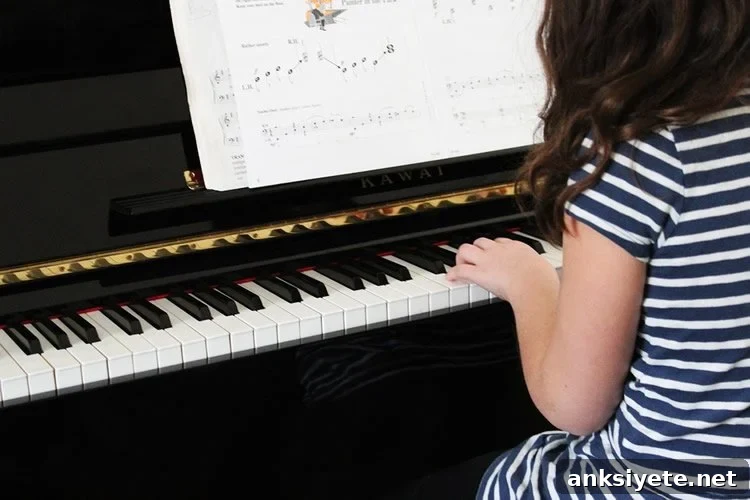
Abstract (condensed)
Music is frequently reported as a strength among people with autism, but neuroscientific evidence for therapeutic benefit has been limited. In a randomized clinical trial (ISRCTN26821793), 51 school-age children with ASD (6–12 years) received 8–12 weeks of individual music-based intervention (n = 26) or a structurally matched non-music behavioral intervention (n = 25). The music intervention used improvisation, song and rhythm to target social communication through reciprocal interaction. Post-intervention, parent-reported communication scores were higher in the music group. Resting-state functional connectivity increased between auditory and motor/subcortical regions and decreased between auditory and visual regions in the music group; these connectivity changes correlated with communication improvements. The study provides initial evidence that short-term, individualized music intervention can enhance social communication and alter functional brain connectivity in children with autism, supporting further research into neurobiologically informed music therapies.