
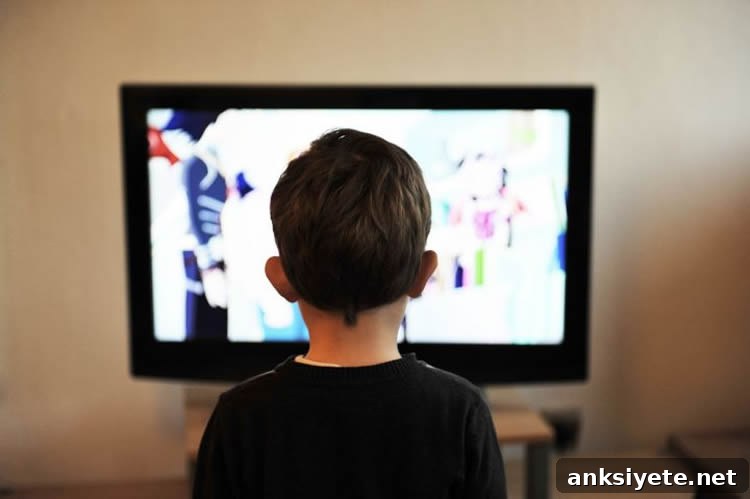
Summary: Researchers report that 11-year-olds who watch more than three hours of television a day tend to have weaker language skills than peers who watch less.
More than Three Hours of TV a Day Linked to Weaker Language Skills in 11-Year-Olds, Study Finds
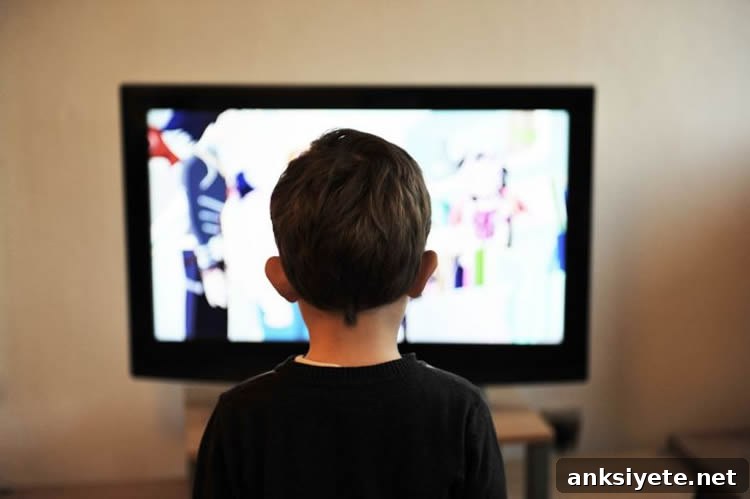
Researchers from Newcastle University, Queen Margaret University, La Trobe University and Griffith University examined how early home activities influence children’s oral language development. Their analysis suggests children who routinely watch more than three hours of television per day during early childhood show poorer language performance by age 11, especially those who already show weaker language skills.
The study used data from the UK’s Millennium Cohort Study and tracked thousands of children born between September 2000 and January 2002. Researchers focused on how parental engagement and everyday activities at ages three and five related to children’s ability to communicate ideas at age 11. The activities they measured included reading to children, telling stories, library visits, trips to the park, and television viewing.
Lead researcher Professor James Law, of Newcastle University’s School of Education, Communication and Language Sciences, highlighted that television had a markedly different effect across the language ability spectrum. “The television effect was a very interesting finding,” he said. “We saw it had a bigger impact for the children with lower language skills, but made little difference to those who had higher levels of language.”
Key findings
- Watching more than three hours of television daily in early childhood is associated with poorer oral language outcomes at age 11, particularly among children who score lower on language measures.
- Children who watched three hours or less tended to perform better on later language tests, suggesting a threshold effect rather than a linear one.
- Parental reading and storytelling were consistently linked to stronger language skills at age 11, with the greatest benefit observed in children who had lower language scores overall.
- Poverty and a larger number of siblings were both negatively associated with language performance at age 11.
Dr Elizabeth Westrupp from La Trobe’s Judith Lumley Centre, a member of the research team, noted that most five-year-olds can watch up to three hours of television a day without showing marked negative effects on their language skills by the time they finish primary school. However, the pattern of impact varies: for children who already have stronger language abilities, television exposure made little difference; for those with lower abilities, heavy TV viewing correlated with notably weaker outcomes.
Practical implications
The researchers emphasize that television itself is not inherently harmful. Rather, how television is used matters. Active viewing—where parents watch with children, discuss content, ask questions and encourage conversation—can be a constructive shared activity. Problems arise when television serves as passive, extended childcare with little interaction, effectively replacing language-rich activities.
Professor Law suggested that public health messages and educational support should target families who may need additional guidance, especially those with children showing delayed language development. He recommended that government and local authorities consider communication strategies that reach parents who would benefit from information about setting sensible limits on screen time and encouraging reading and interactive play.
Background and methods
The study aimed to explore whether different analytic approaches could reveal more targeted insights than traditional models that report average effects for an entire population. The team used a quantile regression approach to examine how early home activities affected different points in the language ability distribution at age 11. This method allowed them to see that factors such as poverty, early language ability, and being read to had stronger effects at the lower end of the distribution, whereas gender differences were more pronounced at the top.
The analysis used language data from 5,682 children within the broader Millennium Cohort Study sample and assessed verbal abilities using the British Ability Scales. The authors compared ordinary least squares results with quantile regression findings to highlight how associations differ across the performance spectrum.
About the research
Source: La Trobe University. The research was published as “Early Home Activities and Oral Language Skills in Middle Childhood: A Quantile Analysis” by James Law, Robert Rush, Tom King, Elizabeth Westrupp, and Sheena Reilly in the journal Child Development, published online February 23, 2017. The study draws on the UK Millennium Cohort Study to examine early home activities and later language outcomes.
Abstract (summary)
Oral language development is an important outcome of elementary education. Commonly used statistical methods focus on average effects, which can obscure how predictors operate differently across the range of abilities. Using data from the Millennium Cohort Study, the authors compared ordinary least squares and quantile regression models with language performance at age 11 as the outcome. They found that gender had greater effects at the top of the distribution, while poverty, early language ability, and reading to the child had larger effects at the bottom. Television viewing showed a more mixed pattern, with stronger adverse associations among children with lower language skills. The findings support combining universal and targeted interventions to promote oral language development.