
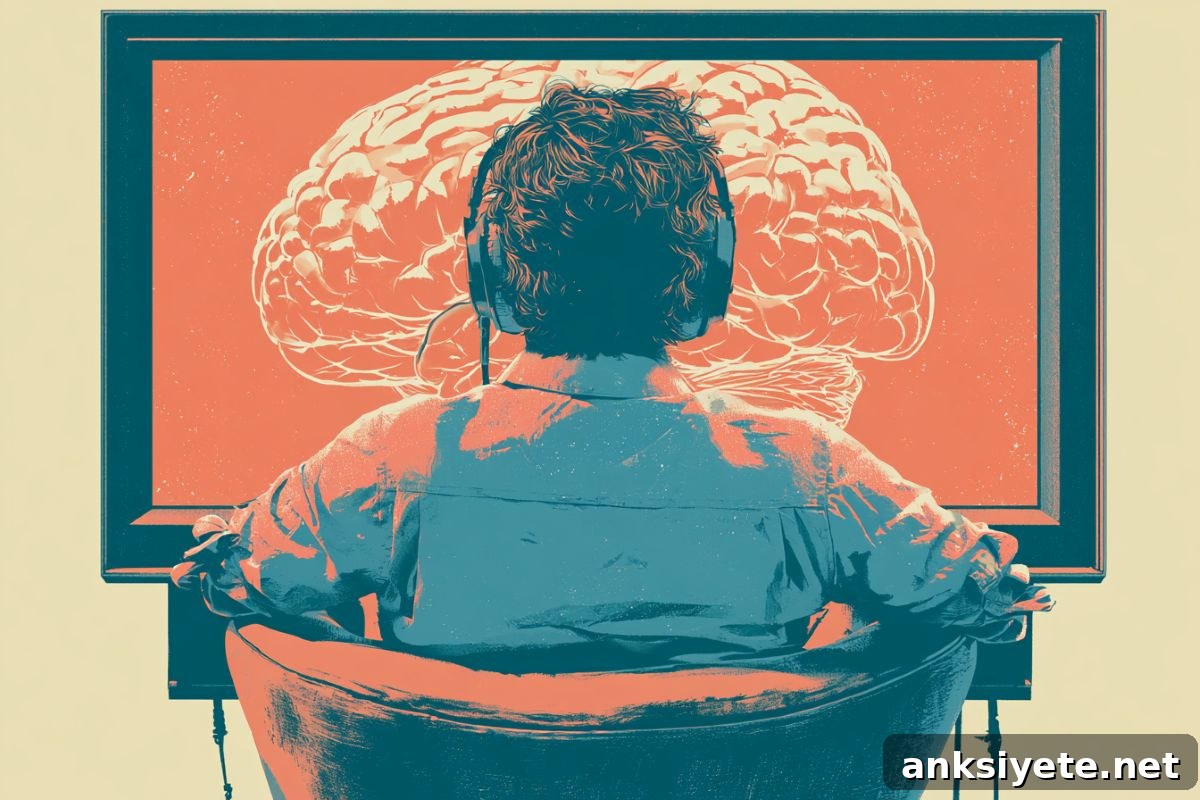
Summary: Modern cities, globalized economies, and highly curated digital networks are overstimulating ancient social survival instincts. Instead of viewing mental health struggles as isolated lifestyle failings, the authors argue that contemporary environments magnify competitive anxieties, turning a once-adaptive need for community and status into an ongoing, screen-driven cycle of comparison and stress.
Key Facts
- The hijacked social sensor: In ancestral small-group societies, monitoring social standing preserved trust, food sharing, and protection. That same status-monitoring instinct is now constantly triggered by a limitless stream of curated milestones, lifestyle imagery, and artificial social metrics online.
- The competition pathway: The review highlights heightened perceptions of social competition as a central psychological route linking evolutionary mismatch to emotional exhaustion and immune-related stress. The mind is frequently misled into feeling judged, outpaced, or isolated by distant, faceless others.
- The scale of comparison: Modern life makes social competition feel permanent and unavoidable. Our evolved cognitive systems cannot easily tell the difference between a rival in a familiar group of 150 people and an edited image of a stranger broadcast across a global feed.
- The myth of individual resilience: The paper contends that public health responses should not place the entire recovery burden on individual willpower. Expecting people to “cope” with mindfulness alone while embedded in systems that exploit ancestral vulnerabilities is biologically and socially inadequate.
- Human-centered structural design: Evidence suggests that physical density itself is not the sole cause of psychological strain. What matters is whether an environment feels crowded, hostile, or isolating. Introducing green buffers, micro-communities, and interactive social design can calm primal fight-or-flight responses.
- A roadmap for thoughtful innovation: Mismatch theory is not a call to reject modernity. Rather, it offers a framework for architects, software designers, and policymakers to craft digital and physical spaces that align with — rather than work against — evolved human needs.
Source: SUTD
The human brain evolved for small groups of familiar faces and immediate, local threats. Today’s rapid social and technological changes can outpace that biology, helping to explain persistent stress, loneliness, and relentless comparison.
This conceptual review, authored by Dr. Jose Yong (Senior Lecturer, James Cook University Singapore) and Dr. Sarah Chan (Research Fellow, Lee Kuan Yew Centre for Innovative Cities, SUTD), appears in Behavioral Sciences under the title “Evolutionary mismatch, stress, and competition: Making sense of psychosocial problems in the polycrisis era.” It explores how stress, competition, and loneliness can be reframed through evolutionary mismatch.
Evolutionary mismatch refers to the consequences that occur when instincts shaped for one environment are forced to operate in a radically different one. Humans evolved in small, tight-knit groups where danger, belonging and status were interpreted through face-to-face cues and familiar relationships. Those adaptive responses can be maladaptive when triggered by the unfamiliar scale and speed of modern life.
Dense cities, algorithmic platforms, widening inequality, and overlapping global pressures now activate the same instincts in ways they were not designed to handle. Signals that once helped coordinate cooperation among known group members can become confusing or overwhelming when they come from strangers or curated representations online.
Social media makes this mismatch particularly visible. The instinct to locate one’s place within a group — once useful for maintaining reciprocal relationships — now responds to highly edited highlight reels and inflated status cues. That creates a persistent sense of being evaluated or left behind.
Competition sits at the core of the paper’s argument. Modern environments amplify the sense that others are constantly judging or outperforming us. The authors propose that this heightened perception of competition is a key mechanism through which evolutionary mismatch contributes to stress and reduced wellbeing.
“Competition is not new, but modern life can make it feel unending,” said Dr. Jose Yong. “An evolutionary lens helps explain why people react so strongly to comparison and the fear of falling behind — even when those signals come from strangers and screens rather than a small social group.”
The review synthesizes existing research and theory rather than presenting original empirical data. It frames evolutionary mismatch as a complementary explanation to psychological, social, and economic accounts and calls for empirical testing through real-world research.
This perspective has practical implications: responses to chronic stress and loneliness cannot rest solely on boosting individual resilience. If our environments repeatedly trigger outdated survival circuits, then cities, workplaces, platforms, and community systems must be redesigned to reduce those triggers.
For institutions focused on human-centered design and urban wellbeing, the findings are instructive. Density alone does not determine wellbeing. Thoughtful design — including green spaces, accessible communal areas, and layout that reduces perceived threat — can alleviate pressure without reducing urban density.
“Stress, loneliness and anxiety are often framed as personal problems,” said Dr. Sarah Chan. “But they also reflect mismatches between modern environments and the conditions our bodies evolved to navigate. That means interventions should address both individual coping and structural design.”
Future research should examine how perceived competition and wellbeing differ across neighborhoods with more greenery, varying crowding perceptions, differing social cohesion, and online environments that either amplify or reduce comparison.
This is not a nostalgic call to abandon modern life. Rather, it is a plea to design contemporary spaces more thoughtfully so they better support human wellbeing. Aligning built and digital environments with evolved human tendencies can help make communities feel less alienating and more supportive.
“We need interventions that work with — not against — our evolved human nature,” said Dr. Yong.
Key Questions Answered:
A: Evolutionary mismatch occurs when traits evolved for a specific environment are exposed to rapid changes that leave biological systems ill-adapted. Our brains and nervous systems developed for slow-moving, small-group living. When that ancient machinery operates in dense urban settings and fast digital networks, ordinary modern stimuli — like notifications or online profiles — can trigger stress responses as if they were immediate threats, keeping anxiety elevated.
A: In small tribal contexts, monitoring social standing was directly tied to survival. That deep instinct to compare persists, but social media presents a global, highly curated set of comparisons. Our brains interpret these edited signals as direct indications of local status loss, producing a chronic sense of being outcompeted or excluded.
A: The authors recommend shifting some responsibility from individuals to environments. Urban planning should prioritize green spaces, local community zones, and design features that reduce perceived threat. Digital platforms should be redesigned to limit toxic comparison mechanics. Combining individual-level supports with structural changes can better alleviate chronic stress and loneliness.
Editorial Notes:
- This article was edited by a Neuroscience News editor.
- The journal paper was reviewed in full.
- Additional context was added by editorial staff.
About this neuroscience and evolution research news
Author: Mingli Low
Source: SUTD
Contact: Mingli Low – SUTD
Image: Image credited to Neuroscience News
Original Research: Open access. “Evolutionary Mismatch, Stress, and Competition: Making Sense of Psychosocial Problems in the Polycrisis Era” by Amy J. Lim, Edison Tan, Jose C. Yong, Sarah H. M. Chan. Behavioral Sciences. DOI: 10.3390/bs16050650
Abstract
Evolutionary Mismatch, Stress, and Competition: Making Sense of Psychosocial Problems in the Polycrisis Era
Many contemporary conditions — from allergies, myopia, and obesity to chronic anxiety, loneliness, and falling fertility — can be framed as outcomes of evolutionary mismatch, amplified by a polycrisis in which technological and socioeconomic change outpace human adaptations. This review maps those problems to the adaptive needs disrupted by modern environments and introduces the social evolutionary mismatch and competition hypothesis.
The hypothesis proposes that social features of modernity — growing population sizes, fragmented communities, rising inequality, and continual exposure to inflated status cues — uniquely heighten both real and perceived competition. That increase in perceived competition helps explain predictable patterns in psychosocial outcomes, including obsessive status-seeking, hostility, and withdrawal.
The paper concludes by outlining strategies to reduce evolutionary mismatch, showing how evolutionary principles can inform interventions to protect wellbeing during intense societal strain. Contributions include a synthesis of how the polycrisis intensifies mismatch, a theoretical advance identifying competition as a key predictor of adverse outcomes, and a translational framework for designing supportive environments.