
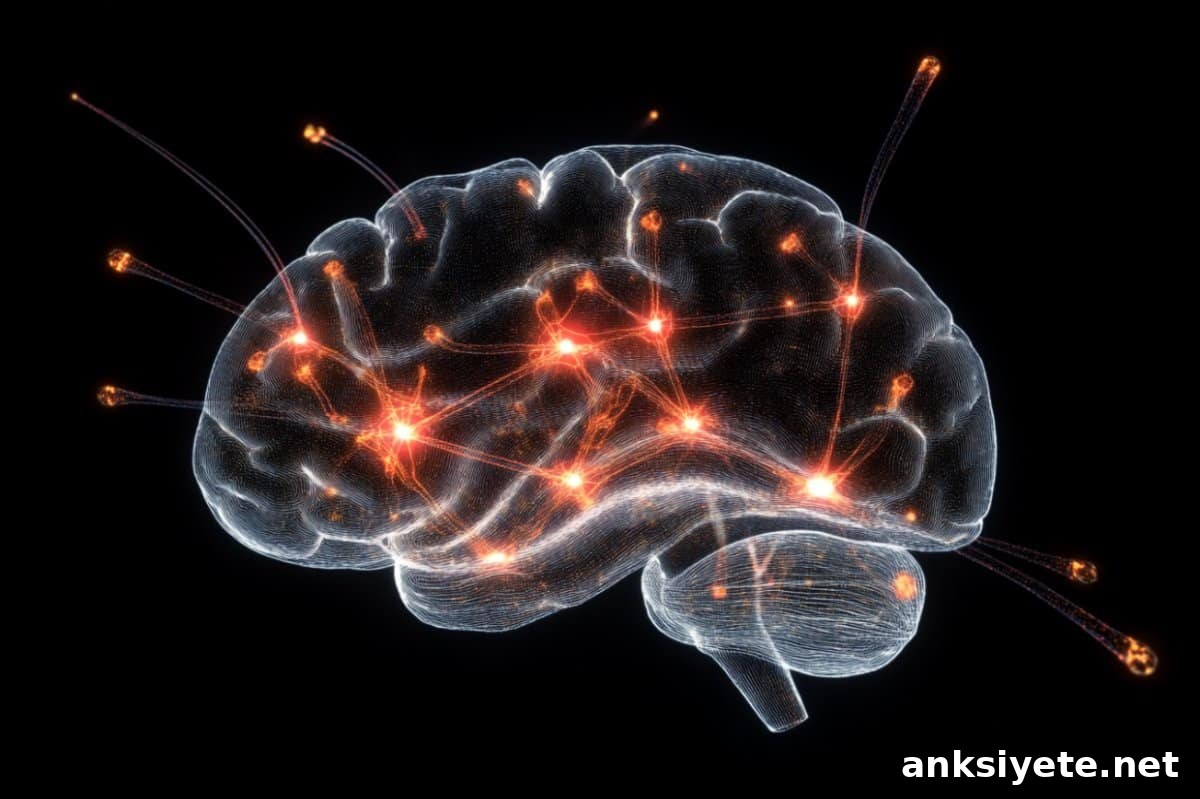
Summary: New research shows that learning does more than change brain activity patterns — it rewires connections between key regions to make communication faster and more precise. Using advanced imaging and a novel analysis approach, scientists mapped how the thalamocortical pathway, which links the motor thalamus and primary motor cortex (M1), reorganizes during motor learning in mice.
The study demonstrates that motor learning sculpts circuits by strengthening signals directly related to the learned movement while suppressing unrelated activity. These discoveries clarify how thalamic inputs refine cortical processing and suggest new directions for therapies and neurotechnology designed to aid recovery from neurological disorders.
Key Facts:
- Pathway rewiring: Motor learning selectively refines the thalamocortical pathway, increasing effective communication from the motor thalamus to M1.
- Selective activation: Learning drives specific M1 neurons tied to the learned movement while reducing activity in neurons that are not part of the task.
- Therapeutic potential: Understanding how brain regions reorganize during learning could guide treatments and rehabilitation approaches for stroke and other neurological conditions.
Source: UCSD
A landmark study led by researchers at the University of California San Diego clarifies how learning reshapes brain wiring.
Published in Nature and supported by the National Institutes of Health and the U.S. National Science Foundation, this work offers new insight into how inputs from the motor thalamus change their influence on superficial layers of the primary motor cortex during skilled motor learning.
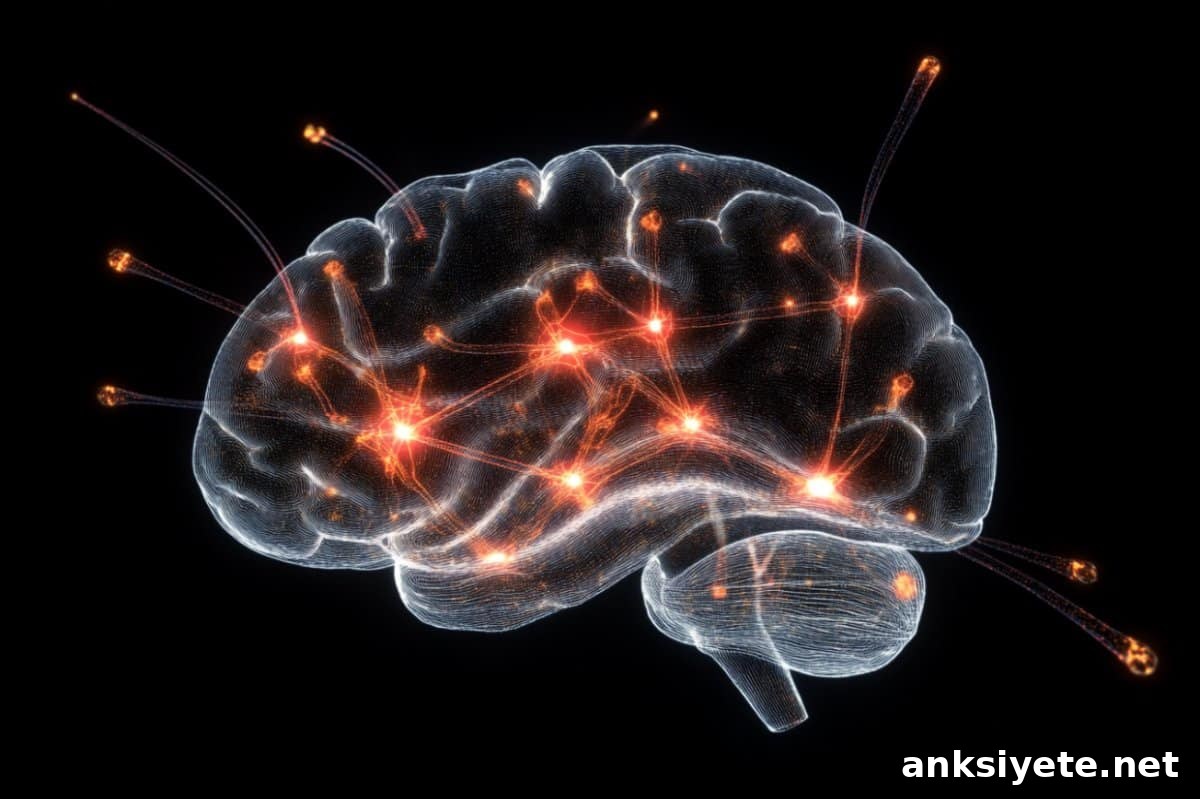
For decades, the primary motor cortex (M1) has been recognized as a central hub for generating and refining the motor patterns needed for skilled behavior. More recently, the motor thalamus has emerged as an important upstream influence on M1 during learning. Until now, however, the precise ways that thalamic inputs reshape cortical circuits during learning remained unclear, largely because tracking interactions across brain areas at cellular resolution is technically challenging.
The Komiyama laboratory applied longitudinal axonal imaging, optogenetics, and a new computational approach to resolve this question in mice. They focused on inputs to the superficial layers (L2/3) of M1, a region known to undergo learning-related plasticity, and traced how thalamic projections change as animals become experts at a motor task.
Their results identify the motor thalamus as the primary input that comes to encode learned movements after training. Importantly, learning does not simply boost or dampen overall activity; it reorganizes which neurons are driven by thalamic inputs. As mice learned, the thalamus came to selectively activate a subset of M1 neurons that represent the learned movement while reducing drive to neurons not involved in the task, producing a more reliable and precise cortical representation.
“Learning reshapes communication between brain regions, making it faster, stronger and more precise,” said Assaf Ramot, lead author and postdoctoral scholar in the Komiyama Lab. “It’s not only about changing neural activity patterns — learning changes how the brain is wired to generate those patterns.”
To identify consistent patterns across animals despite individual behavioral differences, the team developed a new analysis method called ShaReD (Shared Representation Discovery). Co-developed by Neurobiology Assistant Professor Marcus Benna and graduate student Felix Taschbach, ShaReD finds a common behavioral representation that aligns with neural activity across subjects, enabling detection of subtle relationships between behavior and neuron-specific activity that are hard to see in single-animal datasets.
Existing alignment methods often impose strict, artificial correspondence between animals, which can mask genuine variability. ShaReD instead identifies shared landmarks of behavior that consistently relate to neural activity, improving the ability to combine data across experiments and revealing circuit-level changes that would be missed otherwise.
Using optogenetics, the researchers then targeted and characterized the subset of L2/3 M1 neurons strongly driven by thalamic inputs before and after learning. They found that after training, thalamic inputs preferentially recruit neurons that encode expert movement; transiently inactivating those thalamic inputs impaired the execution of learned movements in expert animals, supporting a causal role for this reshaped influence.
This paper builds on prior work from the Komiyama lab that cataloged distinct synaptic and cellular rules followed during learning, showing how different circuit elements contribute in different ways. Together, these studies present a more complete model of how neural circuits for learned movements are established and stabilized.
“Understanding how brain regions reorganize their communication during learning will help us design therapies and neurotechnologies that align with the brain’s natural plasticity,” Ramot added. This perspective has implications for skill acquisition, stroke recovery, and the design of neuroprosthetic systems that depend on coordinated thalamocortical interactions.
The paper is dedicated to the memory of An Wu, an assistant project scientist in the Komiyama lab who died in the 2023 Montreal building fire. She is remembered by colleagues as a talented and inspiring neuroscientist.
About this learning and neuroscience research news
Author: Mario Aguilera
Source: UCSD
Contact: Mario Aguilera – UCSD
Image: The image is credited to Neuroscience News
Original Research: Closed access. “Motor learning refines thalamic influence on motor cortex” by Takaki Komiyama et al. Nature.
Abstract
Motor learning refines thalamic influence on motor cortex
The primary motor cortex (M1) is central to learning and executing dexterous motor skills, and its superficial layers (L2/3) are a major locus of learning-related plasticity. How motor learning changes the way upstream regions activate M1 circuits to execute learned movements has been unclear. Using longitudinal axonal imaging of principal inputs to M1 L2/3 in mice, the authors show that the motor thalamus becomes the dominant input encoding learned movements in expert animals trained for two weeks. Optogenetic mapping identified the subset of M1 L2/3 neurons strongly driven by thalamic inputs before and after learning. The study demonstrates that learning reshapes thalamic influence on M1 so that thalamic activation preferentially recruits neurons encoding the learned movement; inactivation of thalamic inputs in experts impairs execution of the learned behavior. These results indicate that motor learning reorganizes long-range inputs to enable reliable performance of learned movements.