
Findings also shed light on food choices and obesity
New research from NYU Langone Medical Center reveals that insulin — the hormone central to regulating blood sugar and satiety — has a stronger and more direct role in controlling dopamine, the brain chemical tied to reward and pleasure, than previously understood. These laboratory and behavioral studies in rodents demonstrate that increased insulin in the brain raises dopamine release in key reward areas, a discovery that could help explain food preferences and the links between diet, obesity, and brain chemistry.
“We found that when there’s more insulin in the brain, there will be more dopamine released, not less,” says study senior investigator Margaret Rice, PhD, a neuroscientist at NYU Langone. The findings, from experiments combining physiological recordings and behavioral tests, were published in Nature Communications on October 27.
The research confirms previous evidence that insulin promotes dopamine reuptake mechanisms, but it goes further by showing that the overall effect of insulin signaling in the striatum is a net increase in dopamine availability. In targeted recordings, the team observed a 20–55 percent rise in dopamine release in the striatal regions that mediate reward responses. This dopamine boost occurred on the same timescale as the insulin response to food-derived sugars, indicating that insulin’s action in this brain region directly amplifies the reward signal associated with eating.
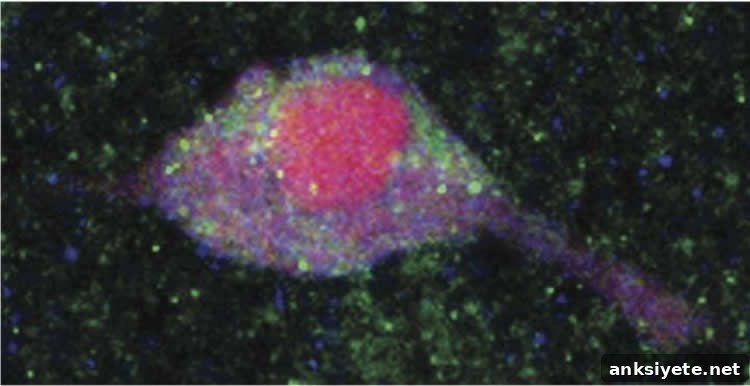
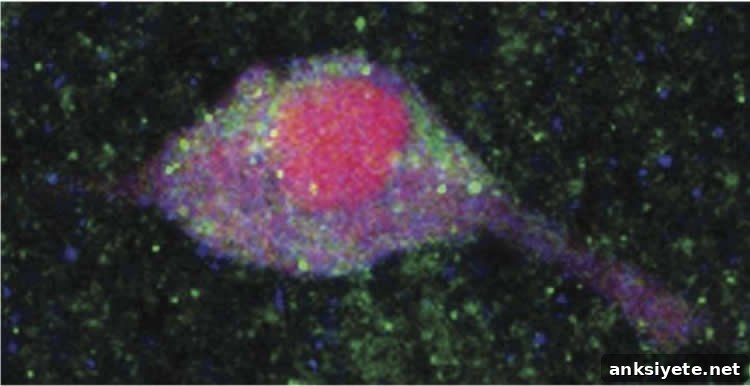
Mechanistically, the team found that insulin’s enhancement of dopamine release in the nucleus accumbens and caudate–putamen occurs via activation of striatal cholinergic interneurons that express insulin receptors. When these interneurons are stimulated by insulin, they increase action potential-dependent dopamine release, effectively signaling reward.
Dietary state strongly modulates this insulin-dopamine interaction. Rats maintained on a low-calorie, food-restricted regimen became far more sensitive to insulin’s effects: only a tenth of the insulin increase needed in normally fed rats was sufficient to boost dopamine release. Conversely, animals fed a high-calorie, obesogenic diet lost striatal insulin responsiveness entirely. Behavioral experiments reinforced these physiological findings: given a choice, rats preferred a flavor paired with normal insulin signaling in the nucleus accumbens rather than a flavor paired with blocked insulin signaling.
These results suggest a compelling hypothesis: animals, and likely humans, may prefer high-carbohydrate or low-fat foods that provoke larger insulin spikes because those foods enhance dopamine-mediated reward. Over time, chronic elevation of insulin and reduced insulin sensitivity in the brain are associated with obesity and type 2 diabetes, conditions that could blunt the brain’s reward response to food and alter eating behavior.
Rice emphasizes the clinical and behavioral implications of the work. “Our study establishes a role for insulin in the brain’s reward circuitry and suggests that insulin-driven dopamine release may influence food choices,” she says. The team plans further studies to map how insulin modulates motivation and reward pathways and whether obesity-related changes in brain insulin sensitivity can be reversed or prevented.
Future research could also explore whether the commonly described “insulin-glucose rush” is experienced as a dopamine reward surge, and whether dietary strategies can safely harness this mechanism to promote healthier eating patterns without contributing to metabolic disease.
The research team was led by Margaret E. Rice, PhD, and Kenneth D. Carr, PhD, with lead investigator Melissa Stouffer, PhD, and contributions from Catherine Woods, BA; Jyoti Patel, PhD; Christian Lee, PhD; Paul Witkovsky, PhD; Li Bao, PhD; Robert Machold, PhD; Kymry Jones, PhD; Soledad Cabeza de Vaca, PhD; and Maarten Reith, PhD.
Funding: The research received grant support from the National Institute on Drug Abuse and the National Institute of Neurological Disorders and Stroke (National Institutes of Health), including grants R01 DA033811, R01 DA03956, and R01 NS036362, as well as a Brain and Behavior Research Institute NARSAD independent investigator award.
Source: David March, NYU Langone Medical Center. Image source: Courtesy of Nature Communications.
Abstract
Insulin enhances striatal dopamine release by activating cholinergic interneurons and thereby signals reward
Insulin activates insulin receptors in the hypothalamus to signal satiety after a meal. However, rising rates of obesity — which lead to chronically elevated insulin levels — suggest insulin may also influence brain centers that regulate motivation and reward. This study reports that insulin amplifies action potential-dependent dopamine release in the nucleus accumbens and caudate–putamen through an indirect pathway involving striatal cholinergic interneurons that express insulin receptors. Two chronic diet manipulations in rats—food restriction and an obesogenic diet—produced opposite effects on striatal dopamine sensitivity to insulin: food restriction enhanced responsiveness, while the obesogenic diet abolished it. Behavioral tests showed that intact insulin signaling in the nucleus accumbens shell is necessary for developing a preference for the flavor of a paired glucose solution. Together, these findings imply that striatal insulin signaling enhances dopamine release and thereby influences food choices.
Study citation: “Insulin enhances striatal dopamine release by activating cholinergic interneurons and thereby signals reward” by Melissa A. Stouffer et al., Nature Communications, published October 27, 2015.