
Summary: A new study reports that herpes viruses exploit an ancient RNA element in the human genome to promote their replication, a mechanism similar to one observed in some tumors. These findings may open new avenues for diagnostics and therapies and could also inform research into neurodegenerative conditions.
Source: Mount Sinai Hospital
Researchers at Mount Sinai report that herpes viruses activate and use a deeply conserved RNA element in the human genome to aid their replication—mirroring a process previously observed in certain cancers. Published in Nature Communications in January, the study suggests shared mechanisms between viral infection and tumor biology that could influence immune responses and potentially contribute to diseases such as Alzheimer’s.
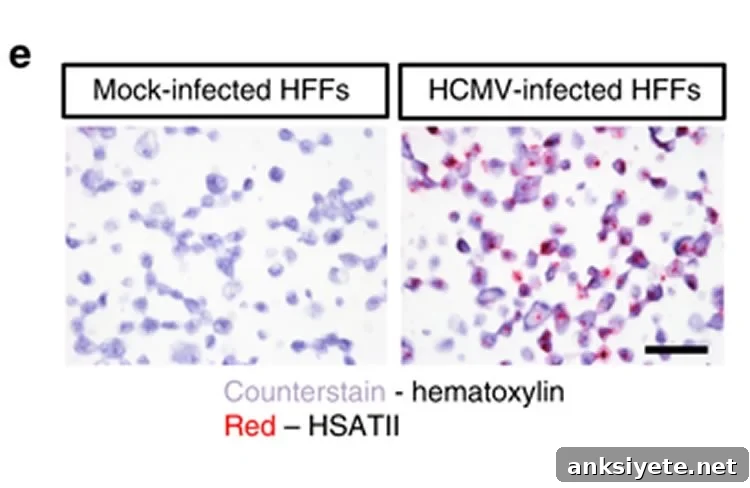
The team found that herpes viruses induce expression of human satellite II RNA (HSATII RNA), a repetitive RNA species that arose millions of years ago and is typically silent in healthy cells. When HSATII RNA becomes active, it can alter the cellular environment in ways that favor viral replication. Cancer cells are also known to activate HSATII RNA, and both viruses and tumors appear to exploit similar strategies to manipulate host cells for their own growth and spread.
Investigators propose that the parallel use of HSATII RNA by both herpes viruses and cancer cells may stem from their rapid evolutionary dynamics, which encourage experimentation with different molecular strategies for survival and propagation. It remains unclear whether the convergence on HSATII RNA arose independently in viruses and tumors or whether there are interactions between the two processes in certain contexts. Several authors on this paper have previously helped establish how other unusual RNA species influence tumor evolution.
“Studying tumor evolution can inform virology, and insights from viral infection can shed light on cancer biology,” said Benjamin Greenbaum, PhD, Assistant Professor of Oncological Sciences, Pathology, and Medicine (Hematology and Medical Oncology) at The Tisch Cancer Institute, Icahn School of Medicine at Mount Sinai, and a senior author of the study. “The induction of HSATII RNA in both herpes infections and cancer cells points to possible convergence on shared regulatory mechanisms across these seemingly disparate diseases.”
The study also raises the possibility that herpes virus–driven HSATII activation could contribute to inflammatory and degenerative conditions. The authors note links between herpes infection and chronic colitis, and they discuss how virus-induced HSATII expression might influence processes relevant to neurodegenerative disease, including Alzheimer’s. While these connections require further investigation, the findings suggest HSATII RNA could serve as a useful biomarker for infection or cancer and might become a target for future therapeutic approaches.
Maciej Nogalski, PhD, a postdoctoral research fellow in the laboratory of Thomas Shenk, PhD, at Princeton University, is the study’s lead author. “Although herpesviruses have been studied for decades, probing host–virus interactions at the cellular level continues to reveal previously unrecognized layers of gene regulation,” Dr. Nogalski said. “Our virus-centered experiments not only uncovered new aspects of viral infection but also provided an inducible system that could accelerate research into possible roles HSATII RNA plays in other diseases.”
Funding: Additional contributors included researchers from Massachusetts General Hospital and the Simons Center for Systems Biology at the Institute for Advanced Study. Funding sources for this work included the National Institutes of Health (AI112951), the American Cancer Society (PF-14-116-01 MPC), the V Foundation, Stand Up To Cancer, the National Science Foundation, the Lustgarten Foundation, the Pershing Square Sohn Research Alliance, the Mark Foundation, the Burroughs Wellcome Fund, and Affymetrix, Inc.
Source: Marlene Naanes, Mount Sinai Hospital
Publisher: NeuroscienceNews.com
Image credit: Greenbaum et al., Nature Communications
Original research: “A tumor-specific endogenous repetitive element is induced by herpesviruses,” by Maciej T. Nogalski, Alexander Solovyov, Anupriya S. Kulkarni, Niyati Desai, Adam Oberstein, Arnold J. Levine, David T. Ting, Thomas Shenk, and Benjamin D. Greenbaum. Nature Communications. Published January 9, 2019. DOI: 10.1038/s41467-018-07944-x.
A tumor-specific endogenous repetitive element is induced by herpesviruses
Tandem satellite repeats make up roughly 3% of the human genome. One of these repeats, human satellite II (HSATII), is highly expressed in several epithelial cancers and cancer cell lines. In this study, the authors report acute induction of HSATII RNA in human cells infected with two different herpesviruses. They show that human cytomegalovirus (HCMV) immediate-early proteins IE1 and IE2 cooperate to induce HSATII RNA, affecting multiple aspects of the HCMV replication cycle, viral titers, and infected-cell behavior. In tissue samples from two patients with chronic HCMV colitis, HSATII RNA expression correlated with the intensity of CMV antigen staining. These observations indicate that endogenous HSATII RNA synthesis following herpesvirus infection can have functionally important consequences for viral replication and pathogenesis. The induction of HSATII in both infected and cancer cells suggests possible convergence on common HSATII-related regulatory mechanisms across these distinct disease states.