
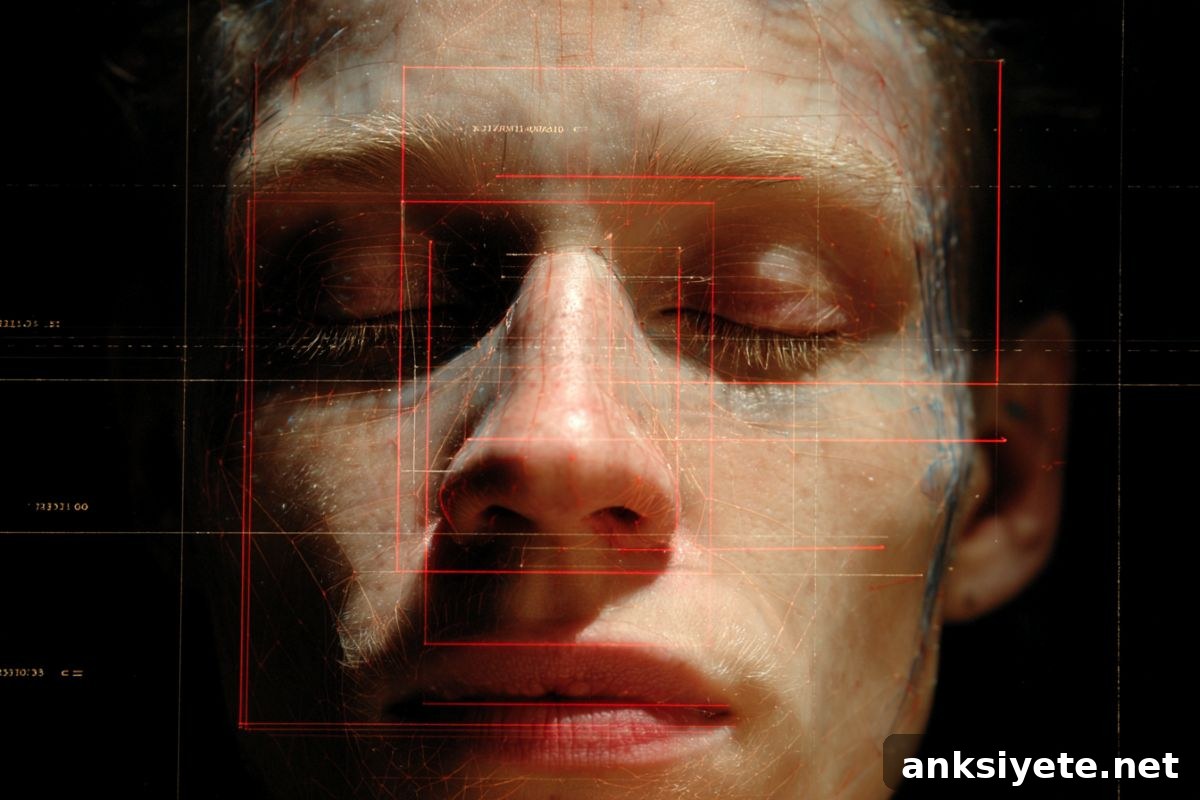
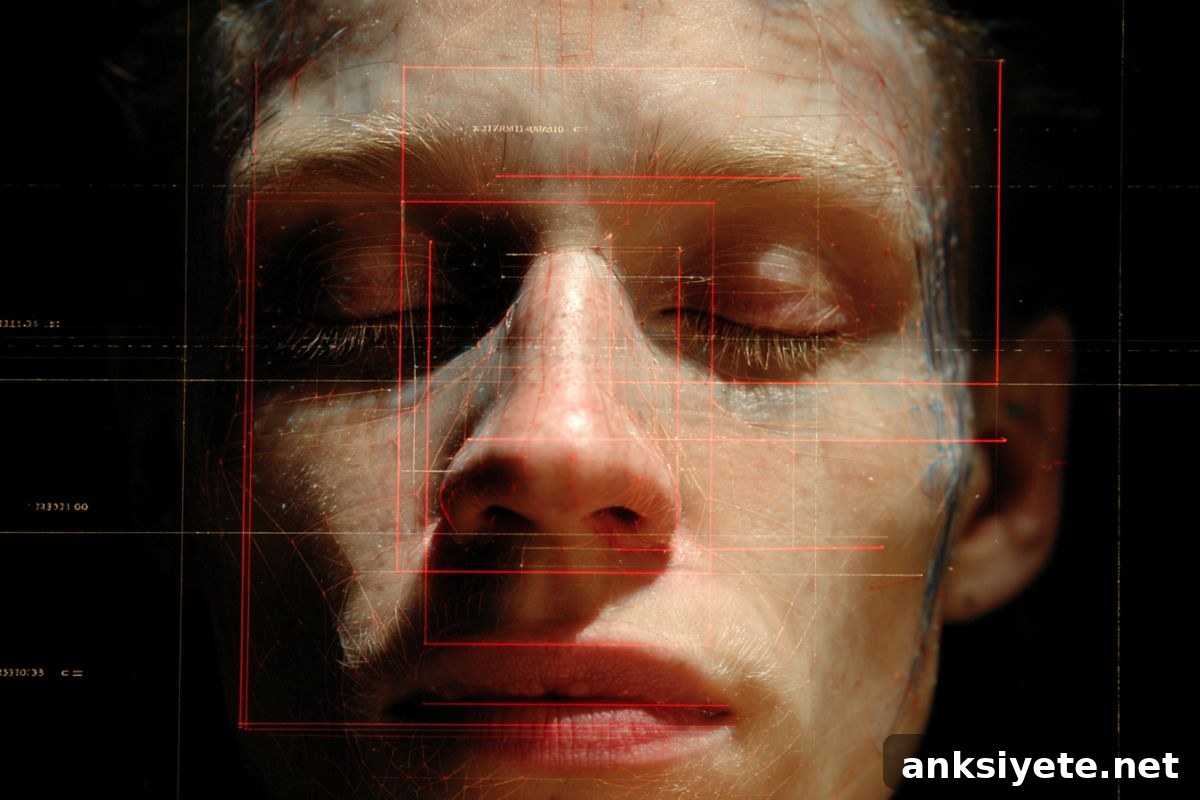
Summary: A computational neuroscience study has developed a precise, data-driven method to quantify human pain by tracking ultra-fast, invisible facial micromovement spikes. Using artificial intelligence (AI) and high-speed video analysis, the research challenges the subjective 1-to-10 pain scale by decoding minute motor fluctuations that are imperceptible to the naked eye.
The investigators established a direct physiological link between these facial micro-spikes and heart rate variability (HRV) during controlled episodes of physical discomfort. That relationship creates an objective physiological window for assessing pain in people who cannot reliably speak for themselves—young children, stroke survivors, and individuals with dementia—potentially improving diagnosis and treatment monitoring.
Key Facts
- Beyond the 1-to-10 Scale: The approach aims to move past subjective self-reporting by capturing individualized, physiological signals from the motor nervous system.
- Facial Micro-Spikes: AI-driven, high-frame-rate video analysis detects rapid, subtle facial micromovements that escape human perception.
- The Cardiac Connection: Simultaneous tracking of facial micromovements and heart rate variability shows that as pressure pain increases, heartbeat timing becomes more irregular and facial micro-fluctuations concentrate around the eye region.
- Cognitive Crowding Effect: Tasks that demand high cognitive load (memory or attention) reduce the observable face-heart coupling, suggesting mental engagement can dampen the outward signs of pain.
- Scalable AI Diagnostics: The technology is being translated into a smartphone application by Neuroinversa LLC, a Rutgers-New Brunswick spinoff, with the goal of providing clinicians and caregivers an accessible way to monitor pain and treatment response.
Source: Rutgers
Researchers at Rutgers University–New Brunswick are developing a more objective way to measure pain than the commonly used “1-to-10” scale.
Published in Frontiers in Neuroscience, the new study proposes quantifying pain by detecting tiny facial micromovement spikes—brief motor fluctuations too fast and subtle for the human eye. These micromovements, when analyzed alongside heart rate variability, provide objective indicators of an individual’s momentary physiological state during pain.
“We wanted to move beyond a one-size-fits-all scale,” said Elizabeth Torres, a psychology professor in the Rutgers School of Arts and Sciences, who led the study with doctoral researcher Mona Elsayed. “Individual pain thresholds vary widely. Measuring responses directly from physiological signals lets clinicians personalize care.”
The team recorded 45 adults before and during short episodes of controlled pressure pain. Participants were observed at rest and while performing tasks that involved movement, touch, or memory. High-resolution video analysis and AI algorithms tracked facial muscle activity and heart rate variability—the timing between heartbeats. The analyses revealed that when pain increased, heart rhythm became more erratic and facial micro-spikes intensified, especially around the eyes.
“Within seconds the body’s pain response showed up as tiny facial movements,” Torres said. “Greater heart dysregulation produced clearer signals in the face.”
Task type affected how clearly pain appeared in the data. Haptic tasks—those involving touch and manipulation—showed the strongest correlation between facial micromovements and HRV, while tasks with higher cognitive load (memory or attention) weakened the connection. The authors describe this as a cognitive crowding effect: mental engagement diverts processing and reduces observable pain-related motor output.
Torres’ Sensory Motor Integration Lab has long used mathematical modeling to decode internal states from subtle body language, including in studies of autism and Parkinson’s disease. Applying the same tools to facial movements and heart rhythms creates a pathway to objectively assess pain in nonverbal or communicatively limited patients.
Although the study paired facial video with specialized heart monitors, Torres notes that advances in phone cameras and AI make smartphone-based assessments feasible in the near future. Neuroinversa LLC, a Rutgers-New Brunswick spinoff that licensed the technology, is developing an app intended to provide real-time tracking of pain and medication effects. The app remains under development and testing.
Torres emphasized the research is at an early stage. While the sample size was modest, the personalized micro-movement metrics produced statistically robust results. Planned next steps include testing larger and more diverse populations, including people living with chronic pain.
“A simple facial scan could one day replace guesswork,” Torres said. “Rather than relying only on caregiver reports or emoji charts, a digital dashboard would let patients and providers monitor biorhythms day to day and make informed treatment choices.”
Key Questions Answered:
A: Self-reported scales assume a universal pain threshold, which varies greatly across individuals. Crucially, many people cannot communicate pain verbally—nonverbal children, stroke survivors, and those with dementia. Facial micromovement analysis reads involuntary physiological signals directly, providing an objective measure where self-report is impossible or unreliable.
A: Human vision is limited in frame rate and sensitivity. High-speed video and AI capture microscopic, millisecond-scale facial fluctuations—“micromovement spikes”—that reflect autonomic disturbances. When pain triggers irregular heartbeats, those dynamics can immediately manifest as tiny, consistent facial tics, especially around the eyes.
A: The framework is being commercialized by Neuroinversa LLC, which has licensed the technology from Rutgers. The app is still in development and testing; the goal is to offer a quick facial scan that tracks biorhythms, shows whether a medication is taking effect, and helps guide dose adjustments.
Editorial Notes:
- This article was edited by a Neuroscience News editor.
- The journal paper was reviewed in full.
- Additional context was added by editorial staff.
About this pain and neurotech research news
Author: Megan Schumann
Source: Rutgers University
Contact: Megan Schumann – Rutgers University
Image: The image is credited to Neuroscience News
Original Research: Open access.
“Facial micro-movements as a proxy of increasingly erratic heart rate variability while experiencing pressure pain” by Elizabeth B. Torres and Mona Elsayed. Frontiers in Neuroscience
DOI: 10.3389/fnins.2026.1702124
Abstract
Facial micro-movements as a proxy of increasingly erratic heart rate variability while experiencing pressure pain
Introduction:
Pain perception varies between individuals and within the same person across contexts. Subjective self-reports are coarse and can miss important individual differences that matter for treatment. This study explores an alternative: objective, physiological markers that reflect how each body experiences pain in real time.
Methods:
The researchers developed a set of assays to measure pressure pain across different task demands—rest, drawing (high cognitive load), pointing, and a grooved peg task (haptic feedback). They introduce micro-movement spikes (MMS) as a standardized data type to quantify facial micro-expressions and micro-fluctuations in the heart’s inter-beat intervals (IBI).
Results:
MMS peak distributions for both facial and heart signals fit continuous Gamma distributions. As the Gamma scale parameter (noise-to-signal ratio) rises, so does the stochastic randomness in both signals. Increased IBI irregularity correlated with greater randomness in the ophthalmic facial region. Correlations were highest during haptic tasks (R² ≈ 0.84) and lower during high cognitive-load tasks (R² ≈ 0.77).
Conclusion:
Transfer entropy measures indicate that recent heart and facial activity (on the order of ~167 ms) helps predict the current ophthalmic facial micro-activity, suggesting the eye region can act as a practical proxy for dysregulated heart rhythm during pressure pain. These findings support further development of nonverbal pain detection and monitoring tools.